








Table of contents
Airport Security Threat Detection
FOCUS: Detecting explosives, firearms, concealed weapons, lithium battery risks, and contraband hidden in baggage, on the body, and in catering supplies
APPLICATION: Aviation catering operations, logistics centers, government buildings, courthouses, event venues, and correctional facilities
SOLUTION: AI-driven baggage, body, and catering trolley X-ray solutions
Airports are among the most heavily protected public spaces in the world, and X-ray screening sits at the center of airport security. Every carry-on bag, every checked suitcase, and most air cargo shipments pass through an X-ray machine at the airport before they reach an aircraft. The goal is to find anything that could endanger passengers, crew, or the aircraft itself, from firearms and explosives to batteries that could start a fire in flight.
The scale of this work is hard to overstate. In 2024, the Transportation Security Administration (TSA) screened more than 904 million people at U.S. airports and intercepted 6,678 firearms at checkpoints, a rate of 7.4 firearms per million passengers1. Over the same year, the agency screened 494 million checked bags and more than 2 billion carry-on items2. Threats are not limited to weapons: the Federal Aviation Administration (FAA) verified 93 lithium battery incidents involving smoke, fire, or extreme heat on aircraft in 2025, 80 of them on passenger flights3. With volumes like these, the speed and accuracy of each airport X-ray decision directly affect both security and the passenger experience.
How Airport X-ray Machines Work and What They Show
An airport X-ray scanner passes a beam through each bag as it moves along the conveyor and measures how much radiation every part of the bag absorbs. Dense objects such as steel appear dark, while light materials such as clothing or paper appear faint. Modern X-ray machines in airports use two energy levels, which lets the software estimate what each object is made of. This answers a common question about what materials the scanners can detect: rather than naming a substance, the system sorts everything into material classes and displays them in color: orange for organic substances such as food, plastics, drugs, and most explosives; green for mixed or low-density inorganic materials such as glass or aluminum; and blue for metals.
More advanced systems add a second viewing angle (dual-view) or build a full three-dimensional image of the bag using computed tomography (CT), so the operator can see objects that would otherwise be hidden behind others. In practice, what airport X-ray machines see depends heavily on the type of scanner installed in a given lane. TSA has awarded contracts worth up to $1.3 billion for up to 1,214 checkpoint CT units, citing the ability of CT algorithms and rotatable 3D images to help operators detect explosives and prohibited items4.
What can’t X-rays see through? Airport X-rays have physical limits. Very dense materials such as lead or thick steel absorb almost all radiation and appear as solid black areas, so operators treat any opaque zone as a reason for a manual search. In cluttered bags, overlapping items can mask a small object. And because many liquids have similar densities, an X-ray image alone cannot reliably tell water from a liquid explosive. These limits explain why airport security never relies on X-ray alone.
The Most Common Threats Detected by Airport X-ray Scanners
What do the scanners at airports detect? X-ray screening at the airport is designed primarily to find threats to aviation safety. Contraband such as drugs and undeclared cash is often found along the way, because it shows up as the same kind of anomaly that could indicate a threat, so in practice airport threat and contraband detection happens in the same image. Below are the most common items that airport X-ray scanners detect, what can be seen in an airport X-ray for each of them, and why it matters.
1. Explosives
Explosives remain the threat that airport screening was originally built around. Improvised explosive devices (IEDs) are among the most serious risks, and they are usually hidden in luggage, electronics, or personal items. An IED needs more than the explosive itself: it also requires a power source, wires, a detonator, and a switch or timer. Even when the charge is hard to see, this combination of components in an unusual arrangement is one of the strongest warning signs an operator can find on an X-ray image.
Plastic explosives such as C-4 or PETN are especially difficult to spot visually. They are organic, can be molded into any shape, and on a conventional X-ray they may resemble food, cosmetics, or leather goods. Advanced scanners address this by analyzing density and material composition: explosives fall within a characteristic range that automated algorithms, particularly on CT systems, are trained to flag. This is the main reason TSA is replacing conventional checkpoint X-ray with CT4.
2. Firearms and Ammunition
Firearms are the most frequent serious threat found at U.S. checkpoints. TSA intercepted 6,678 firearms in 2024 and 6,737 in 2023, and approximately 94% of the firearms found in 2024 were loaded1. That works out to about 18 firearms a day at 277 airports. TSA routinely reports that these weapons are found during standard X-ray screening of carry-on property.
On the screen of an airport X-ray scanner, a firearm appears as a dense, dark blue shape with a recognizable outline. Operators are trained to identify guns even when they are disassembled, because a barrel, slide, frame, magazine, and spring each have a distinctive silhouette. This matters because smugglers may take weapons apart and spread the parts across innocuous items such as toys, tools, or electronics. Ammunition is also clearly visible as small, uniform, very dense cylinders, often packed in rows.
3. Knives, Blades, and Sharp Objects
Box cutters, folding knives, razor blades, scissors, and multi-tools are restricted in carry-on bags and are flagged by their metal composition and shape. Among the items that X-ray machines at airports see most often, these are some of the easiest to recognize: even a short blade has a sharp, high-contrast outline that stands out against clothing and toiletries. Ceramic knives are harder to detect with metal detectors, but on X-ray they still show a recognizable blade shape and a density that differs from the materials around them.
4. Lithium Batteries
Lithium batteries are not weapons, but they are one of the most common causes of in-flight fires. Overheated or damaged lithium-ion cells can enter thermal runaway, a self-sustaining reaction that produces fire and toxic smoke, and such a fire is far harder to fight in a cargo hold than in the cabin. The FAA verified 93 lithium battery incidents on aircraft in 2025, 80 on passenger aircraft and 13 on cargo aircraft, with power banks accounting for the largest share of incidents3.
On airport X-rays, batteries appear as solid, uniform rectangles or cylinders, which makes it possible to spot spare batteries in checked bags, damaged or swollen cells, and improperly packed devices. Vapes are screened under the same logic. A vape under airport X-ray looks like a small battery connected to a metal heating coil and a liquid reservoir. The FAA requires electronic smoking devices to be carried only on the person or in carry-on baggage5, and the U.S. Department of Transportation bans them from checked bags6.
5. Drugs and Narcotics
Smugglers conceal drugs in luggage, in clothing, and even inside the human body. Airport X-ray images of drugs show packages rather than chemistry: most narcotics are organic powders or plant material, so they appear orange, with a density similar to food or cosmetics. What gives them away is the packaging and placement, such as tightly wrapped bricks, layers sewn into a suitcase wall, false bottoms, or containers whose contents do not match their label. Internal concealment cannot be seen on a baggage scanner at all and requires a body scanner.
It is worth noting who is looking for what. TSA states that its screening focuses on threats to aviation security and that its officers do not search for illegal drugs, but any illegal substance discovered during screening is referred to law enforcement7. For international travelers, U.S. Customs and Border Protection (CBP) conducts a separate inspection in which finding drugs is a core task rather than a by-product.
6. Concealed Weapons
Some weapons are designed to look harmless. Brass knuckles, collapsible batons, push daggers, and blades hidden in pens, combs, belt buckles, or keychains can all be flagged through X-ray imagery. The key is shape: a disguised weapon still has a metal component with a form that does not match the everyday object it is hidden in, such as a solid blade inside what should be a hollow pen.
7. Flammable Liquids and Gases
Liquids, gels, and aerosols are restricted because they can conceal liquid explosives or serve as fuel for an improvised incendiary device. Since conventional X-ray cannot reliably distinguish one liquid from another, volume limits are used to manage the risk. The TSA liquids rule restricts carry-on liquids to containers of 3.4 ounces (100 milliliters) or less, packed in a single quart-sized bag8. Larger containers on the X-ray image are diverted for additional screening, and flammable gases such as butane refills or certain aerosols are prohibited outright.
8. Chemical, Biological, and Radiological Threats
X-rays primarily reveal metallic and dense materials, and they cannot identify chemical agents, biological substances, or radioactive material by themselves. A container holding a dangerous chemical looks much the same as one holding a harmless liquid. For this reason, airports and border agencies rely on additional technologies such as explosive and chemical trace detection and dedicated radiation detectors. X-ray contributes by revealing suspicious containers, unusual shielding, or devices that warrant one of these follow-up checks.
9. 3D-Printed Firearms and Plastic Weapons
Non-metallic weapons, many of them 3D-printed, are an emerging challenge. Their plastic frames appear orange on the X-ray image, like any other organic item, and they do not trigger metal detectors. However, a working firearm still needs a barrel, firing pin, springs, and ammunition, which are usually metal. Advanced scanners and automated detection software identify these weapons through density analysis combined with shape recognition, since the outline of a gun frame remains recognizable regardless of the material.
10. Currency Smuggling
Can you see money through an X-ray? Large amounts of hidden currency are clearly visible on an airport X-ray, even though a single banknote is not. Paper money is organic, so a bundle of cash appears as a uniform orange rectangle with sharp edges and even density from end to end. This is what money looks like in an airport X-ray: an unusually neat, dense block hidden in clothing, shoes, books, or electronic devices where a soft, irregular item would be expected. Rolled bills form tight cylinders with the same uniform density.
Carrying cash is not illegal in itself. However, anyone transporting more than $10,000 in currency or monetary instruments into or out of the United States must report it to CBP on FinCEN Form 105, and unreported currency can be seized9.
11. Electronic Devices with Hidden Compartments
Laptops, tablets, cameras, and other electronics can be altered to conceal weapons, explosives, or contraband. Operators know what the X-ray machines at airports see inside a typical laptop or phone, so missing components, unexplained empty spaces, extra wiring, or unusually dense areas stand out on the image. Electronics are also a common place to hide IED components, which is why devices with signs of tampering are always checked by hand.
Layered Screening: Why No Single Scanner Is Enough
No airport X-ray machine works alone. X-rays in airports are only one part of a layered system, and each layer has its own strengths and blind spots. At U.S. checkpoints, passengers pass through walk-through metal detectors or millimeter-wave Advanced Imaging Technology (AIT) scanners, which use radio waves rather than X-rays; the backscatter X-ray body scanners that TSA deployed in 2010 were removed from U.S. airports in 201310. Alarms are resolved with pat-downs and trace detection. Carry-on bags go through X-ray or CT, while checked baggage passes through automated explosives detection systems, followed by on-screen review by an operator and, when needed, a manual search.
A study published in the Journal of Transportation Security modeled how such layers combine into a single screening system. It found that overall effectiveness depends on three factors: the performance of each individual layer, how well the layers complement each other’s weaknesses, and the decision rules used to combine their outputs. For decision-makers, the practical takeaway is that a more advanced scanner improves security only when it fits into the rest of the screening chain.
X-ray Screening Technology from LINEV Systems
The threats described above are not unique to airports. Firearms, knives, explosives, vapes, and concealed drugs are the same items that security teams look for at government buildings, courthouses, event venues, logistics centers, and correctional facilities. LINEV Systems builds X-ray baggage scanners and body scanners for these environments, as well as specialized systems for aviation catering, with automated threat detection embedded in the image pipeline.
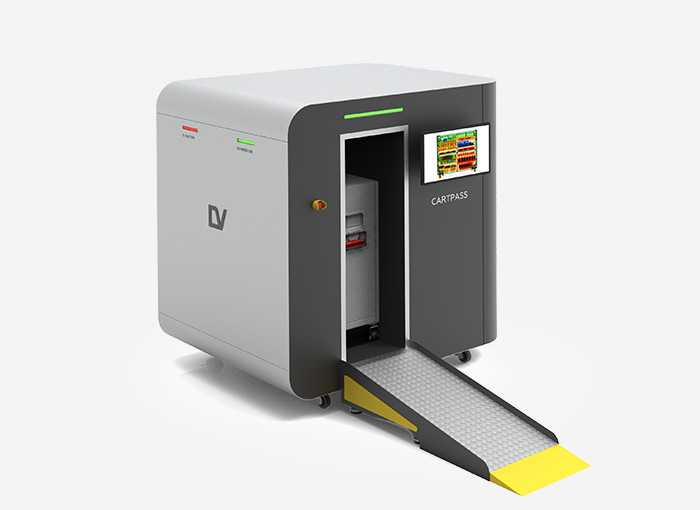
Airline Catering Trolley X-ray Scanner
Catering trolleys are a less visible route into the aircraft cabin. Fully loaded carts travel from catering facilities to the aircraft and are boarded directly, so anything hidden among meals, drinks, or ice would end up in the cabin. Inspecting trolleys by hand means unloading and repacking every cart, which slows operations and leaves room for inconsistency from one inspection to the next.
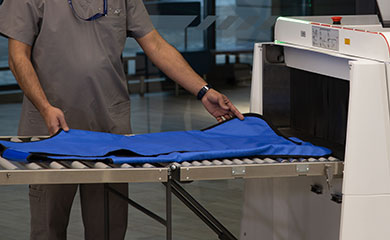
CARTPASS X, the airline catering trolley X-ray scanner from LINEV Systems, is designed to inspect fully loaded trolleys and service carts without unloading or conveyor transfer. The trolley stays stationary inside the inspection chamber while full-height transmission imaging with dual-energy material differentiation covers the loaded body, upper and ice compartments, corners, wheels, brakes, and undercarriage. A-EYE AI-assisted review highlights areas that need a closer look, while the operator keeps the final screening decision. One trained operator can run the full cycle, from trolley identification and scanning to image review and decision recording, and barcode identification links each trolley to its X-ray images, AI indications, and screening decision in a searchable, exportable record that supports traceability.
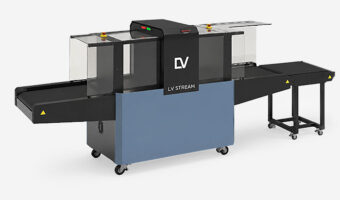


A-EYE–powered dual-view X-ray bag screening for fast, seamless flow at high-traffic venues and schools.
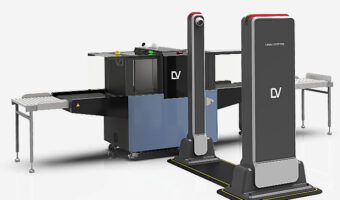
A-EYE–powered checkpoint combining people screening and LV STREAM baggage screening in one coordinated flow.
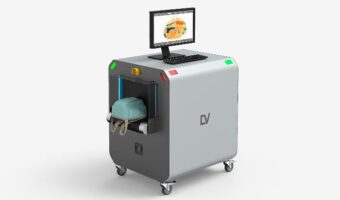
Small parcels and baggage inspection · AI-powered threat detection · Remote monitoring
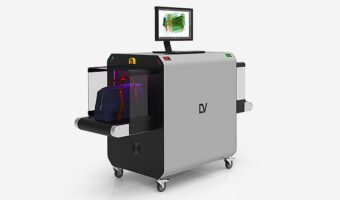
Small baggage inspection · AI-powered threat detection · Remote monitoring
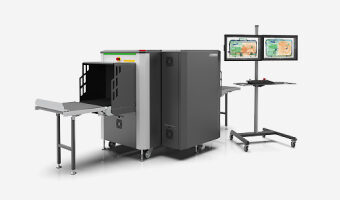
Small and medium sized baggage inspection · Improved detection by Dual View · AI-powered threat detection · Remote monitoring
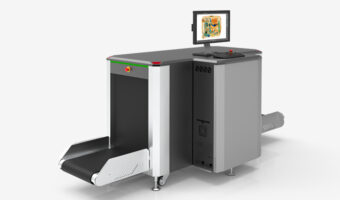
Medium sized check-in baggage inspection · AI-powered threat detection · Remote monitoring
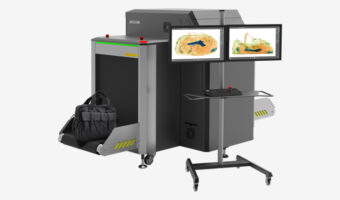
Mid-sized baggage inspection · Improved detection by Dual View · AI-powered threat detection · Remote monitoring
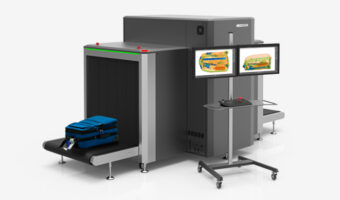
Large baggage and small cargo inspection · Improved detection by Dual View · AI-powered threat detection · Remote monitoring
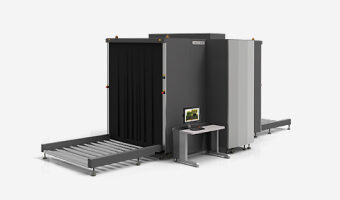
Heavy baggage, large packages and mid-sized cargo inspection · AI-powered threat detection · Remote monitoring
The X-ray baggage scanner line from LINEV Systems ranges from compact units for handbags and small parcels to large-tunnel systems for heavy luggage and cargo. Dual-energy imaging separates organic, mixed, and metallic materials, and dual-view models show each item from two angles to reduce the chance of a threat hiding behind another object.
All scanners support automated threat detection and remote monitoring, so operators receive highlighted alerts on screen and supervisors can track equipment status from a single location.
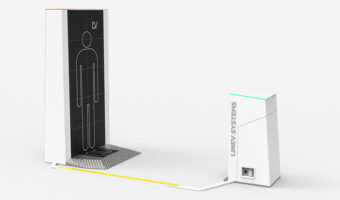
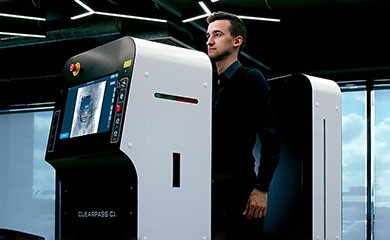
AI-assisted X-ray body screening system with sub-second scan time, ultra-low dose, and localized visual evidence
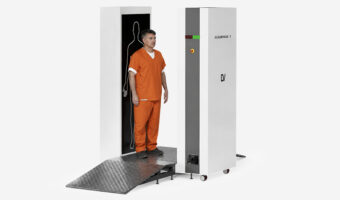
Compact, movable X-ray body screening engineered for the smallest practical footprint in correctional security. AI-assisted visual evidence, and fast operator-confirmed decisions
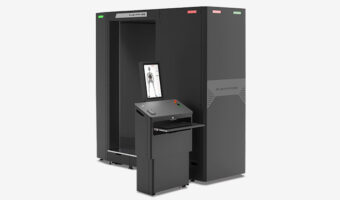
General-use full-body screening technology with extremely low x-ray dose rates to screen a person and which can be used for any applications
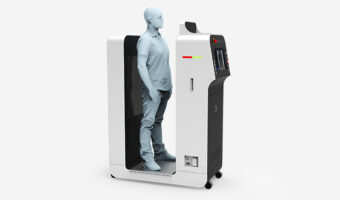
A portable addition to stationary systems, requiring minimal space and ready for immediate use, facilitating fast and on-demand prisoner screening
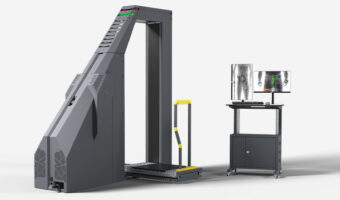
Dual-view screening technology (full-body and torso images) at two x-ray doses is best suited for detecting drugs and contraband, as it allows screening of staff, prisoners, and visitors where required

Partial screening technology delivers high-resolution torso images, providing an effective solution for detecting drugs and contraband inside individuals' bodies, whether in a prison setting or other non-prison environments.
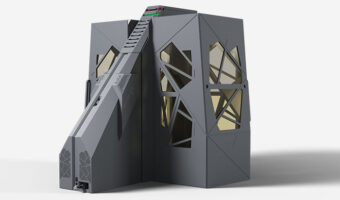

The X-ray shielding cabin is a high-protective option for full body scanner designed for maximum X-ray safety
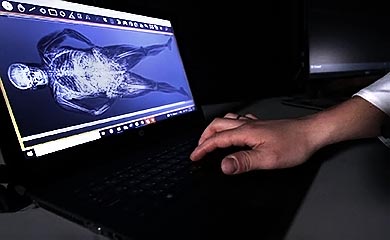
X-ray body scanners from LINEV Systems use low-dose transmission imaging to reveal objects hidden under clothing, inside shoes, or inside the body, including swallowed or internally concealed drugs that a metal detector or pat-down cannot find. Each scan takes seconds and does not require physical contact.
AI-based detection highlights suspicious areas on the image, helping operators with any level of experience make consistent decisions at high-throughput checkpoints.
Where Human-Only Screening Falls Short and How AI Changes It
For decades, every image from an airport X-ray scanner was judged by a human operator, often in a few seconds per bag. Training was thorough, but human attention has natural limits, and they show up in the data.
Operator Fatigue and Rare Targets
Research on airport baggage screeners has found that threat detection accuracy declines with time on task and drops further when real threats are rare, which is exactly the situation at a checkpoint where the vast majority of bags are harmless. Cluttered bags make the problem worse, because a small threat can hide among dense electronics and cables. Regulators respond with rotation rules: under EU aviation security regulations, operators screening cabin baggage by X-ray should not normally review images for more than 20 minutes at a time11. Rotation helps, but it also means more trained staff per lane, which becomes harder to sustain as passenger volumes grow.
What Automated Threat Detection Does
In X-ray airport security, automated threat detection (ATD) software uses deep learning models trained on large libraries of labeled X-ray images to recognize the shapes and material signatures of specific threats. It does not replace the operator; it changes the operator’s job. Instead of searching every image from scratch, the operator reviews areas the algorithm has already highlighted. This makes detection consistent across shifts and fatigue levels, lets bags with no alarms move through faster, and helps new operators reach a working level of competence sooner, because the algorithm carries much of the pattern recognition that previously took years of experience to develop.
These principles are built into the software that LINEV Systems develops for its scanners. BV Threat Detection software for baggage and parcel inspection automatically identifies firearms and their components, ammunition, knives, brass knuckles, grenades, flares, and vaping devices, marks each threat with a colored box and a category label, and can stop the conveyor when a threat is detected. For body screening, the threat detection algorithm for X-ray body scanners highlights prohibited items on or inside the human body, while DruGuard automated narcotics detection software assists operators in finding concealed drugs, including internal concealment. At the fleet level, X-LINEView telemetry for baggage inspection systems gives supervisors remote monitoring of more than 100 equipment parameters, failure notifications, and operator activity tracking, which helps reduce downtime across multiple checkpoints.
Emerging Detection Research
The next generation of X-ray detection is moving beyond simple absorption images. Researchers at University College London combined dark-field X-ray imaging, which measures how materials scatter the beam at microscopic angles, with deep neural networks. In tests where small amounts of explosives were hidden inside electrical items packed with everyday objects to mimic a carry-on bag, the system detected all of the explosive samples. The authors note that the studies were small-scale and that further research is needed, so this is a direction for future scanners rather than technology already deployed at checkpoints. It does show where detection is heading: toward identifying materials by their texture and structure, not only by their shape and density.
To discuss X-ray screening and automated threat detection for your checkpoint, contact the LINEV Systems team.
Sources
- Transportation Security Administration. “TSA intercepts 6,678 firearms at airport security checkpoints in 2024”.
- International Airport Review. “TSA statistics for 2024 reveal that over 6,000 firearms were intercepted in America”.
- Federal Aviation Administration. “Lithium Battery Incidents”. Summary of 2025 data: Lion Technology, “FAA: 93 Lithium Battery Air Incidents in 2025”.
- Homeland Security Today. “TSA Awards Up to $1.3 Billion to Procure Additional CT X-Ray Scanners for Airport Checkpoints”.
- Federal Aviation Administration. “PackSafe: Electronic Cigarettes, Vaping Devices”.
- U.S. Department of Transportation, Pipeline and Hazardous Materials Safety Administration. “DOT Bans E-Cigarettes From Checked Baggage”.
- Transportation Security Administration. “What Can I Bring? Medical Marijuana”.
- Transportation Security Administration. “Liquids, Aerosols, and Gels Rule”.
- U.S. Customs and Border Protection. “Baltimore CBP officers continue to seize unreported currency and marijuana”.
- NPR. “‘Invasive’ Body Scanners Will Be Removed From Airports”.
- European Commission. “Commission Implementing Regulation (EU) 2015/1998 on aviation security”.