










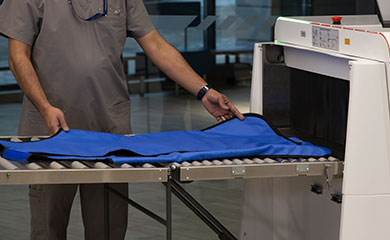




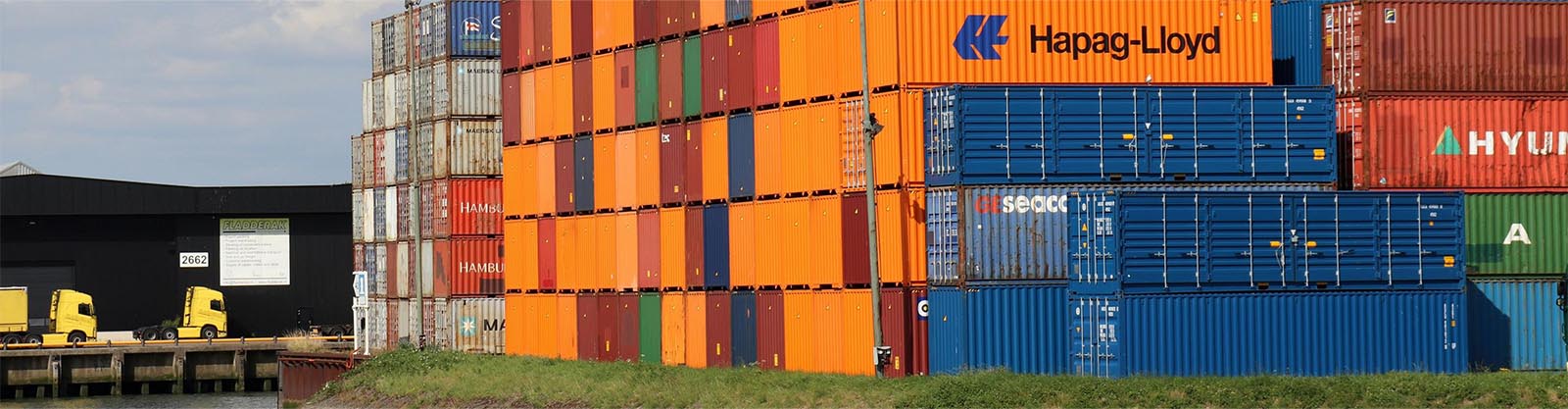


In modern supply chains, logistics security faces a growing challenge — hidden weapon smuggling. From international cargo shipments to cross-border trucking and distribution hubs, firearms and ammunition are being trafficked under the cover of legitimate goods. To address these risks, logistics operators need advanced logistics security solutions powered by artificial intelligence, capable of automatically identifying concealed weapons, contraband, and other threats across cargo flows.
LINEV Systems delivers AI-powered logistics security solutions that combine intelligent X-ray screening with adaptive machine learning to secure every link in the supply chain.
What is logistics security?
Logistics security encompasses the technologies, protocols, and control systems used to protect cargo, vehicles, warehouses, and transportation routes from theft, smuggling, tampering, and unauthorized access. For operations moving goods across borders or through multi-node supply chains, it also includes screening for concealed weapons, ammunition, and contraband — threats that manual inspection consistently fails to catch at scale.
The threat landscape has shifted. Weapon trafficking no longer occurs only at border crossings — it infiltrates commercial freight, vehicle fleets, and warehouse operations. According to UNODC data, only around 15% of illegal firearms are intercepted globally, which means the remaining 85% move through supply chains that lack adequate screening infrastructure.
For logistics operators, the operational stakes are direct: a single security incident can trigger regulatory scrutiny, halt shipments, and expose the organization to liability. In the U.S., compliance with TSA, CBP, and CTPAT security requirements increasingly demands automated, auditable screening — not manual checks that vary by shift and operator.
The Threat Landscape in Modern Logistics: Risks, Blind Spots, and AI-Based Solutions
Modern logistics operations face a threat profile far more complex than cargo theft or access violations. Today’s supply chains are actively exploited for weapon smuggling, drug and contraband trafficking, human trafficking, explosives concealment, and — in industrial and mining environments — the unauthorized removal of precious metals and controlled materials. In art and cultural goods transport, counterfeit and stolen pieces move under legitimate freight documentation. These threats share one characteristic: they are deliberately concealed within mixed or high-density cargo loads where traditional screening consistently underperforms.
The core vulnerability is not a lack of security personnel — it’s the structural limitation of manual inspection under real operational conditions. Trained operators working high-throughput shifts miss concealed threats not because of negligence, but because human attention degrades under volume, time pressure, and the visual complexity of dense, multi-layer cargo. A single missed scan in a busy distribution hub or border crossing can have consequences that extend well beyond the immediate incident — regulatory exposure, shipment holds, and reputational damage that affects carrier relationships and contracts.
AI-powered logistics security systems address this at the operational level. Automated X-ray screening with multi-energy imaging and dual-view projection eliminates the blind spots inherent to single-angle manual inspection — allowing security teams to identify concealed weapons, ammunition, explosives, and contraband inside vehicles, containers, and mixed freight without physical intervention. Non-intrusive drive-through scanning means cargo and personnel flow is not disrupted, and inspection throughput scales without proportional increases in staffing.
Beyond detection accuracy, AI-powered screening compresses inspection time from minutes to seconds per vehicle or container — enabling security teams to maintain lane flow and facility throughput without trading speed for coverage.
Why traditional logistics security screening fails
Traditional X-ray screening places the full burden of threat detection on the operator. In high-throughput environments — busy freight terminals, border crossings processing hundreds of vehicles per shift — that model has a structural ceiling. Operator attention degrades under volume and repetition, concealment techniques evolve faster than training protocols can adapt, and single-angle lateral imaging leaves predictable blind spots in dense or mixed cargo.
The result is not occasional error — it’s a systematic gap. Smugglers exploit shift changes, high-traffic periods, and the visual limitations of standard single-energy imaging. Without deep learning pattern recognition, automated anomaly flagging, and integration with chain-of-custody systems, manual screening cannot provide the consistency that modern logistics security requires.
Technologies Comparison
| Security Method | Inspection Speed | Detection Accuracy | Operational Impact | Scalability |
| Manual Physical Inspection | 30-60 min per container | Moderate (varies by personnel) | High disruption to workflow | Limited by staffing |
| Traditional X-Ray Systems | 3-5 min per container | Good for density anomalies | Minimal delays | Moderate throughput capacity |
| Advanced Dual-Energy Scanning | 1-2 min per container | Excellent material discrimination | Seamless integration | High-volume processing |
| AI-Enhanced Detection Systems | Under 1 min per container | Superior threat recognition | Automated threat flagging | Unlimited with infrastructure |
LINEV Systems: AI-Driven security for logistics operations
LINEV Systems addresses these vulnerabilities through a purpose-built portfolio of AI-powered X-ray screening systems — covering cargo, vehicles, personnel, and baggage — designed specifically for the throughput demands and threat profiles of modern logistics environments.
AI threat detection software for logistics security
LINEV Systems pairs its X-ray hardware with a dedicated software layer that automates threat analysis, reduces operator dependency, and maintains consistent detection performance across all screening points.
For personnel screening, LINEV Systems offers DRUGUARD, an automated narcotics detection assistance solution, alongside THREAT DETECTION software that automatically identifies and highlights prohibited items such as firearms, ammunition, explosives, and other security threats during X-ray inspection.
For baggage and parcel inspection, BV THREAT DETECTION applies next-generation AI algorithms to detect weapons, contraband, and suspicious objects in complex X-ray images, improving screening consistency and reducing the risk of missed threats.
To support uninterrupted system performance, X-LINEView telemetry software enables remote monitoring, preventive maintenance, and real-time diagnostics, helping security teams maximize scanner uptime and operational reliability across distributed logistics facilities.
AI-Powered Logistics Security Solutions by LINEV Systems
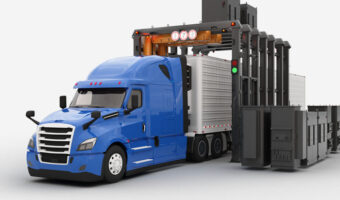
Multi Energy X-ray Portal | AI-powered cargo and vehicle screening system with Multi-Energy Array technology built for high-throughput, precision, and future-ready security
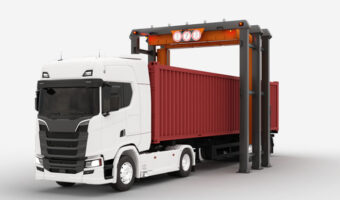
AI-powered 3D cargo and vehicle inspection system with Multi-Energy Array technology and spectral tomography
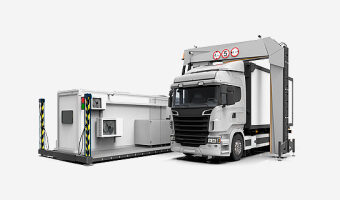
A combination of cost effective DTP 7500LV solution and unique hydraulic relocation set making it possible to deploy high-throughput cargo and vehicle screening checkpoint within just 1 hour
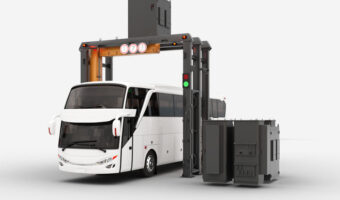
Dual-view screening solution for threat and contraband detection in buses in drive-through mode at speeds up to 15km/h
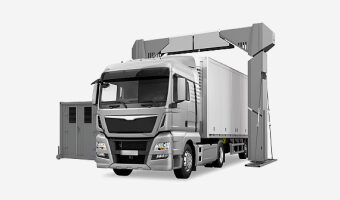
The lowest dose to vehicle drivers than competing systems; high-throughput cargo and vehicle screening with steel penetration of not less 320 mm for threat and contraband detection; small exclusion zone and operation footprint; easy-to-use operator controls and image analysis software
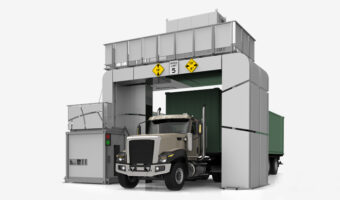
The system’s unique multiple projection and energy technology makes it possible to provide safe inspection of multi size vehicles like passenger vehicles, vans, buses and loaded trucks at the same time.
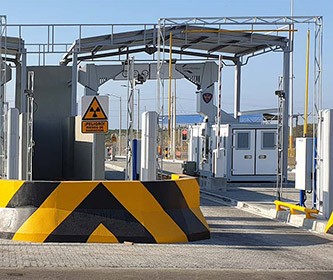
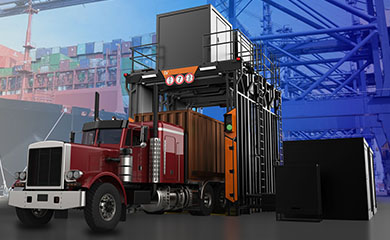
LINEV Systems offers two complementary cargo, vehicle and container X-ray secuirity scanner lines for logistics and freight environments. The MEAP platform combines multi-energy array technology with dual-view imaging and real-time AI analysis — designed for stationary checkpoints at ports, customs terminals, and high-volume freight hubs where detection accuracy and throughput must scale together. The DTP series covers deployments where operational flexibility matters: from fixed border crossings to rapidly established temporary checkpoints, with drive-through scanning that keeps drivers inside vehicles and maintains lane flow. Both lines detect concealed weapons, explosives, contraband, and high-density threats across all vehicle classes — from passenger cars to fully loaded trucks and containers — without physical inspection of cargo.
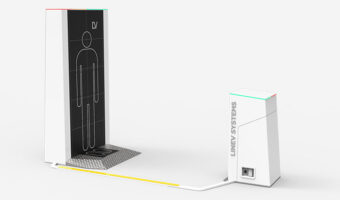
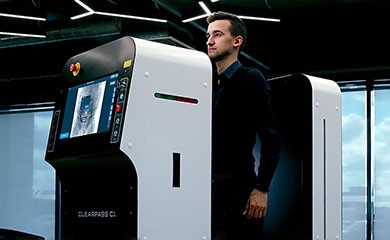
AI-assisted X-ray body screening system with sub-second scan time, ultra-low dose, and localized visual evidence
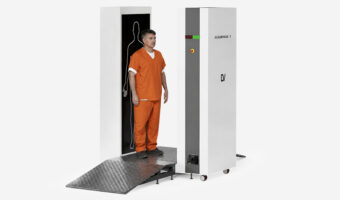
Compact, movable X-ray body screening engineered for the smallest practical footprint in correctional security. AI-assisted visual evidence, and fast operator-confirmed decisions
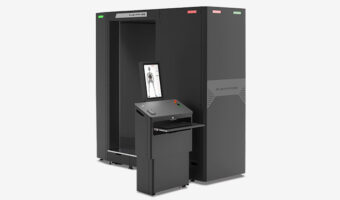
General-use full-body screening technology with extremely low x-ray dose rates to screen a person and which can be used for any applications
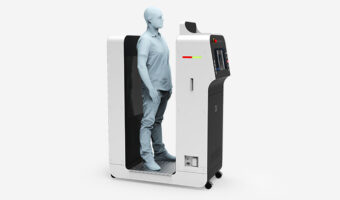
A portable addition to stationary systems, requiring minimal space and ready for immediate use, facilitating fast and on-demand prisoner screening
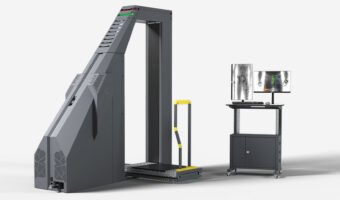
Dual-view screening technology (full-body and torso images) at two x-ray doses is best suited for detecting drugs and contraband, as it allows screening of staff, prisoners, and visitors where required

Partial screening technology delivers high-resolution torso images, providing an effective solution for detecting drugs and contraband inside individuals' bodies, whether in a prison setting or other non-prison environments.
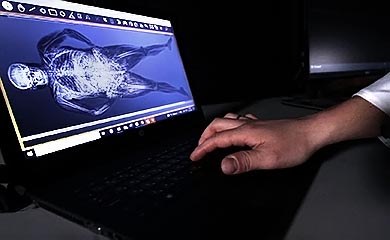
Personnel screening requirements vary significantly across logistics and security environments — from high-footfall access control at ports, customs terminals, and freight facilities to stricter screening at industrial sites, government buildings, and correctional institutions. Stationary full-body systems handle continuous high-volume flow at fixed checkpoints, while compact and portable configurations support on-demand screening where space is limited or deployment needs to be flexible. AI-assisted detection identifies concealed weapons, narcotics, contraband, precious metals, gemstones, and restricted materials — inbound and outbound — with ultra-low X-ray dose and operator-confirmed decisions that reduce false stops without compromising detection coverage.
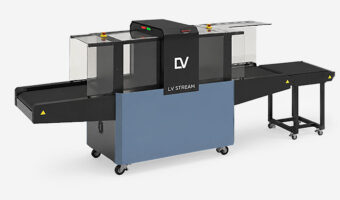
A-EYE–powered dual-view X-ray bag screening for fast, seamless flow at high-traffic venues and schools.
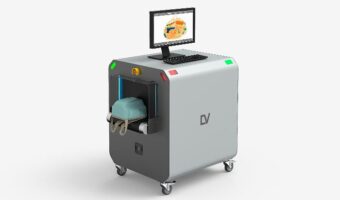
Small parcels and baggage inspection · AI-powered threat detection · Remote monitoring
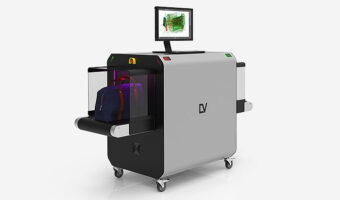
Small baggage inspection · AI-powered threat detection · Remote monitoring
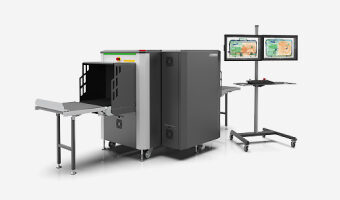
Small and medium sized baggage inspection · Improved detection by Dual View · AI-powered threat detection · Remote monitoring
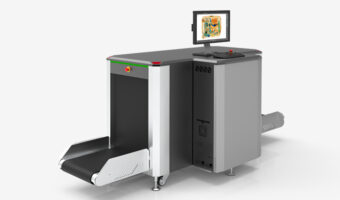
Medium sized check-in baggage inspection · AI-powered threat detection · Remote monitoring
Baggage scanner requirements differ by tunnel size, throughput volume, and detection priority. Compact single-view systems handle small parcels and personal bags at standard access control checkpoints, while dual-view configurations improve detection confidence for mixed or densely packed loads. For high-traffic environments — busy port terminals, large freight hubs, or venue-scale checkpoints — automated screening with AI-powered image analysis maintains consistent detection performance without creating bottlenecks. Across all configurations, AI threat detection and remote monitoring reduce dependence on individual operator attention and support centralized oversight across multiple screening points.
Security requirements across logistics environments
Customs and border crossings prioritize high-throughput cargo inspection and contraband detection under strict regulatory control. Transport hubs and freight terminals focus on rapid screening without creating operational bottlenecks. Industrial and mining facilities often require stricter access control to prevent unauthorized entry of weapons, prohibited items, or high-risk materials.
Because threat profiles differ across environments, security infrastructure must be selected based on operational risk rather than using a one-size-fits-all approach. Effective logistics security often requires a layered architecture combining cargo inspection, personnel screening, baggage control, and centralized monitoring.
| Environment | Primary Threats | Recommended Screening |
| Customs and border crossings | Weapons, explosives, narcotics, human trafficking, contraband | Cargo/vehicle: high-throughput drive-through scanning for all vehicle classes. Body: access control for staff and officers. Baggage: parcels and personal belongings at entry points |
| Seaports and container terminals | Concealed weapons, contraband in dense mixed cargo, high-value goods smuggling | Cargo/vehicle: multi-energy container and vehicle inspection, dual-view imaging. Body: port employee and visitor access control. Baggage: staff baggage at security checkpoints |
| Freight terminals and distribution hubs | Weapon concealment in mixed freight, unauthorized cargo tampering | Cargo/vehicle: AI-powered cargo screening with automated threat flagging. Body: employee access control, inbound/outbound screening. Baggage: personal belongings at facility entry |
| Industrial and mining facilities | Unauthorized removal of precious metals, gemstones, components; weapons on-site | Cargo/vehicle: vehicle and equipment inspection at facility perimeters. Body: strict inbound/outbound personnel screening. Baggage: employee bags at shift checkpoints |
| Correctional institutions | Narcotics, weapons, contraband smuggled by staff and visitors | Cargo/vehicle: vehicle inspection at facility perimeter. Body: full-body screening of staff, visitors, and inmates. Baggage: personal belongings of visitors and staff |
| Government and military facilities | Weapons, explosives, restricted materials, unauthorized access | Cargo/vehicle: vehicle and conveyance inspection at secured perimeters. Body: high-security screening at all access points. Baggage: bags and equipment at entry checkpoints |
Security solutions for high-risk operational scenarios
Different operational environments require different security strategies, screening workflows, and inspection technologies. Explore dedicated solutions designed for the specific risks and throughput requirements of your sector.



AI-powered screening systems apply deep learning algorithms to X-ray image analysis in real time — identifying threat signatures, classifying materials by atomic composition, and flagging anomalies automatically before an operator reviews the scan. Unlike manual inspection, AI performance does not degrade under high volume or shift fatigue. Systems continuously process image data against trained threat libraries, reducing both missed detections and false alarms. In multi-energy and dual-view configurations, AI correlates data from multiple projections simultaneously — a capability no human operator can replicate at scale.
Various factors, such as system capabilities, size, capacity, technology, adherence to regulations, and ongoing maintenance and support expenses, determine the cost of baggage X-ray inspection systems. Additionally, customization or integration with current security systems may result in supplementary costs for engineering, installation, and integration services.
The primary threats in modern logistics environments include concealed firearms and ammunition, explosives, narcotics and controlled substances, human trafficking, and high-value contraband such as precious metals, gemstones, and stolen cultural goods. In industrial and mining facilities, unauthorized removal of materials and components is an additional risk. These threats share a common characteristic: they are deliberately concealed within legitimate cargo, mixed freight, or personal belongings — making them difficult to detect through visual inspection or standard manual procedures.
U.S. logistics operators are subject to overlapping federal security frameworks depending on their operational context. CBP (Customs and Border Protection) governs cargo screening at ports of entry and border crossings. TSA sets security requirements for air cargo and certain surface transportation operations. CTPAT (Customs-Trade Partnership Against Terrorism) is a voluntary CBP program that establishes security standards for supply chain participants — with certified members receiving expedited processing and reduced inspection rates. For operators handling hazardous materials or working within critical infrastructure, additional DHS and OSHA requirements may apply. Automated, auditable screening systems are increasingly central to demonstrating compliance across all of these frameworks.
CTPAT is a public-private partnership program administered by U.S. Customs and Border Protection that certifies supply chain security practices across importers, carriers, freight forwarders, and logistics providers. Certified members must meet minimum security criteria covering cargo handling, access control, personnel screening, and conveyance security — and are subject to periodic validation by CBP officers. AI-powered X-ray screening directly supports CTPAT compliance by providing documented, consistent cargo inspection at key points in the supply chain. Automated threat detection creates an auditable screening record that satisfies CBP validation requirements and demonstrates that security procedures are applied uniformly — not subject to operator discretion or shift variability.
Non-intrusive inspection (NII) uses X-ray or gamma-ray imaging to scan cargo, vehicles, and containers without physical opening or unloading. In drive-through configurations, vehicles pass through a scanning portal at low speed while the system generates high-resolution cross-sectional images of the load. Multi-energy imaging assigns color-coded material classifications — distinguishing organic, inorganic, and metallic content — while dual-view systems capture simultaneous lateral and top projections to eliminate blind spots. AI analysis runs in parallel with image generation, flagging potential threats before the operator reviews the scan. The result is a complete internal view of the cargo within seconds, with no contact, no unloading, and no disruption to driver or vehicle flow.