



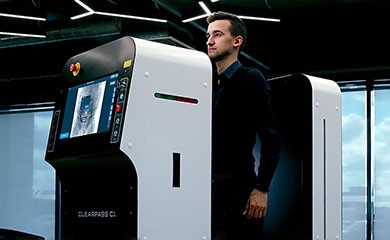
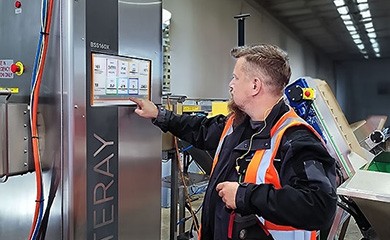
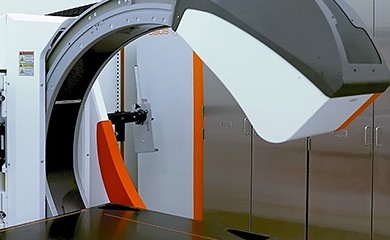
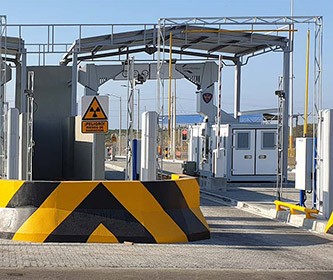





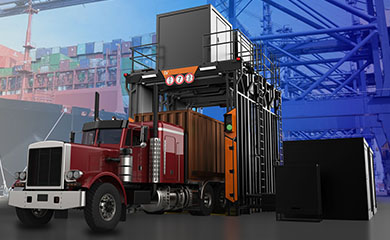



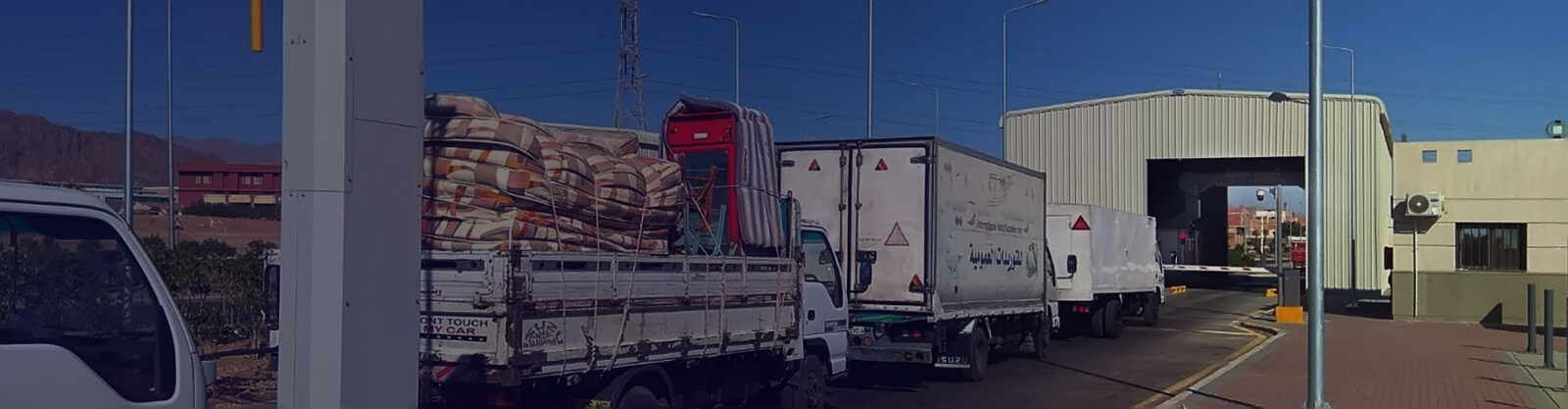
The Drive-Through Portal (DTP) Series is the ideal security portal solution for accurate, non-intrusive drive-through cargo and vehicles, buses, minivans and cars inspection.
The DTP Series is engineered in single or dual-view versions, can be equipped with dual-energy Imaging technology to enhance inspection and material discrimination capabilities.
With limited infrastructure, DTP systems provides state-of-the-art technology for fast inspection of conventional containers and cargo mounted on trucks, as well as passenger cars and minivans.
Utilizing the DTP systems, contraband, dangerous materials and other threats including narcotics, explosives and weapons are quickly and accurately detected.
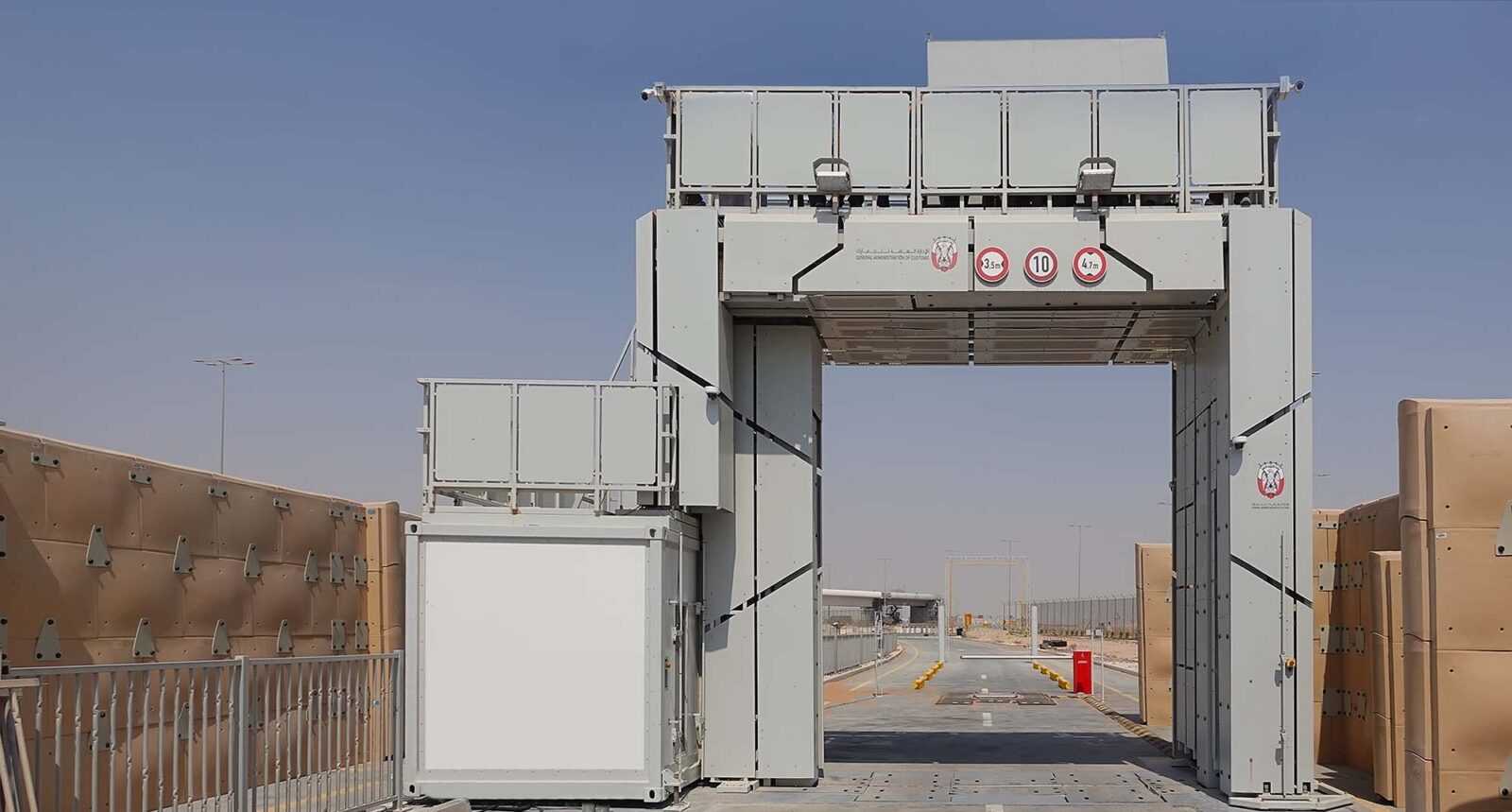
Experience Our Vehicle Inspection Systems Lineup
Multi-Energy X-ray Array Portal


Multi Energy X-ray Portal | AI-powered cargo and vehicle screening system with Multi-Energy Array technology built for high-throughput, precision, and future-ready security
AI-powered 3D cargo and vehicle inspection system with Multi-Energy Array technology and spectral tomography
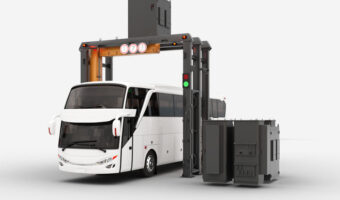
Dual-view screening solution for threat and contraband detection in buses in drive-through mode at speeds up to 15km/h
Trucks and Containers Inspection
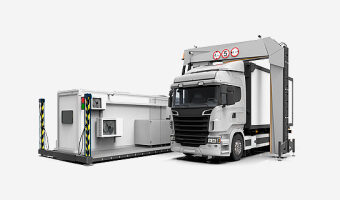
A combination of cost effective DTP 7500LV solution and unique hydraulic relocation set making it possible to deploy high-throughput cargo and vehicle screening checkpoint within just 1 hour
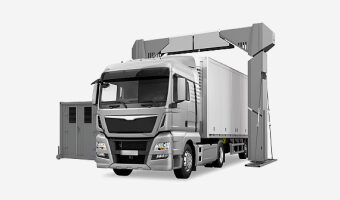
The lowest dose to vehicle drivers than competing systems; high-throughput cargo and vehicle screening with steel penetration of not less 320 mm for threat and contraband detection; small exclusion zone and operation footprint; easy-to-use operator controls and image analysis software
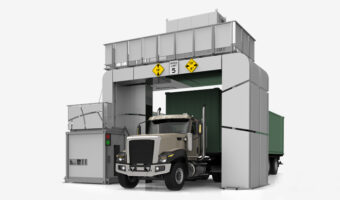
The system’s unique multiple projection and energy technology makes it possible to provide safe inspection of multi size vehicles like passenger vehicles, vans, buses and loaded trucks at the same time.
Light Vehicles & Buses Inspection
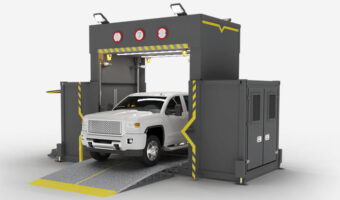
High-throughput occupied passenger vehicle screening for threat and contraband detection; drive-through/dual energy x-ray imaging at vehicle speeds of up to 20 km/h
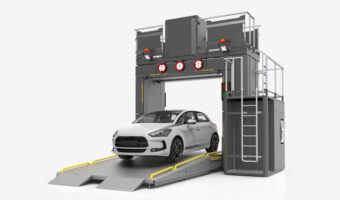
High-performance passenger vehicle inspection solution capable of screening vehicles in drive-through mode at speeds up to 15km/h
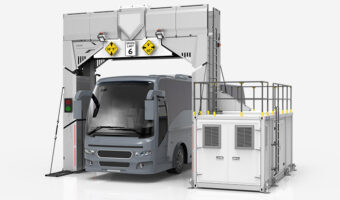
Dual-view screening solution for threat and contraband detection in buses in drive-through mode at speeds up to 15km/h
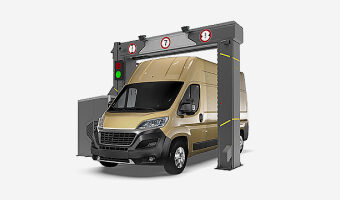
High-throughput inspection solution that can be chosen for safe and rapid screening light vehicle and VANs at the land border crossings or roads with intensive traffic
Railway Inspection
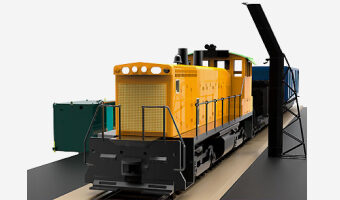

Inspection complex designed for non-intrusive X-ray screening of railway carriages
Threat levels in today’s modern world from smugglers, criminals and even terrorists, create ever evolving challenges when it comes to security screening without hindrance to the flow of the process.
Threat levels in today’s modern world from smugglers, criminals and even terrorists, create ever evolving challenges when it comes to security screening without hindrance to the flow of the process.
LINEV Systems portal systems are able to detect various types of hidden threats and prove to be an optimal solution for the inspection of trucks, passenger vehicles and cargo. DTP series is the perfect fit for all types of high security locations like border crossings, government buildings, embassies or military facilities. Excellent detection ability and image quality position LINEV Systems as one of the leaders on the market.
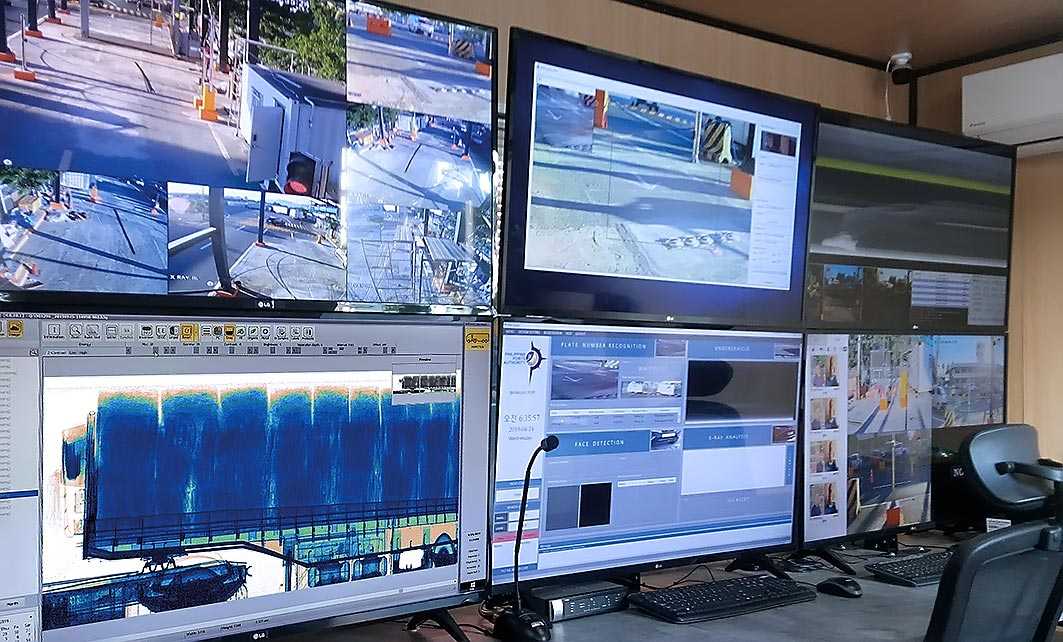
X-ray cargo and vehicle screening systems are specialized X-ray scanners designed to scan large objects, such as cargo containers or vehicles (trucks, cars, buses, vans and other), for security and regulatory purposes. These systems use X-ray technology to penetrate the surface of the object inspected and provide detailed images of its internal contents, structure, and composition.

Cargo and vehicle X-ray scanning machine are essential for detecting and preventing illegal activities, such as smuggling, terrorism, or trafficking of illegal goods or people. These systems can scan large objects, such as shipping containers or vehicles, and detect hidden contraband, weapons, or explosives.

Besides security and safety, X-ray cargo and vehicle (trucks, cars, buses, vans and other) scanners can improve operational efficiency. They can scan large objects quickly and accurately, reducing the need for manual inspections and improving the speed and efficiency of inspections. It helps to reduce wait times and delays at transportation hubs, improving the overall efficiency of the transportation system.
When selecting cargo and vehicle X-ray scanning machines, there are several factors to consider, including:
Look for a system that can produce high-quality images of cargo and vehicles (trucks, cars, buses, vans and other), allowing for detailed inspection and detection of potential threats.
Consider the volume of cargo or vehicles that will need to be inspected and select a system that can process the required throughput within the necessary timeframe.
Depending on the specific needs of your industry or application, consider a vehicle and cargo (trucks, cars, buses, vans and other) X-ray scanner that can be customized with specific features or configurations to ensure optimal performance and compliance with industry standards.
Consider the safety of personnel operating the system and the safety of the surrounding environment, and select a X-ray cargo and vehicle scanner that incorporates appropriate safety features.
Ensure that the system meets relevant regulatory requirements and standards.
In addition to the initial purchase price, consider the ongoing costs of operation, maintenance, and support, including energy consumption, training, and availability of replacement parts.
Consider whether the X-ray cargo and vehicle (trucks, cars, buses, vans and other) screening system can be integrated with existing security or logistics systems to streamline operations and improve efficiency.
Modern cargo X-ray screening systems do far more than generate images for human review. In advanced platforms, artificial intelligence is embedded directly into the scanning pipeline — processing raw sensor data as the vehicle enters the portal, before a final image is rendered on the operator’s screen.
This shifts the operational model fundamentally. Rather than relying on operators to interpret raw projections manually, AI performs the primary analysis: classifying materials, identifying anomalies, and assigning risk scores in real time. Operators receive structured, prioritised alerts rather than unprocessed imagery to evaluate from scratch.
In LINEV Systems’ MEAP platform, this analysis occurs at the raw data level. Multi-energy and dual-view signals are fused before image reconstruction, giving the AI engine a richer dataset to work from — one that captures material characteristics and structural relationships that a single-angle, single-energy projection cannot resolve. Objects that appear visually similar in a conventional 2D image can be separated and classified based on how they interact with X-ray energy across multiple levels and angles.
In MEAP’s most advanced configuration, this extends further: the system reconstructs a three-dimensional representation of the cargo interior, analysing material composition volumetrically across the full load rather than reading a flat projection of it. This depth of analysis — identifying organics, metals, and threat materials within a spatial model of the cargo — is not achievable through image review alone, regardless of operator expertise.
The operational outcome is consistent across configurations: lower false alarm rates, faster clearance for low-risk cargo, and detection performance that remains stable across long operational shifts independent of operator fatigue. AI is not a supplementary feature — it is the mechanism that makes multi-energy, multi-angle data operationally actionable in real time.
The fastest way to hear back from us is to fill the contact form below. Our appropriate department will get back to you depending on your inquiry as soon as possible.
Get vehicle and cargo X-ray machines
In some cases, drivers and passengers do not have to leave their vehicles when undergoing X-ray screening at a border crossing or other security checkpoint. This is because modern X-ray cargo and vehicle scanners are designed to scan vehicles and cargo without exposing people to harmful radiation levels or excluding the cabin from the scan.
The X-ray technology used in these screening systems is highly specialized and designed to minimize the radiation dose to people while still producing high-quality images of the cargo and vehicle.
Cargo and vehicle scanners use X-ray technology to produce images of the contents of cargo containers, trucks, and other vehicles. In addition, these screening systems can provide detailed images of the internal structure of objects:
- Explosives. X-ray cargo and vehicle inspection systems can detect the presence of explosives or explosive components, such as detonators, wiring, or timers.
- Weapons. These screening systems can detect the presence of firearms, ammunition, knives, or other weapons that may be concealed within cargo or vehicles.
- Contraband. X-ray cargo and vehicle scanning machines can identify illegal drugs, currency, or other contraband items hidden within cargo or vehicles.
- Chemicals. These screening systems can identify the presence of chemicals or hazardous materials that may risk public safety or the environment.
- People. X-ray cargo and vehicle scanners can detect the presence of people or animals inside cargo or vehicles.
The cost of X-ray cargo and vehicle scanners is determined by several factors, including:
- Type of system used for inspection, such as x-ray scanners, gamma ray scanners, or radiation detectors.
- The size of the X-ray screening system, whether a handheld device or a large scanner, which could scan cargo and vehicles (buses, container trucks, cars and other).
- Level of automation. The level of automation in the inspection system, such as automated scanning and analysis.
- Integration with other systems. The level of integration with other systems, such as security and transportation systems.
- Maintenance and service. The price of maintenance and service, including the replacement of parts and ongoing system updates.
- Regulatory requirements. The price of regulatory compliance, such as meeting international safety and security standards.
Cargo and vehicle X-ray screening systems are used in various settings where security and safety are priority.
- Border checkpoints. Inspecting cargo and vehicles at border checkpoints helps to prevent the smuggling of contraband goods and enhances security.
- Seaports and airports. X-ray cargo and vehicle scanning machines are used to scan and inspect shipments and vehicles entering and exiting seaports and airports, ensuring compliance with customs and security regulations.
- Military checkpoints. Military checkpoints use cargo and vehicle scanners to detect threats and prevent unauthorized access to military compounds.
- Critical infrastructure. Critical infrastructure facilities such as power plants, water treatment plants, and government buildings use cargo and vehicle scanners to ensure the safety and security of their facilities.
- Event venues. Large event venues such as stadiums and convention centers use cargo and vehicle scanning machines to detect potential security threats and ensure the safety of attendees.
Yes. LINEV Systems’ MEAP platform supports integration via its Digital Management Suite (DMS), including API connections to customs databases and security infrastructure. It works alongside systems such as ANPR, ACCR, UVIS, and radiation monitoring tools within a unified checkpoint workflow.
Scan results, AI risk scores, and operator decisions can be shared with external platforms in real time. The system also supports remote monitoring and diagnostics across multiple sites. Integration is typically adapted during deployment to match existing IT and security architectures.
Occupied vehicle scanning systems like the MEAP 320DVB are designed for drive-through operation with passengers remaining inside. Radiation levels are engineered to stay within internationally accepted safety limits for repeated exposure.
Dose per scan is kept extremely low through controlled beam geometry and fast scanning cycles. Exposure is typically lower than routine air travel or standard medical imaging, enabling high-throughput screening without requiring passengers to exit vehicles or introducing operational safety risks.
Standard X-ray scanning produces a two-dimensional projection of vehicle or cargo contents — a flat image captured from one or two angles. It is effective for identifying dense objects and broad material categories, but it has geometric limitations: items concealed behind other cargo may not resolve clearly, and material identification depends on what the projection reveals from a fixed angle.
3D cargo scanning reconstructs a volumetric model of the cargo interior from multiple simultaneous projections. Rather than reading a flat shadow, the system builds a spatial representation of what is inside the vehicle — allowing it to locate objects within the load and analyse their material characteristics from multiple perspectives in a single pass. In LINEV Systems’ MEAP platform, this three-dimensional analysis is performed by the AI engine at the raw data level, before image rendering, which means threat classification is underway from the moment scanning begins. The result is higher detection confidence in complex, densely packed cargo loads where standard 2D imaging reaches its limits.
No — in well-engineered systems, volumetric reconstruction does not require additional scan time or a slower drive-through speed. LINEV Systems’ MEAP platform performs its multi-angle data capture and three-dimensional analysis within the same scanning pass as standard imaging. The AI processing occurs in parallel with data acquisition rather than sequentially after it, which means operators receive results at the same pace regardless of whether the system is producing a standard projection or a full volumetric analysis of the cargo. For high-traffic border crossings and port terminals where throughput is a primary operational constraint, this parallel processing architecture is what makes advanced 3D cargo scanning operationally viable at scale.