














Table of contents
- Layered Screening: Why No Single Device Covers an Event Checkpoint
- Temporary and Mobile Screening for Festivals and Pop-Up Events
- Tailoring Checkpoint Design to Event Type
- A Complete Event Screening Solution
- Baggage Inspection Systems
- Body Scanners for Selective, High-Assurance Screening
- Integrating X-Ray Screening Into an Existing Security Program
- Operational Metrics, Guest Experience, and Redundancy
- Staffing, Human Factors, and ROI
- FAQ
X-Ray Security Scanners for Public Events
FOCUS: Detecting firearms, disassembled weapons, knives, explosives, drugs, and other prohibited items in bags and cases while keeping high-volume event entry moving
APPLICATION: Baggage and personal security screening at stadiums, concerts, trade fairs, conventions, festivals, and temporary event checkpoints
SOLUTION: X-ray baggage scanners with AI
Public events — NBA and NFL games, concerts, trade fairs, conventions, parades, marathons — bring large crowds into open, high-visibility environments, which makes them prime targets. The risks are specific, not generic: alcohol- or crowd-density-driven violence, drug trafficking or drug-related assault, concealed weapons or improvised explosive devices (IEDs) that raise the possibility of mass-casualty outcomes, and opportunistic attacks timed to high-attention moments — a stage change, an athlete entrance, a fireworks show, VIP movement. The scenario at a venue can shift minute to minute due to ingress rushes, weather interruptions, or last-minute schedule changes, which is why screening has to be systematic and built into the checkpoint by design rather than assembled on event day.
X-ray screening addresses this directly, and non-invasively. The system generates a low, regulated dose of ionizing radiation that penetrates bags and materials, producing an image based on variations in density and effective atomic number — this is what lets an operator distinguish organics, metals, and mixed materials on screen instead of guessing from an outline. No physical contact with the person or their belongings is required, which matters at the volume public events actually run: crowded concerts, sports arenas, and trade fair floors need screening that keeps pace with thousands of people moving through a handful of lanes.
Layered Screening: Why No Single Device Covers an Event Checkpoint
X-ray inspection isn’t a standalone control — it’s the detection layer inside a broader framework. An effective checkpoint combines a walk-through metal detector to catch metallic items fast, an X-ray baggage scanner to inspect what’s inside bags and cases, and a defined secondary-inspection process for anything either layer flags. Body scanning fits into this stack selectively rather than as a default for every attendee — used at lanes or moments where a faster walk-through isn’t sufficient: resolving a metal-detector alarm without a pat-down, screening a VIP or credentialed-access lane with a higher assurance requirement, or following up on a baggage alarm with a non-contact personal check.
A related, often overlooked bottleneck is coordination, not detection. A person and their bag enter a checkpoint together and are supposed to leave together, but when a walk-through detector and an X-ray scanner run as separate systems, each produces its own independent result and staff are left to manually connect a baggage alert to the right person, or a personal alert to the right bag. At high attendee volumes, that manual coordination step is often where a checkpoint actually loses time and accuracy, more than the speed of either device alone.
Temporary and Mobile Screening for Festivals and Pop-Up Events
Not every event has a permanent checkpoint. A single-weekend festival, a touring concert series, or a temporary trade fair floor needs the same level of weapons detection and threat screening as a fixed venue, without the infrastructure commitment of a permanent installation. Modular, mobile-deployable X-ray and detection equipment covers this case directly: temporary festival gateways, pop-up entry points along a parade route, and short-term event floors can run the same detection capability as a fixed stadium gate, with the difference being deployment footprint and setup time — not what the equipment can actually catch. For organizers evaluating screening for a specific date range rather than a year-round installation, that distinction is what to plan around: match equipment to duration and site conditions, not to a lower detection standard.
Tailoring Checkpoint Design to Event Type
No two events present the same bag profiles or crowd behavior, and a checkpoint that works for one event type often underperforms at another if the layout isn’t adjusted.
Music festivals and concerts bring backpacks, hydration packs, and creative concealment attempts, which calls for clearly posted bag policies, hydration-lane exceptions with strict size limits, larger-tunnel lanes for bulk items, and compact, fast-moving lanes for VIP entries. Stadium sports create surge-based ingress right before kickoff or tipoff, with frequent VIP and press movement, which is better handled with time-based staffing ramps, dedicated press and equipment lanes, and fast-track VIP lanes rather than a single uniform lane configuration. Conventions and trade fairs bring bulky display cases, electronics, tools, and constant exhibitor in-and-out traffic, which favors a mixed deployment — high-volume lanes for equipment entries alongside compact lanes for attendee bag checks — supported by clear SOPs for toolkits and merchandise. Civic gatherings and parades involve dispersed perimeters, variable weather, and pop-up screening locations, which is where mobile configurations, weather-protected tents, generator-ready power plans, and modular checkpoints that scale across a route keep screening consistent along a route that isn’t a fixed gate at all.
A Complete Event Screening Solution
Detection accuracy at scale isn’t just a function of the scanner — it’s a function of what’s running behind the image, and this is where LINEV Systems brings the pieces above together into one system rather than a collection of separate devices.
BV Threat Detection is the next generation of AI for automatic X-ray threat detection in cargo and baggage. It flags likely threats in real time as bags move through the system, giving operators a second, consistent layer of judgment that doesn’t fatigue over a long shift the way human attention does. This is the piece that actually controls false-alarm rate and secondary-inspection volume — the two variables that determine whether a checkpoint holds its queue time under pressure or falls behind during a surge.
X-LINEView is the company’s telemetry solution — a preventive maintenance platform built on remote system monitoring. Instead of discovering a hardware fault when a lane goes down mid-event, X-LINEView surfaces system health remotely, so maintenance can be scheduled ahead of a failure rather than reacted to after one. For a security lead, this is the difference between a lane that’s simply “working” on any given day and a checkpoint infrastructure with a predictable uptime record across an entire event season.
Together, these platforms are why the hardware choice matters less in isolation than it does as part of a system: the scanner captures the image, BV Threat Detection interprets it consistently, and X-LINEView keeps the whole checkpoint running.
Baggage Inspection Systems
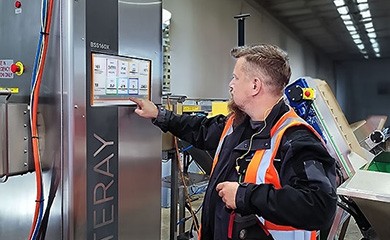
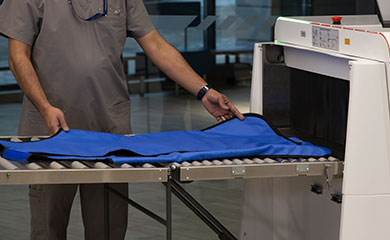
Baggage X-ray scanner solution is the core of any event checkpoint, and getting it right comes down to matching tunnel size and throughput to how bags actually move through a given lane — compact, fast-moving configurations for VIP and staff entrances, and high-volume systems built for bulk equipment cases and merchandise. Every model in the lineup, including LV STREAM, shares the same core capabilities that matter at a public event: multi-energy material differentiation, AI-assisted threat detection, and remote telemetry monitoring — so what changes between models is tunnel size and lane role, not detection quality. Browse the full lineup below to match a system to your specific checkpoint layout.
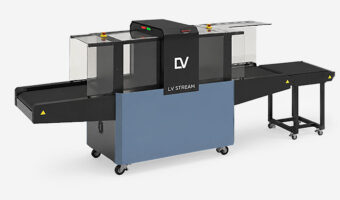

A-EYE–powered dual-view X-ray bag screening for fast, seamless flow at high-traffic venues and schools.
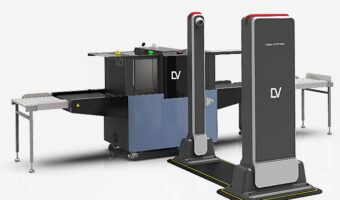
A-EYE–powered checkpoint combining people screening and LV STREAM baggage screening in one coordinated flow.
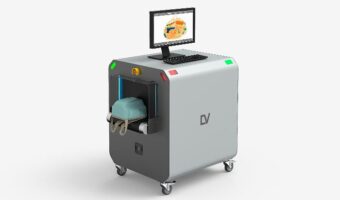
Small parcels and baggage inspection · AI-powered threat detection · Remote monitoring
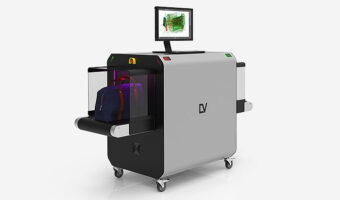
Small baggage inspection · AI-powered threat detection · Remote monitoring
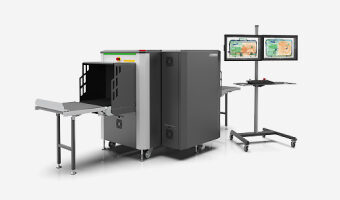
Small and medium sized baggage inspection · Improved detection by Dual View · AI-powered threat detection · Remote monitoring
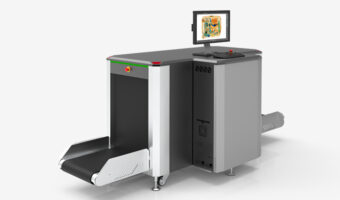
Medium sized check-in baggage inspection · AI-powered threat detection · Remote monitoring
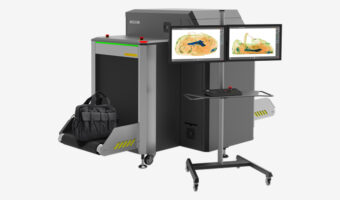
Mid-sized baggage inspection · Improved detection by Dual View · AI-powered threat detection · Remote monitoring
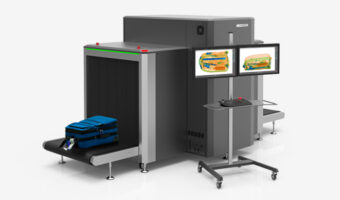
Large baggage and small cargo inspection · Improved detection by Dual View · AI-powered threat detection · Remote monitoring
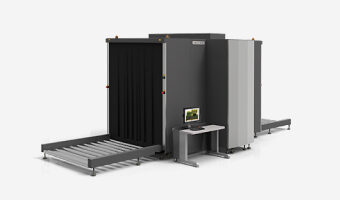
Heavy baggage, large packages and mid-sized cargo inspection · AI-powered threat detection · Remote monitoring
Body Scanners for Selective, High-Assurance Screening
Criminal intent at a public event isn’t limited to what’s inside a bag. Terrorism, political conflict, and international tensions all create scenarios where screening the person matters as much as screening their belongings — a risk that applies to trade fairs, sporting events, concerts, and conventions alike, and one that gets more acute wherever VIPs or dense crowds are involved.
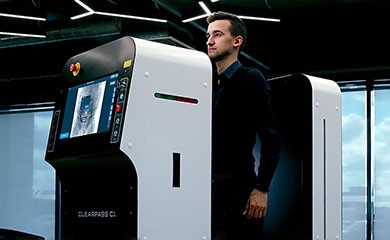
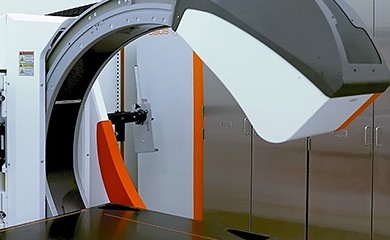
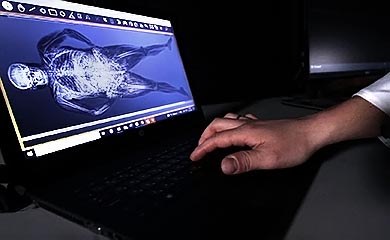
Body scanners add a fast, non-contact way to handle this at the checkpoint level: the individual remains stationary for a few seconds while high-resolution imaging clears or escalates the case, without a pat-down or added delay at the lane. Deployed as the selective, second-tier check described earlier — alongside walk-through detection rather than in place of it — this closes the loop on both threat vectors, guns, drugs, knives, blades, bombs, explosives, and other prohibited items, at a single checkpoint. Browse the full range of body scanning systems below to match acquisition speed and throughput to your VIP, credentialed-access, or secondary-inspection lanes.
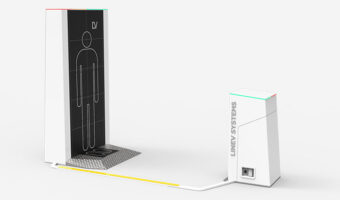
AI-assisted X-ray body screening system with sub-second scan time, ultra-low dose, and localized visual evidence
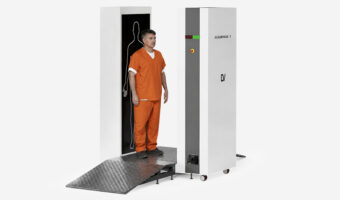
Compact, movable X-ray body screening engineered for the smallest practical footprint in correctional security. AI-assisted visual evidence, and fast operator-confirmed decisions
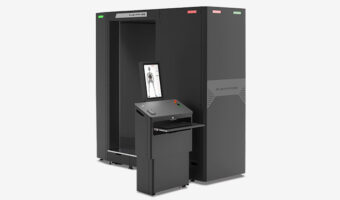
General-use full-body screening technology with extremely low x-ray dose rates to screen a person and which can be used for any applications
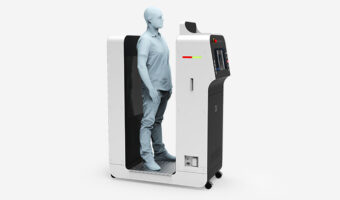
A portable addition to stationary systems, requiring minimal space and ready for immediate use, facilitating fast and on-demand prisoner screening
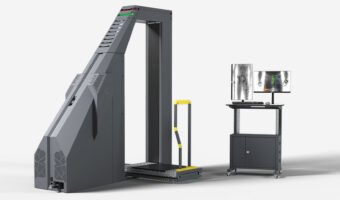
Dual-view screening technology (full-body and torso images) at two x-ray doses is best suited for detecting drugs and contraband, as it allows screening of staff, prisoners, and visitors where required

Partial screening technology delivers high-resolution torso images, providing an effective solution for detecting drugs and contraband inside individuals' bodies, whether in a prison setting or other non-prison environments.
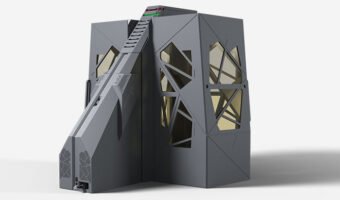

The X-ray shielding cabin is a high-protective option for full body scanner designed for maximum X-ray safety
Integrating X-Ray Screening Into an Existing Security Program
Very few venues are building a checkpoint from zero. Most are adding or upgrading X-ray screening alongside walk-through metal detectors, access control, CCTV, and an existing security staffing model that’s already in place for the venue. LINEV Systems’ baggage and personal inspection systems are designed to slot into that environment rather than replace it: telemetry data from X-LINEView can feed into a venue’s existing monitoring workflow, AI-flagged alarms from BV Threat Detection route into the same secondary-inspection process a security team already runs, and modular hardware builds mean a new lane can be added at a specific gate or satellite checkpoint without redesigning the whole entry sequence. For venues running seasonal or recurring events — a stadium’s home schedule, an annual trade fair, a festival series — this also means a lineup can scale incrementally: add a compact lane for a new VIP entrance one season, a high-volume lane for growing attendance the next, without replacing what’s already deployed.
Operational Metrics, Guest Experience, and Redundancy
Technology alone doesn’t guarantee throughput — measurement does. Security leads should track throughput per lane, alarm rates, false positives, resolution time, and operator utilization across shifts to know where a checkpoint is actually losing time, rather than guessing at it. Telemetry-driven predictive maintenance through X-LINEView keeps systems ready ahead of ingress windows instead of failing during them, which shows up directly in those same throughput numbers.
Guest experience is a design input, not an afterthought bolted on at the end. Clear signage, pre-triage bag checks, and staff available to answer questions reduce friction at the line itself, and dedicated lanes for VIPs, families, and accessibility needs keep the flow both fast and inclusive rather than forcing every attendee through the same lane regardless of need.
Redundancy is what prevents a single equipment issue or surge from cascading into a venue-wide delay: backup lanes or mobile units to absorb surges or cover an outage, and staff cross-trained to operate more than one system so they can shift between stations as demand changes through the event.
Staffing, Human Factors, and ROI
Technology empowers security staff, but vigilance and judgment are still the deciding factor at the checkpoint. Role clarity — so greeters, pre-check screeners, X-ray operators, secondary inspection teams, and supervisors each know their exact responsibility — prevents the ambiguity that slows down alarm resolution. Regular rotation during peak ingress manages fatigue and keeps recognition accuracy from degrading over a long shift, and clear communication and escalation protocols let supervisors rebalance lanes quickly when queues start to build.
On cost: upfront pricing is only part of the picture. Long-term value comes from reliability, uptime, and staff productivity. Predictive maintenance via telemetry cuts emergency repairs and event-day failures. AI-assisted detection lowers false alarms, which directly shortens queues and reduces headcount pressure at secondary inspection. Modular builds ease servicing, extend system life, and lower total cost of ownership — a checkpoint built around a flagship system for primary lanes, supplemented by additional units mapped to expected bag sizes, entry volumes, and venue layout, tends to deliver the best balance of speed, accuracy, and cost efficiency over a full event season.
Reach out with your venue’s requirements, and our team will help you put together the right setup for it.
FAQ about X-ray scanners for Event Venues
There isn’t one device that covers an event checkpoint — the effective setups combine a walk-through metal detector, an X-ray baggage scanner, and a body scanner used selectively for alarm resolution or higher-assurance lanes, tied together with AI threat detection software and remote telemetry monitoring. Some venues also move to an integrated checkpoint that synchronizes baggage and people screening into one process rather than running each as a separate system. The “best” combination depends on expected bag volume, crowd density, and whether the event is a permanent venue or a temporary deployment — not on picking the single most advanced piece of hardware.
Throughput isn’t a fixed number — it depends on belt speed, tunnel size, and how fast operators can clear or escalate an image, not just the scanner’s mechanical capacity. A compact single-view system moving small carry-ons at a VIP lane will clear bags faster per unit than a larger-tunnel system handling bulky equipment cases, even though the larger system is built for higher-volume lanes overall. In practice, the throughput bottleneck at most venues is operator decision speed and AI-assisted triage, not the belt itself — which is why software like BV Threat Detection has a bigger effect on real-world queue time than tunnel size alone.
AI detection reduces false positives compared to operator-only screening, but it doesn’t eliminate secondary inspection entirely — it’s designed to flag ambiguous cases for a human decision rather than auto-clear or auto-reject them. The combination of Dual-Energy material differentiation (organic vs. metal vs. mixed) with AI pattern flagging is what narrows down genuinely ambiguous cases, but any system will still route a meaningful share of oddly packed or densely stacked bags to secondary screening. That’s expected behavior, not a system failure.
These systems are built to operate alongside an existing security stack rather than in isolation. Telemetry (X-LINEView) and AI alarm data (BV Threat Detection) can feed into a venue’s broader monitoring and incident-response workflow, and hardware is modular enough to add a single lane at a specific gate without reworking the venue’s entire security architecture.
Densely packed bags, stacked or overlapping items of similar density, and improvised concealment (an object broken into components across multiple bags) remain the hardest cases for any X-ray system, AI-assisted or not. This is why layered screening — X-ray plus walk-through detectors plus a defined secondary-inspection SOP — matters more than any single piece of hardware. Operator training on color-palette interpretation and TIP (Threat Image Projection) libraries is what keeps recognition accuracy consistent across these harder cases, not the scanner alone.
Yes — modular and mobile configurations are built for exactly this case: temporary festival gateways, parade routes, and pop-up checkpoints without fixed infrastructure. Telemetry monitoring via X-LINEView still functions in these deployments as long as a network connection is available, which is a planning factor worth confirming ahead of a temporary or remote deployment rather than assuming by default.
X-ray baggage systems use a low, regulated radiation dose designed for safe screening of standard carry-on contents, and equipment is subject to the radiation-safety regulations of the country where it’s deployed, with required regular inspection and maintenance to confirm safe operating levels. Attendees with specific sensitivity concerns (certain film stocks, some medical devices) should be directed to your venue’s stated bag-policy exception process rather than assuming universal safety across every item type — this is a policy and signage question as much as a hardware one.