


















Table of contents
- Why Sorting Decides the Economics of Battery Recycling
- Battery Chemistries in a Mixed Portable Battery Stream
- Fire and Worker Safety Risks in Battery Waste
- The Battery Preprocessing Chain
- X-ray Battery Detection in Waste Streams
- Battery Screening Technology: Sorting Methods Compared
- How X-ray Battery Inspection and Sorting Works
- Why the Number of Output Fractions Matters
- Regulatory Context: Industrial Battery Disposal and Recycling
- What to Evaluate in a Battery Sorting System
- X-ray Battery Sorting from LINEV Systems
- Proven in Operation
- Benefits of X-ray Battery Sorting with LINEV Systems
Battery Sorting and Screening Technology
FOCUS: Battery sorting by chemistry with X-ray battery inspection, X-ray battery detection of hidden cells in waste streams, and battery screening technology that keeps lithium-ion batteries out of crushing and shredding
APPLICATION: Battery recycling plants, battery collection and stewardship programs, materials recovery facilities, e-waste processors, scrap plants, and companies managing industrial battery disposal
SOLUTION: AI-driven X-ray systems for Battery Sorting Platform
Battery sorting is the process of separating collected waste batteries by chemistry, and in some cases by subtype, so that each fraction can go to the recycling process designed for it. It sits between collection and metal recovery and decides both the value of the output and the safety of everything downstream: a lithium-ion cell in the wrong fraction can start a fire in a shredder, and a few percent of foreign chemistry can push a whole batch below a buyer’s specification.
This article explains why sorting has become the bottleneck of battery recycling, how the main battery screening and sorting methods compare, and how X-ray technology identifies batteries that labels and cameras cannot. It also covers the US regulatory context and the criteria recyclers use to evaluate a battery sorting system before investing.
Why sorting decides the economics of battery recycling
Lead-acid batteries show what a working recycling loop looks like: one chemistry, one design, one return channel. The U.S. lead battery industry hassustained a recycling rate of about 99%, while the same industry comparison puts the rate for lithium-ion batteries below 15%1.
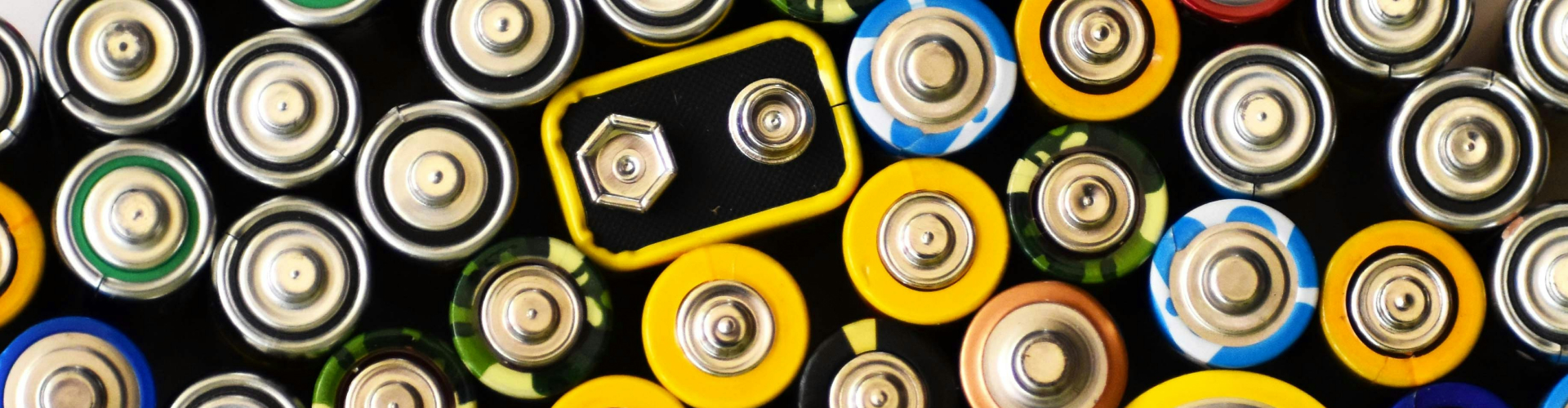
The gap is not explained by recycling chemistry alone. Portable batteries arrive at collection points as a single mixed stream: alkaline and zinc-carbon cells, rechargeable nickel batteries, lithium primary cells, and lithium-ion cells, in more than a dozen common formats. Each chemistry needs its own downstream process, and each process tolerates only a small share of foreign material. Before any battery crushing and sorting system can recover metals, that stream has to be separated by chemistry.
Sorting is therefore the stage where profitability is set. Receiving processors typically expect fraction purity of 95% or higher, and some routes demand more: zinc and manganese from alkaline and zinc-carbon batteries can become micronutrient fertilizer feedstock only when cadmium, mercury, and nickel contamination is minimal. A batch that misses the specification is discounted, re-sorted, or rejected.
These purity requirements come from the downstream processes themselves. Lithium-ion cells are shredded into black mass, a powder of electrode materials that hydrometallurgical plants refine into battery-grade lithium, nickel, and cobalt, and each such process is built around a specific chemistry family. Metallic contaminants carried into black mass lower the quality of the recovered material2. Every foreign cell in a fraction costs recovery yield.
Battery chemistries in a mixed portable battery stream
The main groups in a typical collection stream and why each needs its own route:
| Chemistry | Common formats | Why it needs a separate route |
| Alkaline | AAAA to D, 9V, A23, A27 | Largest share by volume; zinc and manganese recovery requires low contamination |
| Zinc-carbon (ZnC) | AA, AAA, C, D, 9V | Same recovery route as alkaline, but lower value and visually identical to it |
| Nickel-cadmium (NiCd) | AA, AAA, C, D | Cadmium is toxic and requires a dedicated thermal process |
| Nickel-metal hydride (NiMH) | AA, AAA, D | Nickel and rare earth recovery; the fraction loses value if cadmium is present |
| Lithium primary (Li-MnO₂, Li-SOCl₂, Li-FeS₂) | CR2, CR123, 1/2 AA, AA | Contains reactive lithium metal; handling differs by subtype |
| Lithium-ion | 18650, 21700, CR123-size, AA-size | High cobalt and nickel value in some subtypes; serious fire hazard when damaged |
The difficulty is that many of these groups look alike from the outside. Alkaline and zinc-carbon cells share the same dimensions. NiCd and NiMH cells use the same formats and similar casings. A lithium iron disulfide AA cell is easily mistaken for an alkaline AA. Lithium-ion subtypes such as NMC, NCA, LCO, and LFP also differ in recovery value, because LFP contains no cobalt or nickel. Labels are often worn off, corroded, or wrong, especially on counterfeit products.
Lithium thionyl chloride battery recycling shows why subtype identification matters. Li-SOCl₂ cells power utility meters, sensors, and other long-life industrial devices. Their electrolyte reacts with water to form hydrochloric and sulfuric acid, and processing undischarged cells can release toxic gases or cause explosive reactions, which is why specialized recycling methods discharge and neutralize these cells first3. A Li-SOCl₂ cell that ends up in an alkaline fraction brings that hazard into a process that was never designed for it.
Fire and worker safety risks in battery waste
A review by the U.S. Environmental Protection Agency identified 245 fires caused or likely caused by lithium batteries at 64 U.S. waste management facilities between 2013 and 2020, and the agency noted that the true number is probably much larger4. An industry fire report estimated that fires at recycling and scrap facilities in the United States and Canada caused about $2.5 billion in damage in 2025, with lithium-ion batteries a central driver5.
Lithium-ion cells ignite when crushed, punctured, or short-circuited, and thermal runaway is difficult to extinguish. In a battery recycling plant the risk concentrates at manual handling, where workers meet leaking electrolyte and cells that heat up, and at mechanical processing, where one lithium-ion cell hidden in an alkaline fraction can enter a shredder built for far less reactive material. Accurate sorting therefore protects people and equipment, not only fraction value.
The battery preprocessing chain
Cell sorting is one stage in a longer preprocessing chain that typically includes:
- Detection of hidden batteries in municipal waste, e-waste, and recycling streams before shredding or compaction, covered in the next section.
- Extraction of batteries from devices and mixed waste so that they leave the general stream.
- Routing of the incoming battery material by object type: loose cells, battery packs, secondary material, and unknown items for review.
- Disassembly of battery packs, including an electrical status check and inspection before opening, so that recovered cells can be returned to sorting.
- Sorting of individual cells by chemistry into saleable fractions.
- Traceability, with recorded data on how each batch was routed, sorted, and prepared.
Separating material by object type first keeps packs, debris, and unsupported items out of cell fractions and lets each machine work within its validated range.
X-ray battery detection in waste streams
Many battery fires start long before a battery reaches a battery recycler. Lithium-ion and NiMH cells hidden in phones, vapes, power tools, toys, and other devices travel through municipal recycling, e-waste, and scrap streams until a shredder, baler, or compactor damages them4. Battery screening technology at this stage has a different job from cell sorting: it does not need to identify chemistry, but it must find every battery, including cells fully enclosed in a device housing.
Manual pickers and optical sorters can remove only what they can see. X-ray detection for waste sorting looks through plastic housings, packaging, and surrounding material and recognizes the dense electrode stack and metal casing of a battery inside. Combined with optical cameras and AI classification, X-ray battery detection flags battery-containing objects on the belt in real time so they can be ejected or diverted before the critical processing stage. Typical installation points are ahead of shredders at e-waste and scrap plants and on MRF lines before compaction or baling. Recovered batteries and devices then enter the preprocessing chain as a separate stream.
Battery screening technology: sorting methods compared
Manual sorting relies on staff reading labels, colors, and shapes on a picking belt. Throughput is low, accuracy drops with fatigue, workers touch damaged and leaking cells, and identical-looking chemistries cannot be told apart.
Optical sorting uses cameras to read labels, barcodes, colors, and dimensions. It is fast on clean, well-labeled cells but fails on corroded, unlabeled, or counterfeit cells and on look-alike pairs such as alkaline and zinc-carbon.
Sorting by weight, size, or magnetic properties is useful as a pre-separation step, but these properties overlap too much between chemistries for chemistry-level purity.
X-ray screening images the inside of each battery. Because classification is based on internal construction and materials rather than on the label, it remains accurate on damaged, unlabeled, and mislabeled cells and can separate look-alike chemistries.
How X-ray battery inspection and sorting works
An industrial X-ray battery cell sorting line follows the same basic sequence regardless of manufacturer.
Batteries are loaded into an intake hopper, and a screening conveyor removes dust, fragments, and coin or button cells that would contaminate fractions or disturb imaging. The remaining cells are singulated and aligned so that each passes the detector in a known position.
In the inspection zone, a low-dose, fan-shaped X-ray beam passes through each battery, and a detector records an image of its interior. Different chemistries are built differently: bobbin-type cells such as alkaline and zinc-carbon have a different internal geometry from spirally wound rechargeable cells, and the active materials and current collectors inside the casing absorb X-rays to different degrees. These internal features remain visible whether the label is intact, corroded, or missing.
A machine learning classifier compares each image with a reference library of known battery types and assigns a chemistry group with a confidence score. Libraries can be expanded as new brands and formats appear.
Finally, ejectors direct each identified battery into its output container. Pneumatic ejectors divert batteries at full conveyor speed with few moving parts, while robotic or electromechanical diverters are slower but handle larger objects. Low-confidence items go to a reject route rather than into a fraction.
For a closer look at multi-sensor imaging and AI classification architecture, see our article on X-ray battery sorting technology.
Why the number of output fractions matters
Early battery sorters were built for two or three output streams. Recycling has since become more specialized, and receiving plants now buy narrowly defined fractions. A system with few outputs still produces mixtures that must be run through the line again, costing throughput, handling time, and exposure to damaged cells.
Six independent output channels separate the main portable battery groups in a single pass, and switchable sorting programs let the same line serve a different buyer or stream without mechanical changes.
Two design principles protect purity. Uncertain items are classified conservatively: a nickel cell that cannot be confidently assigned to NiCd or NiMH goes to a mixed nickel fraction, keeping the NiMH fraction clean. A dedicated reject route collects unrecognized batteries, debris, and assemblies, which can be cleaned and fed back to raise the overall recognition rate.
Regulatory context: industrial battery disposal and recycling
Collection volumes in the United States keep growing. Call2Recycle, the largest consumer battery stewardship program in the country, collected more than 9 million pounds of household batteries in 20246. Federal funding has targeted the same bottleneck: in 2024 the U.S. Department of Energy selected 17 projects for $62 million under the Bipartisan Infrastructure Law, including projects that deploy battery storage and sorting facilities7.
In the United States, most waste batteries are managed under the federal universal waste rule in 40 CFR Part 273, which provides streamlined handling standards. Universal waste handlers are permitted to sort and mix batteries as long as the cell casings are not breached, and they must contain batteries that show evidence of leakage or damage8. Small quantity handlers are prohibited from disposing of universal waste9, so industrial battery disposal in practice means sending sorted batteries to a destination facility for recycling rather than to landfill.
Lithium batteries shipped for recycling are regulated as hazardous materials in transport, and damaged or defective lithium batteries must be packaged separately from other batteries10. Accurate identification of lithium cells at the sorting stage is therefore a compliance issue as well as a safety issue.
What to evaluate in a battery sorting system
Recyclers should assess how a battery sorting machine performs on their own material, not on headline speed. Purity should be verified per fraction on a representative sample of the real incoming stream, not on clean test batteries, and throughput should be stated in both batteries and pounds per hour. Hourly figures also need translating into annual capacity: a line rated at 770 lb (350 kg) per hour, running two eight-hour shifts on 250 days a year, handles roughly 1,500 tons of batteries annually, a useful benchmark against current and projected collection volumes.
The number of output channels and sorting programs determines whether the line delivers buyers’ fractions in one pass, and an expandable recognition library determines how long the equipment stays relevant.
Operational factors matter too. Emission levels and shielding determine how the system is installed and staffed. Compressed air supply, floor space, cleaning requirements, and tolerance of heat and humidity determine whether the line fits the site, and remote diagnostics and local service presence determine how much downtime a fault will cost.
X-ray battery sorting from LINEV Systems
LINEV Systems has been developing X-ray battery sorting since 2018, building on its experience in X-ray security inspection and non-destructive testing, and its battery sorting technology is patented.
The standard sort map covers nine chemistry types across 13 formats, from AAAA to 21700: zinc-carbon, alkaline, NiCd, NiMH, lithium-ion, and lithium primary cells, including separate identification of the Li-SOCl₂, Li-MnO₂, and Li-FeS₂ subtypes. Advanced configurations extend lithium classification to lithium-ion subtypes. Sorting purity reaches 99.5% for alkaline and zinc-carbon batteries and exceeds 95% for the other supported groups.
The six-channel systems process up to 18,000 batteries per hour and up to 772 lb (350 kg) per hour, depending on the battery mix. Operators switch between preinstalled sorting programs with a single command and add customer-specific battery types to the recognition library through a semi-automatic process. The software monitors identification rates and sorting performance and keeps a record of each processed batch.
The enclosed design provides full operator protection. Typical X-ray emission is below 0.03 mrem/h at a distance of 4 in (0.3 μSv/h at 10 cm), against a standard limit of 0.1 mrem/h (1 μSv/h). The line outside the scanning section can be pressure-washed, and the equipment is built for hot and humid climates.
The same X-ray and AI recognition approach is applied across the other stages of the preprocessing chain. Hidden battery detection for recycling plants is built for MRFs, e-waste processors, and scrap plants that need to keep lithium-ion and NiMH cells out of shredders and balers. A modular battery recycling preprocessing plant routes a mixed stream into loose cells, eligible packs, and secondary material, sorts cells by chemistry, and records batch data, with a concept design target of up to 2.5 t/h (5,500 lb/h). X-ray-guided battery pack disassembly checks the electrical status of packs, inspects them before opening, and returns eligible cells to the sorting route.
| Equipment type | Preprocessing stage | Result |
| Hidden battery detection system | Before shredding and compaction | Embedded lithium-ion and NiMH batteries removed from waste and e-waste streams |
| Battery extraction system | Removal from waste | Batteries separated from the general stream |
| Preprocessing plant | Routing and full preprocessing | Process routes, chemistry fractions, batch records |
| Pack disassembly system | Pack handling | Recovered cells returned to sorting |
| Six-channel cell sorter | Chemistry sorting | Up to six chemistry fractions plus reject |
| Multi-sensor cell sorter | Chemistry and subtype sorting | Chemistry fractions including lithium subtypes |


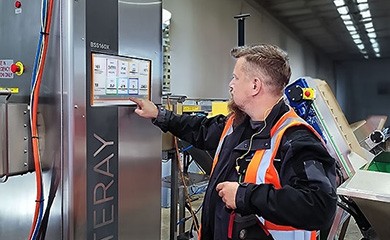
Batteries are no longer waste the environment and avoids getting into landfill
AI-powered X-ray system for battery pack identification and controlled disassembly
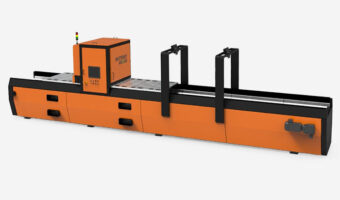
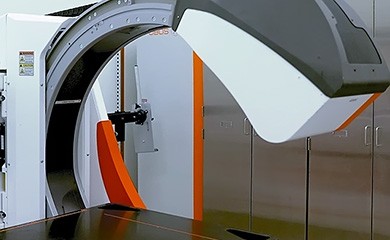
Detects hidden Li-ion and Ni-MH batteries in waste and e-waste streams using AI-powered X-ray and optical sensing, helping recycling facilities reduce battery-related fire risks before critical processing stages.
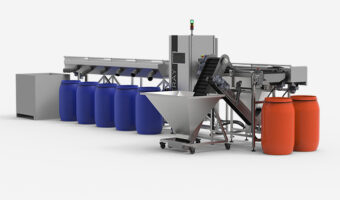
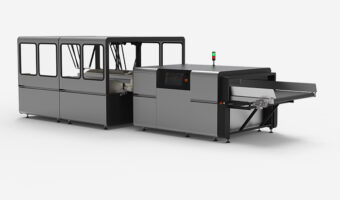
Automatic X-ray battery sorting system for separating used portable batteries into up to 6 chemical groups
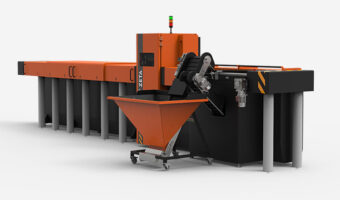
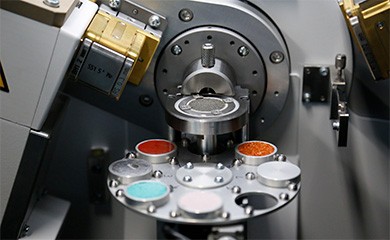
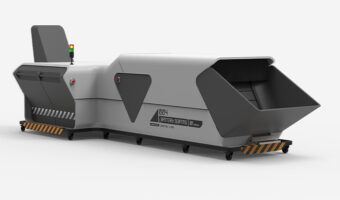
AI-powered multi-sensor X-ray system for high-speed classification and sorting of mixed battery chemistries based on internal structure and material composition
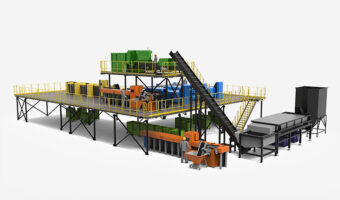
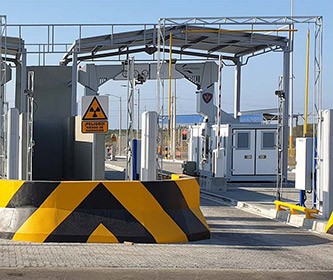
Compact X-ray / AI-supported battery preprocessing plant for routing, sorting and preparing complex mixed battery waste streams for downstream recycling
Proven in operation
Australian recycler Resource Pty Ltd had an optical sorting system that delivered about 95% purity, while its fertilizer production from alkaline and zinc-carbon batteries required at least 99.5%. After two years of development and calibration, X-ray sorting met that specification, with only about 5% to 6% of batteries passing through unsorted, according to the company’s founder.
Italian recycler SEVal replaced manual sorting and reported lower selection costs from the first months. LINEV Systems battery sorting equipment is installed in Australia, the European Union, Scandinavia, the United States, and Canada.
Benefits of X-ray battery sorting with LINEV Systems
For recyclers, automated X-ray sorting means fractions that sell at full value, fewer sorting cycles, and lower exposure for staff. LINEV Systems backs these results with more than a decade of X-ray imaging development and a patented battery sorting technology, manufactured under an ISO 9001:2015 quality management system and CE marked. US customers are supplied and supported by LINEV Systems US in Conroe, Texas. Remote telemetry lets engineers monitor system condition, plan preventive maintenance, and resolve many issues without a site visit, and the recognition database is retrained as new battery types appear.
To discuss your battery stream, purity targets, and site conditions, contact the LINEV Systems team for a configuration assessment.
Sources
- Recycling Today. “BCI study claims lead batteries are most recycled consumer product in US”.
- National Renewable Energy Laboratory. “Metallic contamination in black mass for direct recycling”.
- U.S. Patent and Trademark Office. “Method for recycling lithium batteries” (U.S. Patent No. 5,523,516).
- U.S. Environmental Protection Agency. “An analysis of lithium-ion battery fires in waste management and recycling” (EPA 530-R-21-002).
- Resource Recycling. “Report pegs fire losses at $2.5B in US and Canada recycling industry”.
- Call2Recycle. “2024 corporate annual report”.
- U.S. Department of Energy, Office of Energy Efficiency and Renewable Energy. “$62 million to lower battery recycling costs across the nation”.
- U.S. Environmental Protection Agency. “RCRA, Superfund & EPCRA call center monthly report” (EPA530-R-02-005i).
- Legal Information Institute, Cornell Law School. “40 CFR § 273.11 – Prohibitions”.
- Pipeline and Hazardous Materials Safety Administration. “Safety advisory notice for the disposal and recycling of lithium batteries in commercial transportation”.