









Schools and Universities
AI-powered X-ray security screening for schools, universities and educational campuses

Schools, universities and educational campuses have a responsibility to provide a safe environment for students, teachers, employees and visitors. Managing access to educational facilities requires security procedures that address potential threats while allowing daily activities, classes and campus operations to continue efficiently.
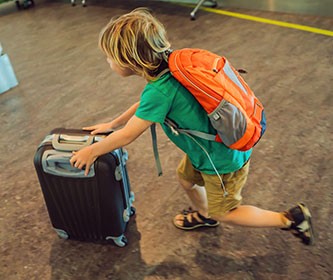
School entrances present particular challenges because large numbers of students may arrive within a relatively short period. Bags, backpacks, laptops and other personal belongings must be considered within the school’s security procedures, especially where designated screening checkpoints have been established.
LINEV Systems provides X-ray security screening systems designed to inspect bags, backpacks and personal belongings at educational facilities. Our portfolio includes conventional baggage scanners and AI-powered screening technologies that can help security personnel identify potentially prohibited items and support more consistent entrance screening procedures.
Backpacks and personal bags can contain numerous items packed closely together, making it difficult to identify prohibited objects through visual checks alone. Manual searches may also slow entry procedures, particularly at schools and universities with high student populations.
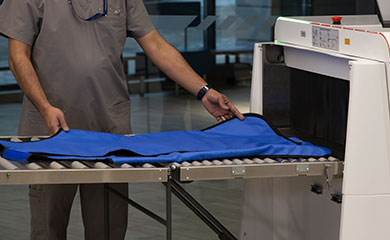
X-ray baggage scanners allow trained personnel to examine the contents of bags without routinely unpacking them. Depending on the selected configuration, systems can inspect school bags, backpacks, handbags, laptop bags and other personal belongings as part of a designated security checkpoint.
LINEV Systems offers scanners in different tunnel sizes and imaging configurations to accommodate varying operational requirements. Compact systems may suit smaller entrances, while high-throughput configurations can support busy school entrances, university buildings and larger campus facilities.
The appropriate system depends on the expected screening volume, the dimensions of the items being inspected, the available installation space and the school’s security procedures.
Security operators must review X-ray images consistently while keeping screening queues moving. AI-assisted threat detection can help identify selected prohibited objects in baggage images and direct attention towards items that require further examination.
Depending on the selected system and software configuration, automated analysis can support the detection of weapons, knives, ammunition and other specified threat indicators. By highlighting suspicious items, AI-powered screening can help operators prioritise bags requiring additional review rather than treating every image in the same way.
LINEV Systems’ LV STREAM high-throughput X-ray screening system combines dual-view baggage imaging with A-EYE™-powered primary screening. It is designed for high-traffic environments, including schools and other locations where maintaining the flow of bags through a checkpoint is important.
Automated detection supports the screening process but does not replace the need for appropriate security procedures, staff training and a defined response to alerts.
School security measures must account for both safety and the practical realities of daily entry. Long queues can create operational difficulties during morning arrival periods, between scheduled activities and at large campus events.
The screening configuration should therefore reflect the number of people entering the facility, the time available for screening, the layout of the entrance and the expected volume of bags. High-throughput systems can help educational institutions manage peak entry demand, while suitable checkpoint planning helps ensure that screening equipment is integrated into the wider access procedure.
Depending on the school’s requirements, screening can be organised at main entrances, selected building access points, event entrances or other designated locations. The decision to screen bags and the procedures used should follow the institution’s security policy and applicable requirements.
Educational institutions vary significantly in size and layout. A primary or secondary school may have a limited number of entrances, while a university campus can include multiple buildings, lecture halls, libraries, laboratories, sports facilities and public event spaces.
For this reason, school security screening should be planned around the specific facility rather than based on a single standard configuration. Relevant factors include student and visitor volumes, the types of belongings carried into the building, the available space and the operational resources assigned to security.
For larger educational facilities, STREAMSYNC-M integrated people and baggage screening combines compatible people-screening technology with LV STREAM baggage inspection in a coordinated checkpoint workflow. This option can be considered where a school or university requires a more integrated approach to screening people and their belongings.
Selecting an X-ray security scanner begins with understanding the institution’s security objectives and daily operating conditions. The system should accommodate the items being inspected and the anticipated screening volume without creating unnecessary complications at the entrance.
LINEV Systems provides X-ray baggage screening technologies for educational institutions seeking to strengthen security at designated entrances. From conventional baggage inspection systems to AI-powered high-throughput screening, our portfolio supports different school and university requirements.
Our team can help educational institutions evaluate their screening needs, compare suitable system configurations and identify equipment that fits their facility layout and operational procedures.
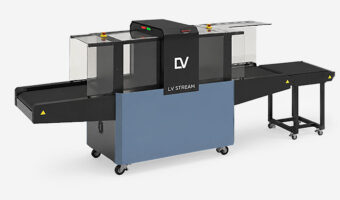
A-EYE–powered dual-view X-ray bag screening for fast, seamless flow at high-traffic venues and schools.
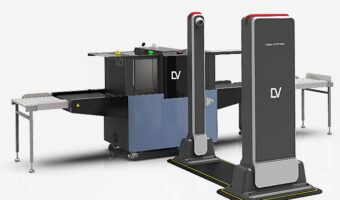
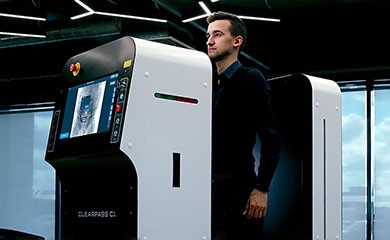
A-EYE–powered checkpoint combining people screening and LV STREAM baggage screening in one coordinated flow.
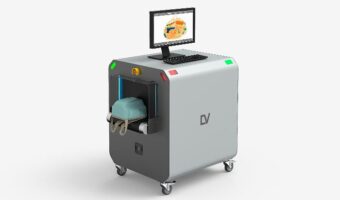
Small parcels and baggage inspection · AI-powered threat detection · Remote monitoring
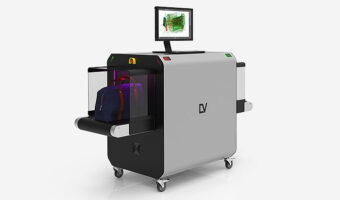
Small baggage inspection · AI-powered threat detection · Remote monitoring


