

















Product description
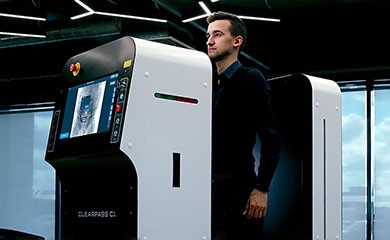
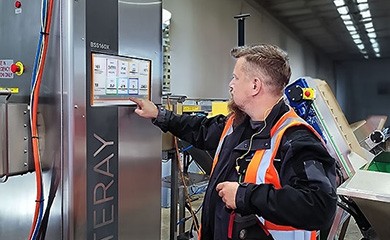
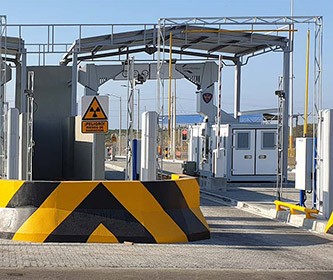
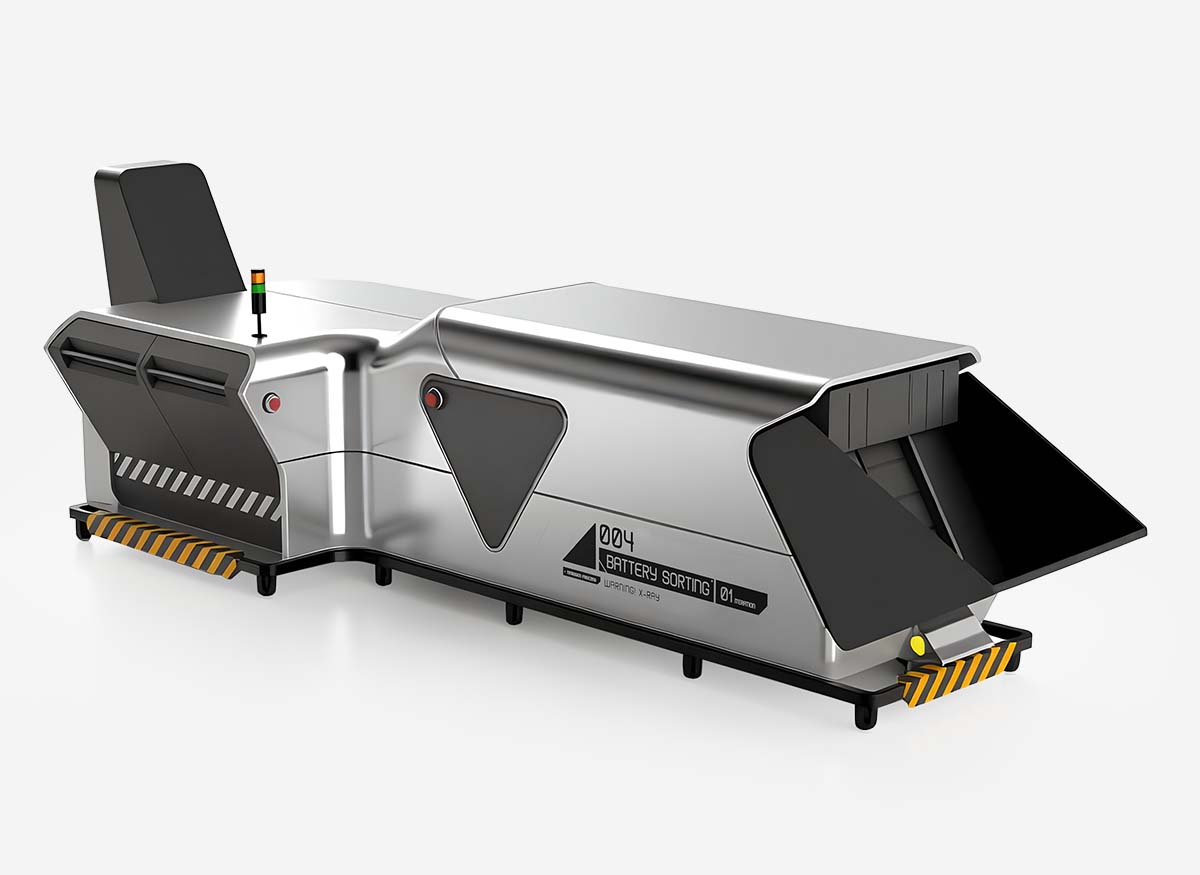
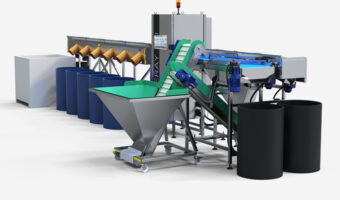
BATTERAY™ PAC is an AI-powered X-ray system designed to identify the internal structure of battery packs and prepare them for controlled opening prior to recycling. Using industrial X-ray imaging and the proprietary SmartCut™ AI technology, the system analyzes each pack before any mechanical processing begins.
The system transforms one of the most difficult stages of battery recycling — opening non-standardized battery packs — into a predictable and controlled process that prepares material streams for downstream sorting and recovery.
Battery packs used in power tools and other devices vary significantly in design. Cell layouts, busbars, welds, adhesives, and electronic components differ from manufacturer to manufacturer, making manual dismantling slow, risky, and difficult to standardize.
BATTERAY™ PAC addresses this challenge by combining X-ray imaging, SmartCut™ AI analysis, and cryogenic processing into a single automated workflow. The system scans each pack to reveal its internal layout and uses this information to safely prepare it for controlled mechanical separation.
After identification, battery packs pass through a cryogenic conditioning stage where liquid nitrogen rapidly cools structural materials. This process makes the pack brittle and reduces the risk of thermal or electrical hazards during the opening stage.
The conditioned packs are then released into a controlled mechanical breakup stage and further processed in a drum crusher. The pack structure separates into individual components such as cells, casing parts, wiring, and electronic boards.
As the system processes more battery packs, the SmartCut™ AI continuously expands its internal library of pack architectures. This enables faster identification, improves safety, and increases the efficiency of the preprocessing workflow over time.
Operational concept
Stage 1 — X-ray inspection.
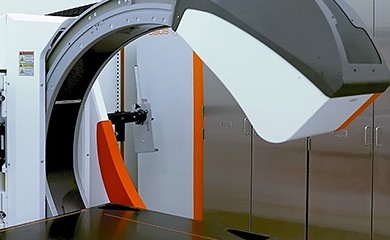
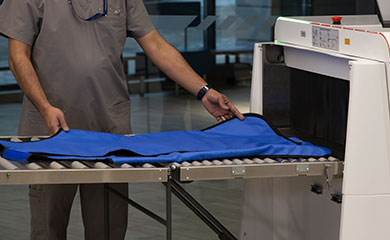
Battery packs move along the conveyor and are scanned using an industrial X-ray system that reveals the internal structure of cells, electronics, and structural elements.
Stage 2 — SmartCut™ AI analysis.
SmartCut™ analyzes the X-ray image and identifies the architecture of the battery pack. Based on this information, the system determines the optimal preprocessing strategy.
Stage 3 — Cryogenic conditioning.
The packs pass through a liquid nitrogen chamber where materials become brittle, enabling safer mechanical fragmentation.
Stage 4 — Controlled mechanical separation.
The cooled packs break apart during controlled impact and are further processed in a drum crusher, producing a stream of components ready for downstream sorting.
- SmartCut™ AI improves safety by analyzing pack architecture before processing
- Cryogenic treatment enables controlled opening of complex battery packs
- Designed to integrate with downstream sorting systems such as BATTERAY ZETA™
Read less
Read more
System highlights
- SmartCut™ AI identification of battery pack internal structure
- Industrial X-ray imaging for non-destructive internal inspection
- Cryogenic conditioning using liquid nitrogen
- Controlled mechanical opening and fragmentation of battery packs
- Designed for non-standardized battery packs from power tools and devices
- Preparation of material streams for downstream recycling and sorting
Key features

Handles Complex Pack Designs
Designed to process non-standardized battery packs with different internal architectures, including varying cell layouts, busbars, adhesives, and electronic components.

AI-Powered Pack Identification
Machine learning algorithms analyze X-ray images to identify battery pack architecture and determine the optimal preprocessing strategy.

Industrial X-ray Inspection
High-resolution X-ray imaging reveals the internal structure of battery packs before mechanical processing begins.

Cryogenic Conditioning
Liquid nitrogen rapidly cools battery packs, making structural materials brittle and enabling safer mechanical separation.

Controlled Mechanical Breakup
Conditioned battery packs are fragmented in a controlled mechanical stage and further separated in a drum crusher.

Sorting-Ready Output
Produces a stream of components ready for downstream recycling systems such as BATTERAY ZETA™.
Technical data
X-ray source
| X-ray emission | Complies with the standard: 1 μSv/h at any point at a distance of 10 cm from the device. Typical value of our system less than 0.3 μSv |
| X-ray protection | Full operator protection |
| Inspection method | Industrial X-ray imaging |
| Analysis | AI-based battery pack identification |
Processing
| Input material | Battery packs from power tools and similar devices |
| Identification method | X-ray imaging with AI-based structural analysis |
| Cryogenic stage | Liquid nitrogen conditioning |
| Mechanical separation | Controlled impact and drum fragmentation |
| Output stream | Separated battery pack components |
| Typical fractions | Cells, casing parts, wiring, electronic boards |
Dimensions
| System dimensions | ||
|---|---|---|
| Length | Depends on configuration | |
| Width | Depends on configuration | |
| Height | Depends on configuration |
| Layout | Modular system layout |
|---|
| Weight | Depends on configuration |
|---|
Integration
| Process role | Battery pack preprocessing system |
| Downstream compatibility | Integration with battery sorting systems (e.g. BATTERAY ZETA™) |
| Process result | Sorting-ready component stream |
X-ray source
| X-ray emission | Complies with the standard: 1 μSv/h at any point at a distance of 10 cm from the device. Typical value of our system less than 0.3 μSv |
| X-ray protection | Full operator protection |
| Inspection method | Industrial X-ray imaging |
| Analysis | AI-based battery pack identification |
Processing
| Input material | Battery packs from power tools and similar devices |
| Identification method | X-ray imaging with AI-based structural analysis |
| Cryogenic stage | Liquid nitrogen conditioning |
| Mechanical separation | Controlled impact and drum fragmentation |
| Output stream | Separated battery pack components |
| Typical fractions | Cells, casing parts, wiring, electronic boards |
Dimensions
| System dimensions | ||
|---|---|---|
| Length | Depends on configuration | |
| Width | Depends on configuration | |
| Height | Depends on configuration |
| Layout | Modular system layout |
|---|
| Weight | Depends on configuration |
|---|
Integration
| Process role | Battery pack preprocessing system |
| Downstream compatibility | Integration with battery sorting systems (e.g. BATTERAY ZETA™) |
| Process result | Sorting-ready component stream |
The problem of waste batteries gets more and more serious every year. Improper disposal of batteries can lead tо an environmental disaster.
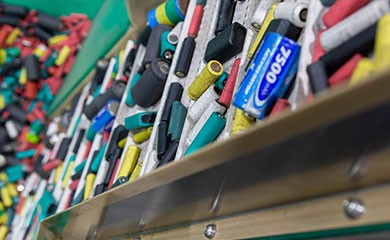
Portable batteries are one of the most hazardous waste. There are a lot of hazardous materials in batteries and they must be properly sorted to meet recycling criteria.
Poor sorting purity can lead to emergency situations at processing plants or to contamination and deterioration of the properties of final fractions.
Since 2017 our team has researched the possibility of using X-ray technology to solve the problem of identifying and sorting various types of used batteries

The fastest way to hear back from us is to fill the contact form below. Our appropriate department will get back to you depending on your inquiry as soon as possible.
Batteries are no longer waste the environment and avoids getting into landfill
AI-powered X-ray system for high-speed, multi-chemistry battery sorting by internal composition
Used batteries can be sorted into 6 different chemical groups