












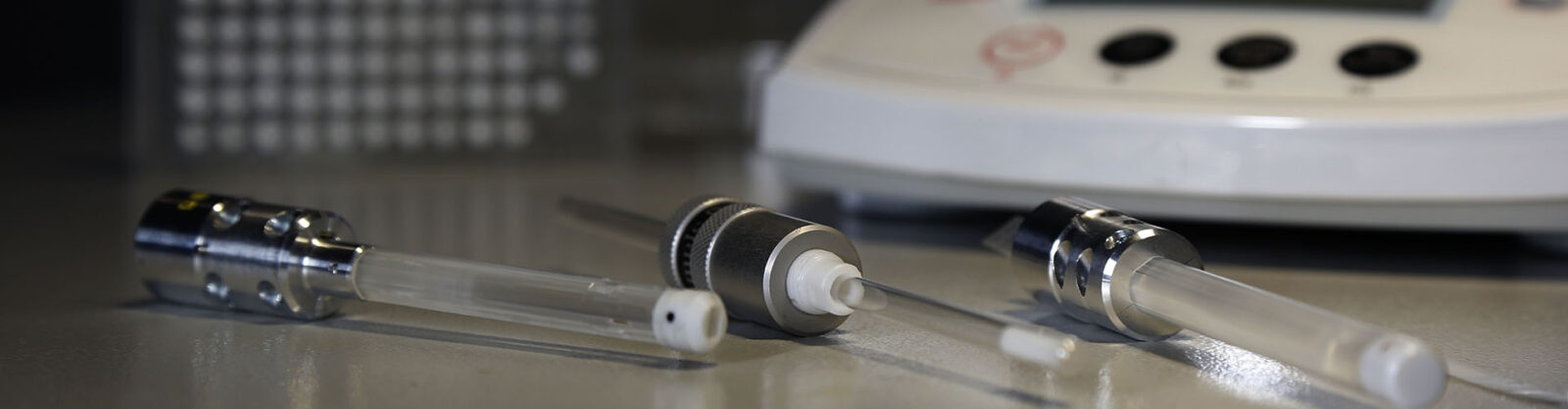
LINEV Systems has established itself as a trailblazer in the field of benchtop science products. With a dedication to innovation, accuracy, and excellence, LINEV Systems is transforming the analytical techniques industry by providing cutting-edge solutions for the training of qualified specialists. LINEV Systems stands out for its commitment to creating cutting-edge benchtop analytical instruments in an environment where science is becoming increasingly demanding and fast-paced.
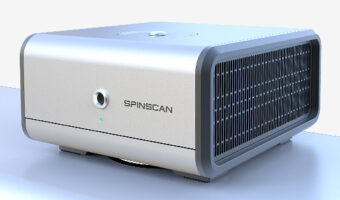


Outstanding performance meets the needs of scientific and industrial laboratories
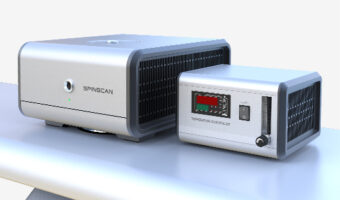
LOT #A2011 | External system to control the temperature in the sample area
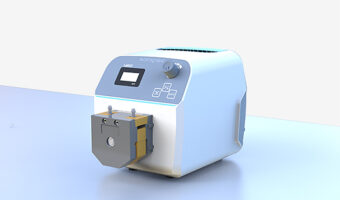
LOT #A2008 | Continuous Flow System
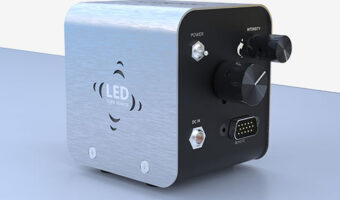
LOT #A2003 | Identification and study of free radicals, ion-radicals and triplet-state molecules generated during photochemical processes
EPR spectroscopy finds various applications within university and college settings, primarily within research and educational contexts across various disciplines. Here are some key areas:
- Study of radical reactions: EPR is invaluable for investigating reaction mechanisms involving free radicals, crucial in fields like polymer chemistry, organic chemistry, and catalysis.
- Characterization of materials: EPR can probe defects, impurities, and paramagnetic centers in materials like semiconductors, ceramics, and polymers, aiding in understanding their properties and functionalities.
- Developing new materials: EPR, a key player in the design and optimization of new materials, excites researchers with its potential for innovation in creating materials with desired magnetic and electronic properties.
- Study of biological systems: EPR is used to investigate the structure and function of biological molecules like proteins and enzymes, especially those containing metal ions or free radicals.
- Understanding of biological processes: EPR helps researchers explore processes like photosynthesis, respiration, and DNA damage, providing insights into cellular mechanisms.
- Development of new drugs and therapies: EPR can be used to study drug interactions with biological targets, aiding in the development of new therapies.
- Study of spin dynamics: EPR is a powerful tool for investigating spin relaxation and coherence phenomena, which are essential in fields like quantum computing and spintronics.
- Development of new sensors: EPR can be used to develop sensors that are susceptible to detecting various molecules and radicals.
- Investigating magnetic materials: EPR helps researchers understand the magnetic properties of different materials, including their response to external magnetic fields.
ESR spectroscopy is a powerful tool for researchers and educators across various disciplines. It enables them to explore the fundamental properties of matter and advance knowledge in a wide range of scientific fields.
The fastest way to hear back from us is to fill the contact form below. Our appropriate department will get back to you depending on your inquiry as soon as possible.
Get EPR (ESR) solutions for University and College
Tabletop Electron Paramagnetic Resonance (EPR) spectrometers designed for University and College settings offer a range of advantages, making them valuable tools for diverse research and analytical applications. Some key benefits of tabletop EPR spectrometers include:
- Portability: tabletop EPR spectrometers for Universities and Colleges are engineered to be compact and portable, enabling easy transportation between different locations or laboratories. This portability is particularly advantageous for fieldwork or on-site measurements.
- Ease of use: tabletop EPR spectrometers are frequently designed with user-friendly interfaces and streamlined operation, making them accessible to researchers and technicians. This can minimize the learning curve and training time needed to operate the instrument effectively.
- Cost-effectiveness: compared to larger, more complex EPR spectrometers, tabletop models typically have lower initial purchase and ongoing maintenance costs. This can make them a more accessible option for research groups or laboratories with budgetary limitations.
- Rapid setup and measurement: tabletop EPR spectrometers for University and College are designed for quick setup and data acquisition, allowing researchers to perform experiments and obtain results efficiently.
- Versatility: These instruments can be used in various applications, including chemical analysis, material characterization, and biochemical studies, providing valuable insights into the properties and behavior of paramagnetic substances.
ESR (Electron Spin Resonance) and EPR (Electron Paramagnetic Resonance) spectroscopy are essentially the same technique, simply known by different names.
The magnetic moments of electrons arise from their spin and/or orbital angular momentum. While both contribute, the spin component overwhelmingly dominates the magnetic moment. Consequently, the scientific community frequently uses “electron spin resonance” to emphasize the primary role of electron spin in the absorption of electromagnetic radiation. The term “electron paramagnetic resonance” was introduced to acknowledge electron spin and orbital momentum contributions. As a result, both terms are commonly used in scientific literature and refer to identical experimental methods.
In nature, an EPR resonance can be obtained using a wide range of combinations of operating frequencies and magnetic fields. But in reality, everything depends on the current needs of the scientific and industrial communities, which are usually fully covered by the capabilities of electron paramagnetic resonance spectrometers operating at a frequency close to 9.5 GHz.
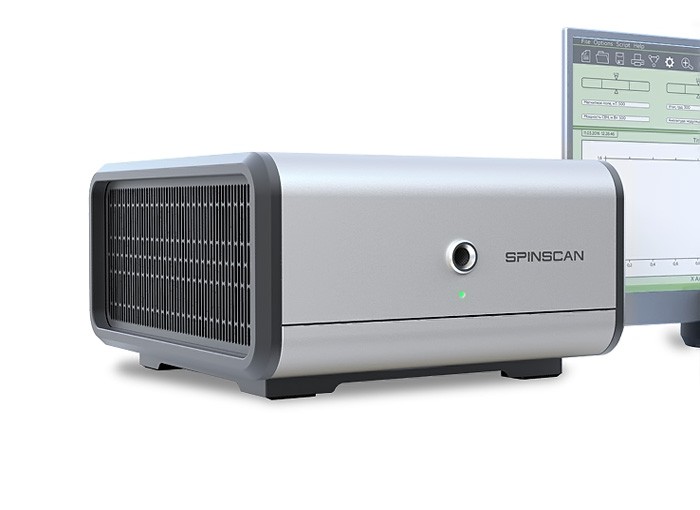
The operating frequency of the EPR spectrometer Spinscan X produced by LINEV Systems is in the X-band, 9.2-9.55 GHz.
The following operating frequencies of EPR spectroscopy are also known: L band (1 GHz), S band (3 GHz), C band (4 GHz), X band (10 GHz), P band (15 GHz), K band (24 GHz), Q band (35 GHz), U band (50 GHz), V band (65 GHz), E band (75 GHz), W band (95 GHz), F band (111 GHz), D band (140 GHz).