














Replacing an X-ray body scanner is rarely a decision driven by equipment age alone. Many systems remain operational for years beyond their expected service life, continuing to produce images and support daily screening activities. The real question is not whether the scanner still works, but whether it continues to meet today’s operational, technical, and economic requirements.
For correctional facilities, border control agencies, and other high-security organizations, the cost of keeping legacy equipment extends beyond maintenance. Older systems often require more frequent servicing, rely on increasingly difficult-to-source components, and may no longer support modern imaging or software capabilities. At the same time, security challenges continue to evolve, placing greater demands on image quality, workflow efficiency, and the ability to detect increasingly sophisticated methods of concealment.
The decision to replace an existing body scanner is therefore best viewed as a long-term operational investment rather than simply the purchase of new equipment. Evaluating the total cost of ownership, expected service life, maintenance requirements, and future technology support provides a far more accurate picture than considering acquisition cost alone.
Repair, Upgrade or Replace?
Replacing a body scanner is not always the only—or the best—solution. In many cases, existing systems can continue to operate effectively through scheduled maintenance, software updates, or replacement of individual components. When equipment remains fully supported by the manufacturer and continues to satisfy operational requirements, modernization may extend its useful life without the need for a complete replacement.
However, every screening system eventually reaches a point where continued investment becomes increasingly difficult to justify. This transition is rarely caused by a single technical failure. Instead, it is usually the result of several factors that gradually affect day-to-day operations.
One of the first signs is the growing cost of maintenance. Individual repairs may appear manageable, yet over time the cumulative expense of replacement parts, engineering visits, and unplanned downtime begins to increase. Older platforms can also become more difficult to support as critical components are discontinued or manufacturing of spare parts is phased out.
Operational requirements often change as well. Facilities that originally screened several hundred people per day may now process significantly higher volumes. Inspection procedures become more demanding, while expectations regarding throughput, reporting, cybersecurity, and software support continue to evolve.
Modern body scanners have also changed considerably over the last decade. Improvements are no longer limited to detector technology or image quality. Artificial intelligence, automated operator assistance, advanced visualization tools, and remote diagnostics have become standard capabilities on many current-generation platforms. Legacy hardware frequently lacks the processing architecture required to support these technologies, making further upgrades technically impractical.
For many companies, replacement becomes the logical next step not because the scanner has stopped functioning, but because continuing to maintain it no longer provides the best operational or financial outcome.
Looking Beyond Maintenance Costs
Maintenance expenses are often the most visible cost associated with an ageing scanner, but they rarely represent the full financial impact.
Each period of unplanned downtime affects checkpoint availability and may require alternative screening procedures. Additional manual inspections increase the workload for operators, while delays in obtaining replacement parts can extend service interruptions from days to weeks. These factors are difficult to capture in a maintenance budget, yet they have a direct effect on operational efficiency.
Image quality also influences productivity in ways that are not immediately obvious. As equipment ages, operators may spend longer reviewing examinations, adjusting image settings, or performing secondary inspections to verify uncertain findings. Even small increases in review time become significant when multiplied across hundreds or thousands of screenings.
Legacy systems may also introduce hidden administrative costs. Unsupported software platforms become more difficult to integrate with modern IT infrastructure, cybersecurity requirements continue to evolve, and reporting capabilities may no longer satisfy current operational or regulatory expectations.
When evaluating replacement options, companies increasingly consider the total cost of ownership rather than maintenance expenditure alone. This broader perspective includes equipment reliability, software support, operational efficiency, spare parts availability, service response times, and the expected lifespan of the replacement system.
Viewed over the lifetime of the equipment, a modern body scanner that minimizes downtime and remains fully supported often represents a more economical investment than repeatedly extending the life of an ageing platform.
Typical Lifecycle of an X-ray Body Scanner
Every X-ray body scanner follows a different service history, but most systems progress through similar operational stages. Understanding this lifecycle helps companies determine whether continued maintenance, modernization, or complete replacement is the most effective long-term strategy.
During the first years of operation, scanners typically require only scheduled preventive maintenance. Image quality remains stable, software is fully supported, and replacement parts are readily available. Operational costs are predictable, allowing security teams to focus on routine inspections rather than equipment reliability.
As the system ages, maintenance gradually becomes more demanding. Individual components may require replacement more frequently, software support becomes more limited, and sourcing spare parts may take longer than before. At this stage, many companies extend the useful life of the scanner through preventive servicing or targeted upgrades.
Eventually, however, operational limitations begin to outweigh technical reliability. The scanner may continue functioning, but older hardware platforms often cannot support modern AI-assisted software, advanced image processing, or new visualization capabilities. At the same time, recurring maintenance, increasing downtime, and ageing components steadily raise the total cost of ownership.
For most companies, this is the point where replacement becomes less about the age of the equipment and more about maintaining operational efficiency, consistent detection performance, and long-term serviceability.
Modern Body Scanners Are Software Platforms, Not Just Imaging Systems
The capabilities of today’s body scanners are no longer defined solely by detector technology or image resolution. Increasingly, overall screening performance depends on intelligent software that assists operators throughout the inspection process.
Rather than replacing human judgement, AI-assisted applications analyze X-ray images in real time, highlight suspicious findings, and provide additional visual evidence to support consistent decision-making. This reduces variability between operators, improves workflow, and helps maintain high detection performance during routine screening.
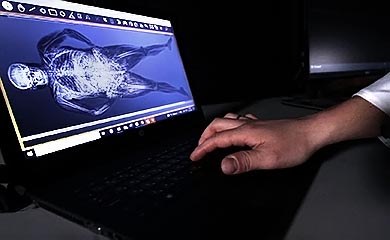
For correctional facilities, one of the most demanding inspection tasks is detecting narcotics concealed inside the human body. A-EYE was developed specifically for this application. Using neural-network algorithms trained on transmission X-ray images and human anatomy, the software automatically analyzes scans, highlights suspicious regions with colour overlays, and provides a probability assessment that assists operators during image interpretation. Supervisors can also compare operator decisions with software analysis, making A-EYE a valuable tool for quality assurance and ongoing training. As the system processes more verified examinations, its machine-learning capabilities help improve sensitivity while reducing false alarm rates.
Different operational environments require different analytical tools. For high-throughput security checkpoints, A-EYE® Threat Detection automatically identifies a broad range of prohibited items carried on or inside the body, including weapons, electronic devices, drugs, and other non-anatomical objects. Potential threats are highlighted directly on the X-ray image using colour-coded markers, allowing operators to focus their attention on areas that require closer examination. By combining artificial intelligence with human oversight, the software supports faster image interpretation, more consistent inspections, and improved checkpoint throughput without changing established screening procedures.
Choosing the Right Replacement Solution
Replacing an X-ray body scanner is not simply about purchasing newer equipment. The right replacement strategy starts with understanding the facility’s security requirements, operational environment, and long-term objectives.
Different companies face different screening challenges. Correctional facilities, border checkpoints, and high-security sites require different combinations of throughput, detection capability, available space, and workflow efficiency. A modern system should therefore be evaluated not only by technical specifications, but by how effectively it supports daily operations.
Matching Scanner Capabilities to Operational Requirements
The most suitable replacement solution depends on the environment where the scanner will operate.
Facilities with limited space may require compact or portable systems, while high-volume screening locations may prioritize faster inspection speeds, automated detection assistance, and continuous operation. Environments focused on concealed contraband detection may require advanced imaging capabilities and specialized software support.
Selecting equipment based only on general performance metrics can lead to either unnecessary investment or insufficient capability. The optimal solution is the one that matches the facility’s actual security needs and operational workflow.
Long-Term Support and Technology Readiness
A body scanner replacement is a long-term investment, making future support an important consideration.
Modern systems should provide more than improved imaging at the time of purchase. Software development, cybersecurity updates, technical support, spare parts availability, and the ability to adopt future technologies all influence the long-term value of the equipment.
By evaluating operational requirements together with technology readiness, companies can select a solution that improves security performance while remaining effective throughout its service life.
Body Screening Solutions Designed for Different Security Environments
No single X-ray body scanner is suitable for every application. Different facilities require different approaches depending on screening volume, available space, detection objectives, and operational procedures.
The following solutions represent modern body screening technologies designed for different security scenarios — from compact systems for flexible deployment to high-throughput platforms for continuous screening operations.
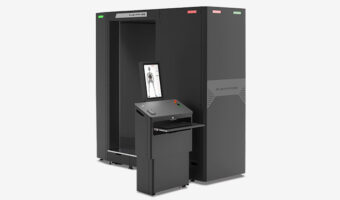
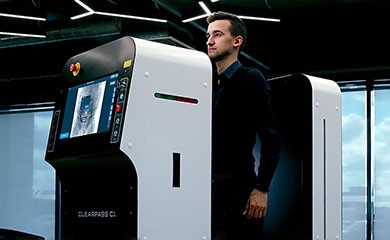
General-use full-body screening technology with extremely low x-ray dose rates to screen a person and which can be used for any applications
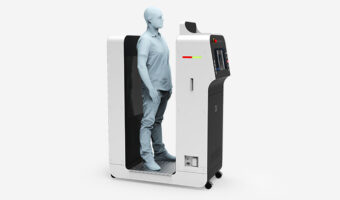
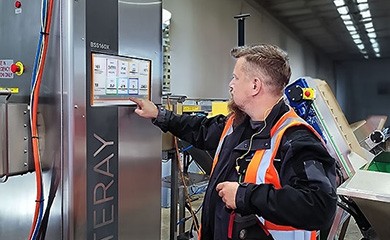
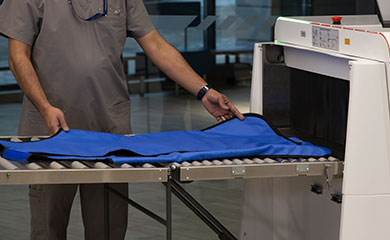
A portable addition to stationary systems, requiring minimal space and ready for immediate use, facilitating fast and on-demand prisoner screening
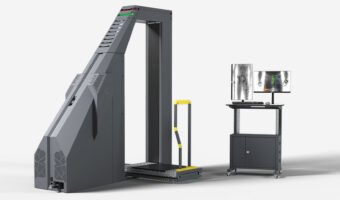
Dual-view screening technology (full-body and torso images) at two x-ray doses is best suited for detecting drugs and contraband, as it allows screening of staff, prisoners, and visitors where required

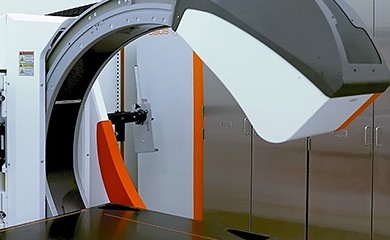
Partial screening technology delivers high-resolution torso images, providing an effective solution for detecting drugs and contraband inside individuals' bodies, whether in a prison setting or other non-prison environments.
Working with LINEV Systems
Replacing an X-ray body scanner is a strategic decision that affects security performance, operational efficiency, and long-term facility planning. Selecting the right technology is only one part of the process — successful implementation also depends on proper system configuration, integration, training, and ongoing support.
LINEV Systems works with security organizations to identify the most suitable screening approach based on their operational requirements, facility conditions, and detection objectives. Rather than applying a one-size-fits-all solution, each project is evaluated according to factors such as screening volume, available space, workflow requirements, and future technology needs.
From initial consultation and equipment selection to installation, operator training, and technical support, LINEV Systems provides full lifecycle assistance to help companies maintain reliable screening operations.
With decades of experience in X-ray security technologies and AI-assisted screening solutions, LINEV Systems supports correctional facilities, border control agencies, and other high-security environments in modernizing their screening capabilities and preparing for future operational challenges.
In many cases, yes. Modern systems are available in different footprints, including ultra-compact and portable configurations. The feasibility depends on available space, shielding requirements, power supply, and operational workflow, all of which should be assessed before selecting a replacement.
Not necessarily. If the existing platform is still supported and the required improvements can be achieved through hardware or software upgrades, modernization may be the more economical option. Replacement becomes more attractive when core hardware has reached the end of its service life or can no longer support current operational requirements.
The decision is rarely based on a single failure. More often, it results from a combination of increasing maintenance costs, recurring downtime, limited spare parts availability, reduced operator efficiency, and the need to meet new security or operational standards.
Beyond technical specifications, companies should evaluate screening objectives, daily throughput, available installation space, expected service life, maintenance strategy, operator workflow, and future scalability. A scanner that fits operational requirements is generally a better investment than one with features that are unlikely to be used.