














Table of contents
- A Multi-Layered Approach to Campus Security
- X-Ray Security Solutions for Schools: How the Screening Process Works
- LV STREAM: The AI-Powered Gateway for High-Traffic Venues
- LV STREAM vs. the BV Line: Choosing the Right Screening Architecture
- Designing the Right Screening Setup for Your Campus
- AI Threat Detection: A-EYE, Smart Zoom, and Telemetry
- What a Security Director Gets Beyond the Hardware
- Building Trust: Communicating Security to Students and Families
- X-Ray Technology for Educational Institutions Beyond Schools
X-Ray Security Scanners for Schools
FOCUS: Detecting firearms, disassembled weapons, and prohibited items like vapes in student bags without disrupting daily entry flow
APPLICATION: Bags and backpacks screening at school entrances
SOLUTION: X-ray baggage scanners with AI
A school X-ray screening system inspects the contents of bags and backpacks at building entrances, using X-ray imaging and AI-based detection to flag weapons and other prohibited items before they reach a classroom — without a manual search.
The modern educational landscape has been fundamentally altered by an escalating crisis of violence. U.S. schools recorded 233 shooting incidents in 2025 — the lowest annual total since 2020, though still down only from an all-time high of 352 incidents in 2023.1 This count includes any instance of a firearm being discharged, brandished with intent, or a bullet striking school property, regardless of the number of victims, time of day, or motive — a broad definition that captures the full scope of firearm presence on campus, not only mass-casualty events. The nation has struggled with the fallout from such incidents ever since the 1999 Columbine High School shooting. Firearms remain the leading cause of death among children and adolescents in the United States, and student exposure to school shootings has risen sharply over the past two decades. These figures demonstrate how urgent it is to take action to prevent catastrophes of this nature.
The disturbing trend is not isolated to any single region. It has sparked a global conversation — from the UK to the EU — about the vulnerability of “soft targets” like campuses and universities.
For security directors and district administrators tasked with responding, the challenge isn’t whether to act — it’s choosing the right screening technology, deploying it without disrupting daily school life, and getting a team trained to run it well. This guide walks through how X-ray security machines works, where LINEV Systems’ LV STREAM and BV product lines fit, the AI software behind detection accuracy, and what to expect beyond the hardware itself.
The danger of weapons on campus goes beyond the physical threat itself. The mere presence of firearms, knives, or prohibited items such as vapes and incendiary devices creates an environment of fear that stifles academic growth. For parents, administrators, and students, the mission is no longer just academic excellence — it is ensuring that every person who enters a school building returns home safely at the end of the day. Educational institutions must strike a balance between maintaining a welcoming atmosphere and putting in place security measures strong enough to prevent and respond to real threats.
A Multi-Layered Approach to Campus Security
To combat evolving threats, schools are adopting layered security architecture. No single tool is a silver bullet — a combination of technologies creates a robust safety net:
- Surveillance systems. High-definition cameras with motion analytics provide real-time situational awareness and forensic evidence.
- Access control. Secure fencing, electronic locks, and visitor management systems ensure that only authorized individuals enter the premises.
- Trained security personnel. School resource officers and security staff provide a visible deterrent and a rapid first response to potential threats.
- Metal detectors (WTMD). Traditional walk-through detectors are effective for identifying large metal objects, but they struggle with high-traffic surges and cannot distinguish a weapon from harmless personal items — which leads to frequent, disruptive manual searches.
- X-ray baggage and backpacks scanners. X-ray scanners close the gap left by metal detectors, screening the full contents of bags and backpacks rather than only what a person is carrying on their body.
- Use artificial intelligence to detect threats automatically, rather than relying solely on an operator’s eye.
- Reduce staffing needs by cutting down on manual bag inspections.
- Speed up the screening process, particularly during high-traffic windows like school entrances or event doors.
- Ultra-high throughput. LV STREAM processes 1,300+ bags per hour, keeping entry flows uninterrupted even during peak arrival times, assemblies, or events.
- Golden Standard dual-view imaging. LV STREAM is built on dual-view X-ray imaging — the same proven standard used by global airports and government agencies. Capturing two perpendicular images of each bag makes it far harder for a threat to go unnoticed due to angle or concealment.
- A-EYE™-powered detection. The system analyzes raw X-ray data internally, far beyond what a human eye can interpret, using detection models trained on real-world threat objects — delivering faster, more accurate results with fewer false positives.
- Auto-start scanning. Scanning begins the instant a bag enters the tunnel, with no manual triggering required.
- Operator-free analysis. No one needs to sit and review X-ray images — A-EYE™ handles detection and flags only genuine threats in real time, removing the fatigue-and-training variable entirely.
- Fast, portable installation. LV STREAM fits into existing checkpoint layouts, integrates with pedestrian screening and magnetometers, and can be moved or reconfigured as a campus’s needs change — from a school lobby to a stadium entrance.
LV STREAM also serves sectors beyond education — including prisons, border checkpoints, industrial sites, retail, government facilities, police, transport hubs, and large events — built on the same detection core across every environment.
LV STREAM vs. the BV Line: Choosing the Right Screening Architecture
Our company’s screening portfolio splits into two distinct product lines, and the right starting point depends on the checkpoint you’re solving for rather than any single model’s spec sheet.
LV STREAM is the AI-first gateway line: a single, purpose-built configuration engineered around automation rather than tunnel size. It’s the right call when the priority is removing the operator from the detection loop entirely and moving the highest possible volume of backpacks and handbags through one checkpoint with zero image review.
The BV line is LINEV’s traditional tunnel scanner range — eight tunnel sizes from 500×300 mm up to 1600×1800 mm, single- or dual-view, covering everything from small parcels to oversized cargo. It’s the right call when a venue needs a specific tunnel footprint for specific item types (band equipment, check-in luggage, freight), or when a lower-traffic secondary entrance doesn’t justify a full automated gateway.
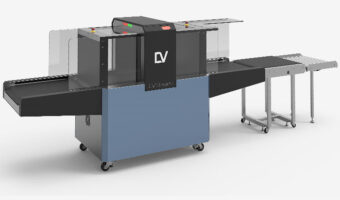 LV STREAM · Peak-flow screening solution
A-EYE–powered dual-view X-ray bag screening for fast, seamless flow at high-traffic venues and schools.
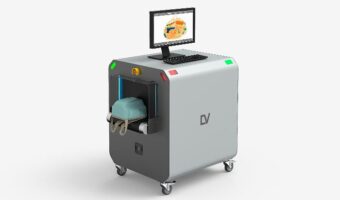 BV 5030 · Single view 500 by 300 mm tunnel solution
Small parcels and baggage inspection · AI-powered threat detection · Remote monitoring
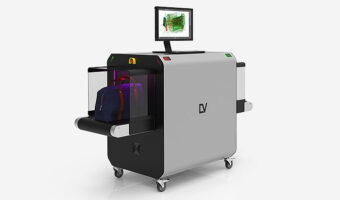 BV 6045 · Single view 600 by 450 mm tunnel solution
Small baggage inspection · AI-powered threat detection · Remote monitoring
Feature LV STREAM BV LineCore Security approach Fully automated gateway — A-EYE™ handles detection, no image review required Tunnel scanner with A-EYE-assisted detection; can run with or without a dedicated image analyst Throughput 1,400+ bags per hour Varies by tunnel and configuration; typically built around steady, sustained flow rather than peak-surge volume Tunnel options One gateway configuration, optimized for backpacks and handbags Eight tunnel sizes, single- or dual-view, matched to item type and venue Best fit High-traffic single-entry checkpoints — school lobbies, stadium gates, transit hubs Venues needing a specific footprint: parcel rooms, check-in counters, freight and cargo inspection Deployment Fast, portable, minimal footprint changes; deployable in a matter of minutes Standard fixed installation sized to the checkpoint Both lines share the same detection core — A-EYE™ threat detection and Smart Zoom imaging — so a school running LV STREAM at the main entrance and a BV tunnel at a secondary loading or delivery point isn’t managing two different technology stacks, just two form factors of the same system.
Designing the Right Screening Setup for Your Campus
No two campuses are alike, and configuration should start with an honest read of your space, your traffic, and what people are actually carrying. A single-building elementary school with one public entrance has different needs than a multi-building secondary campus with separate lanes for students, staff, and visitors.
Tunnel size is the first decision point. Smaller tunnels work well where most items are backpacks and handbags; larger tunnels are needed where band equipment, sports gear, or bulkier items are common, to avoid delays as students rearrange bags to fit. Where lobby or vestibule space is limited rather than purpose-built, small details make the difference between a checkpoint that feels like a security bottleneck and one that feels like a normal part of the morning:
- Placing the scanner against a wall to preserve open sightlines.
- Using a remote operator station a short distance away to reduce crowding at the belt itself.
- Selecting a casing color and finish that matches the school’s existing visual identity.
Integration matters just as much as hardware. Tying baggage scanners into existing access control, visitor management, and video surveillance systems creates a single, coherent security posture rather than a patchwork of disconnected tools — and when an incident does occur, recorded images and logs from the scanner support the investigation and help refine policy going forward.
Intelligent Threat Detection: A-EYE, Smart Zoom, and Telemetry
A-EYE: Automated Threat Detection Built for Real Venues
BV THREAT DETECTION, powered by our proprietary A-EYE software, is an AI system built to automatically identify firearms, firearm components, ammunition, grenades, knives, and brass knuckles as part of the baggage inspection process. The detection algorithm is embedded directly into our baggage inspection systems and was trained on real threat objects expected at venues such as theme parks, concerts, sporting events, and schools.
A-EYE is built to handle the reality of a packed bag — diverse visual backgrounds, densely packed items, and different bag types — rather than a clean, staged test image. When a threat is identified, it is visually highlighted on screen with a colored box and category label, and the system can automatically stop the conveyor. This raises detection consistency regardless of an individual operator’s experience level.
For schools specifically, A-EYE includes vape detection — identifying e-cigarettes and vaping devices concealed in bags or personal belongings. This directly addresses a growing disciplinary and health concern on campuses: automated detection reduces the burden on staff to catch these items manually and supports a proactive, consistent approach to enforcing campus vaping policy.
Smart Zoom: Clarity Where It Matters
Accurate identification depends on image clarity, especially in bags packed with dense or overlapping items. LINEV’s Smart Zoom (SZ) Technology, standard across our baggage scanners, is an intelligent magnification tool that enhances X-ray image resolution in real time. Using machine learning models to restore high-frequency detail typically lost in standard imaging, Smart Zoom can magnify an image up to 96 times its original size — revealing detail that would otherwise go unnoticed.
Smart Zoom’s effectiveness depends on the quality of the original image, the complexity of the textures being restored, and the training data behind the algorithm. It’s worth being direct about its limits: Smart Zoom enhances and restores detail already present in the image — it does not invent information that wasn’t captured in the original scan.
X-LINEView: Keeping the System Itself Under Control
Detection technology is only as reliable as the system running it. X-LINEView is telemetry and preventive maintenance solution, giving operators remote visibility into how their scanners are performing. Key capabilities include:
- AI-based data analysis to identify usage patterns and inform operational decisions.
- Over 100 monitorable parameters for fine-tuning system performance.
- Smart failure notifications, so issues are caught and resolved before they disrupt screening.
- Operator activity monitoring to support training and consistency.
- Online and offline access, so personnel can manage hardware even without a constant connection.
- A device digital twin, letting operators simulate configuration changes before applying them to the live system.
For a school or district running multiple checkpoints across a campus or across sites, this level of remote oversight turns X-ray screening from a set of standalone machines into a managed security infrastructure.
What a Security Director Gets Beyond the Hardware
For the person signing off on a screening system, the equipment itself is only part of the decision. What determines whether a deployment actually works day to day is what comes with it:
- Staff training and certification. LINEV provides onboarding for security staff and administrators on operating the system, interpreting A-EYE alerts, and handling day-to-day maintenance — so a school isn’t left to figure out the equipment on its own after installation.
- Integration support. Our team works directly with a school’s existing security stack — access control, visitor management, video surveillance — during deployment, rather than leaving integration to be solved after the fact.
- Ongoing remote support via X-LINEView. Telemetry-based monitoring can catch and resolve hardware issues before they turn into downtime at the entrance, without needing an on-site technician for every fault.
- A scalable procurement path. Because LV STREAM and the BV line share the same detection core, a district can standardize on one vendor and one AI platform across every building and checkpoint type, rather than re-evaluating vendors each time a new site or budget cycle comes up.
- Manufacturing and quality standards. Our X-ray bags scanners are manufactured in the EU, ISO 9001 certified, and CE marked — the same quality and compliance benchmarks expected in government and critical-infrastructure procurement.
These factors are usually what separates a screening system that gets used correctly from one that ends up bypassed or under-monitored within the first year.
Building Trust: Communicating Security to Students and Families
Technology alone doesn’t create a safer school — but it gives leadership a solid foundation to build on. Students and families generally accept X-ray screening and AI detection when it’s introduced thoughtfully and explained clearly: what the system looks for, what staff is (and isn’t) reviewing, and why the checkpoint exists in the first place.
Involving student councils, parent groups, and safety committees in the rollout surfaces practical concerns early and tends to turn early skeptics into advocates. Clear signage, a friendly staff presence at the checkpoint, and visible support from school leadership all reinforce the same message: the goal is safety, not suspicion.
X-Ray Technology for Educational Institutions Beyond Schools
In addition to schools, X-ray technology for educational institutions extends naturally to colleges and universities, community centers, and libraries — venues that deal with the same core challenges of managing large crowds while preventing unauthorized entry of prohibited items. These environments can maintain an open, welcoming atmosphere while still strengthening their overall security posture.
The same underlying technology extends further still. Government agencies, transportation hubs, sports stadiums, and critical infrastructure operators use LINEV Systems’ screening solutions to strengthen border security, inspect cargo and vehicles at ports of entry, and protect high-value assets from smuggling and attack. Security requirements differ by venue type, and screening technology should be reviewed periodically against emerging threats — a principle equally true for a small campus checkpoint and a border crossing.
X-ray security solutions for Schools in USA and Worldwide
Explore how LINEV Systems’ AI-powered screening extends beyond a single checkpoint — from the full vision behind our school security approach to broader deployments across hotels, public buildings, and large-scale events.
A Layered, Ongoing Commitment to Safety
X-ray detection is an essential part of a modern security plan, but it works best paired with strong emergency preparedness and mental health support rather than as a stand-alone fix. Countermeasures have to evolve alongside the threats they’re built to catch, and educational institutions need to stay watchful and adaptable rather than treating any single technology purchase as a finished project.
By combining AI-powered screening like LV STREAM and A-EYE with the right entrance design, integration, and community communication, schools, universities, and public venues can make it clear that safety is a genuine priority — giving students, staff, and visitors real grounds for confidence, not just the appearance of security.
FAQ about X-ray scanners for Educational Institutions
Ongoing cost depends more on staffing and maintenance than on the hardware price itself. Because A-EYE-powered systems like LV STREAM don’t require a dedicated image analyst, the largest recurring cost in a traditional checkpoint — a trained operator watching screens — is significantly reduced. Remaining costs are largely maintenance and support, which telemetry tools like X-LINEView help keep predictable by catching issues before they cause downtime.
Yes. School X-ray screening systems scan bags and belongings, not people — students walk past the checkpoint rather than through an X-ray beam. The scanner itself is fully enclosed, and radiation exposure is limited to the interior of the tunnel where bags travel, with no direct exposure to anyone standing nearby.
Yes. LV STREAM is designed to work alongside pedestrian screening equipment like walk-through metal detectors and magnetometers rather than replace them outright, so a school can add automated bag screening to an entrance that already has a metal detector in place.
No. Unlike airport-style checkpoints, school X-ray screening is built around keeping bags closed and moving — laptops, water bottles, and personal items stay inside the bag as it passes through the tunnel, which is part of what keeps entry lines moving at a normal pace.
The system highlights the flagged item on screen with a colored box and threat category, and can automatically stop the conveyor so the bag doesn’t proceed further. From there, a trained staff member follows the school’s own response protocol — typically pulling the bag aside for a manual check before it’s returned to the flow, rather than the system taking any action beyond flagging and stopping the belt.
Source
1. Incident count and definition per the K-12 School Shooting Database, as reported in: K-12 Dive, “School shootings dropped in 2025. Here’s what to know for 2026“, January 12, 2026.
X-Ray Security Solutions for Schools: How the Screening Process Works
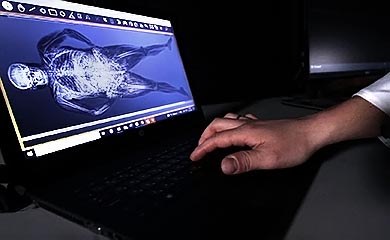
X-ray security scanners generate images of the interior contents of bags and personal belongings, revealing what is inside without a physical search. The technology relies on the principle of differential absorption: different materials absorb X-rays at different rates, producing distinct contrasts in the resulting image. This lets an operator — or an AI system — distinguish between metals, dense organic substances, and synthetic compounds, which is essential for catching threats such as firearm components, batteries, or wiring that a metal detector alone would miss.
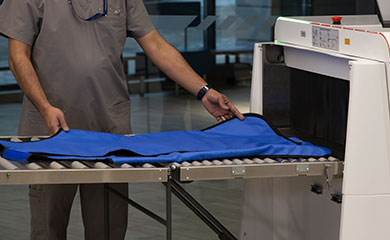
Airports and government buildings are no longer the only places using this technology. Scanners for schools now serve the same proactive function: identifying a dangerous item before it ever reaches a classroom or event floor. Modern X-ray baggage scanners:
Beyond detection accuracy, the visible presence of X-ray scanners has a deterrent effect: people are less likely to attempt to carry in prohibited items when they know a screening checkpoint is in place. That said, privacy considerations matter. Clear, honest communication with staff, parents, and students about how the technology is used — and what it is and isn’t looking for — is what builds acceptance and trust in the system.
LV STREAM: The AI-Powered Gateway for High-Traffic Venues
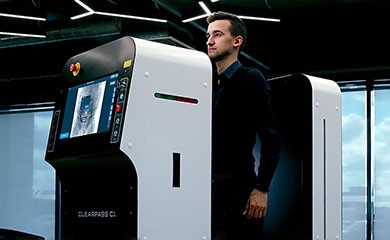
At LINEV Systems, we recognize that a school is not a prison or an airport. Security has to be effective yet stay largely invisible to the day-to-day student experience. LV STREAM is a next-generation X-ray security gateway, and more than a high-speed baggage scanner — it’s a fully automated checkpoint solution built for today’s high-traffic, high-risk environments, powered by our proprietary A-EYE™ intelligence software.
Growing crowds, evolving threats, and the need for faster, less invasive screening put mounting pressure on any checkpoint. Long entry lines and manual inspections put both safety and the visitor experience at risk, and even well-staffed locations struggle to keep up when accuracy depends on an operator’s eyes, training, and fatigue level on any given day. LV STREAM removes that dependency: it shifts security teams from reactive, manual scanning to automatic, software-driven threat identification — detecting weapons, disassembled firearms, flares, vapes, and explosives without an operator reviewing every image.
What sets LV STREAM apart:


