


















Why Hockey Arena Security Must Evolve Today
Hockey games are high-energy, high-attendance events. Whether it’s a professional league match, a college championship, or a regional tournament, arenas bring together thousands of spectators, athletes, staff, and families.
Packed entrances. Emotional crowds. Equipment bags. Backpacks. Open public access. These are exactly the conditions that demand serious hockey arena security and modern sports event security systems.
Fans come to enjoy the game. Arena operators focus on logistics. Event organizers manage crowd flow. But behind every successful event stands something even more important — effective arena entrance security. The reality is clear: large sporting events require advanced, reliable, and scalable protection solutions.
The Real Challenge of Security at Hockey Matches.Ensuring safety at hockey arenas is not as simple as adding more guards or installing basic checkpoints. Modern threats require smarter solutions.Metal Detectors Alone Cannot Stop Modern Threats
Metal detectors can identify metallic objects, but they don’t provide complete protection in a modern arena environment. A firearm can be disassembled and concealed inside a sports bag. Components can be hidden among personal belongings. During peak entry periods, handheld metal detectors operated by security personnel can be distracted, misled, or overwhelmed.
In high-density entry scenarios, relying solely on metal detection creates blind spots. When large crowds move quickly, even small oversights can escalate into serious incidents. For true hockey arena threat detection, detecting exposed metal is simply not enough.
Increasing Security Personnel Is Expensive and Inefficient. Hiring additional security staff increases operational costs dramatically. It also slows down entry and can create congestion at access points. At peak arrival times before puck drop, poor crowd management at hockey arenas can itself become a safety concern.Security must be strong, but it must also be efficient and sustainable.
Conventional X-Ray Systems Depend Entirely on Human Attention
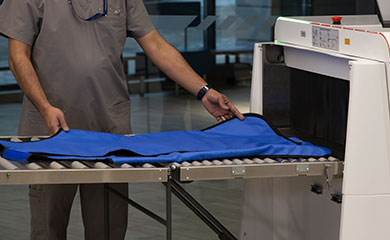
Standard X-ray baggage scanners require operators to continuously analyze images in real time. During high-volume entry periods before a hockey game, fatigue, distraction, or cognitive overload can reduce detection accuracy. Operators may need to review hundreds of bags within a short window.
In fast-moving environments like professional or semi-professional hockey events, relying solely on manual interpretation increases operational risk. Even a momentary lapse can allow a concealed weapon or prohibited item to pass through screening. Modern sports venue security systems must go beyond human-dependent monitoring.
A Smarter Standard for Hockey Arena Security Today’s security systems for hockey arenas must deliver high throughput, automated threat detection, reduced operator dependency, accurate baggage screening, and seamless integration at arena entrances. This is where intelligent AI-powered X-ray screening transforms hockey game security.Intelligent Baggage Screening Designed for Hockey Events
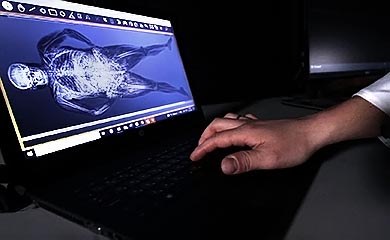
LV STREAM represents a next-generation AI-powered baggage screening system for sports venues. Specifically engineered for high-traffic environments, it enables automated bag scanning, dual-view X-ray imaging, AI-based threat recognition, real-time alerts, and continuous high-speed operation. Unlike traditional systems, LV STREAM supports operators rather than relying entirely on them.
High Throughput for Arena Entry PointsHockey games generate intense entry surges within a short time window. Delays at entrances increase pressure on security teams and create safety risks. LV STREAM processes over 1400 bags per hour, making it ideal for professional hockey arenas, minor league venues, college hockey championships, regional tournaments, and multi-arena sports complexes.
Fast scanning ensures smooth flow while maintaining strong arena access control and baggage screening.
AI-Based Automated Threat DetectionUnlike conventional systems that rely solely on human interpretation, LV STREAM integrates artificial intelligence for automated weapon detection. The system is designed to identify firearms and firearm components, explosive materials, bladed weapons, suspicious objects hidden inside sports bags, and prohibited items under venue policies.
AI-assisted screening improves security screening accuracy at hockey games, reduces false alarms, and minimizes operator fatigue. Security teams can focus on response and situational awareness instead of staring at screens continuously.
From “Price Per Scanner” to “Cost Per Secured Arena”
Traditional security is often evaluated by unit price. But for hockey arenas, the real metric is total cost per secured venue, including the number of lanes required, staffing per checkpoint, throughput under peak load, long-term labor cost, compliance support, downtime, and upgrade flexibility.
| Parameter | Traditional Security Setup | LV STREAM |
|---|---|---|
| Throughput per lane | ~600–800 bags/hour | 1400+ bags/hour |
| Operators per lane | 3–4 (X-ray + metal + supervision) | 1–2 (AI-assisted monitoring) |
| Integration | Separate systems (metal detector + X-ray + manual checks) | Unified checkpoint (AI-assisted X-ray + integrated workflow) |
| Detection dependency | Fully human-dependent image analysis | AI-supported automated threat detection |
| Upgrade path | Limited / hardware replacement required | Modular and software-upgradable |
| Compliance readiness | Manual reporting and documentation | Built-in analytics and digital reporting support |
| Operational complexity | Multiple systems, multiple staff roles | Streamlined workflow and fewer checkpoints |
| Total venue cost | High OPEX, increasing staffing burden | Lower total OPEX, higher throughput efficiency |
| Scalability | Requires adding lanes and personnel | Scale throughput without multiplying lanes |
Fewer Lanes. Fewer Operators. Lower OPEX.
Reduce Infrastructure ComplexityHigher throughput per lane means fewer screening lanes are required to secure the entire arena. This leads to a smaller checkpoint footprint, simplified arena entrance design, lower equipment investment, and improved crowd flow. Instead of multiplying checkpoints, venues optimize each one.
Reduce Staffing RequirementsTraditional systems often require 3–4 operators per lane. LV STREAM reduces that requirement to 1–2 operators per checkpoint thanks to AI-assisted detection and automated image analysis. This results in lower labor costs, reduced training requirements, higher operational consistency, and improved long-term cost control.
Improve Throughput and Flow ContinuityWith processing capability exceeding 1400 bags per hour, LV STREAM maintains entry speed even during peak arrival waves. This reduces entry congestion, bottlenecks at arena doors, crowd pressure, and fan frustration. Efficient flow improves both safety and overall visitor experience.
Lower Total Venue Operating CostSecurity should not be evaluated by price per scanner. It must be evaluated by total cost per secured arena, including the number of lanes required, staffing per checkpoint, integration with access control, downtime, maintenance, and long-term scalability. LV STREAM improves total venue efficiency, operational reliability, compliance support, and long-term ROI.
Secure the Game. Protect the Crowd.
Hockey arenas present unique security challenges: large concentrated crowds, emotional environments, sports equipment bags, high-volume entry periods, and public accessibility. Modern arena security solutions must combine speed, automation, and intelligence.
LV STREAM delivers AI-powered automated threat detection, dual-view X-ray imaging, high-throughput baggage screening, reduced staffing dependency, and scalable venue-wide security architecture.
When thousands gather under one roof, security must be smarter, faster, and more reliable.
Upgrade your hockey arena security today. Protect the crowd. Protect the game.
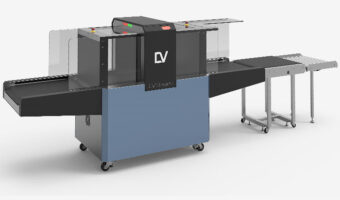


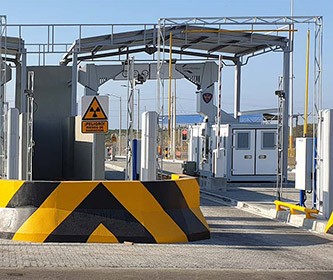
Powered by A-EYE Intelligence Software Next-Generation X-Ray Security Gateway — seamless, fast, and fully automated screening for crowd-heavy environments and schools