




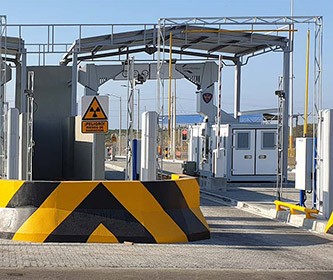






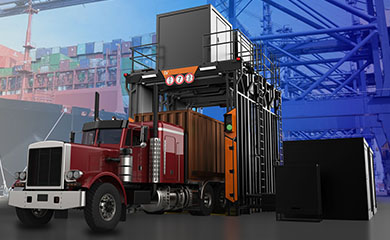


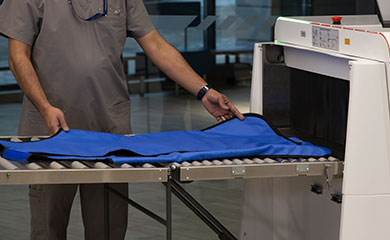






X-ray tomography remains one of the ground-breaking technologies in many sectors including hospitals, diagnostic centres, security checkpoints and cargo/vehicle inspection spots.
The facts shows that while traditional X-ray systems are still widely used, there is a shift towards AI-enabled X-ray systems which are the systems that combine X-ray equipment with the CAL image analysis, decision support, and workflow automation.
Therefore, a question about the return on investment when switching from a traditional X-ray system to an AI-enabled system arises.
To answer the above question, we need to figure out which cost/benefit levers become significant and how they vary across different fields of activity.
Thus, the discussion may be divided into two segments:
- Medical imaging systems where AI usually helps with the working process, image quality assurance, sortation or decision-making, but the final statement still rests with the physician.
- X-ray security scanners where throughput capacity, threat detection efficiency, Operator’s workload, and false alarms minimization play a critical role.
It is stands to mention that each case describes key ROI factors, typical ranges based on reported data, and ways to formulate an upgrade-concerning decision. Throughout the text there is reference to LINEV Systems’ position regarding radiation safety offerings and to the academic and industry literature in the field of AI medical imaging.

ROI of the AI-Enabled X-Ray Systems in Medical Imaging
Key ROI factors
If a hospital, diagnostic imaging center or a clinic selects for an AI-enabled X-ray system (or adds AI tools to the existing system) the benefits may be as follows:
- Saving of time. AI tools can sort urgent cases, reduce the report time and automate daily tasks so the Operator makes less effort, but the interpretation becomes faster and the number of re-scans lowers.
- Improved quality. AI-enabled systems can provide better detection of hard-to-see things and therefore lower the number of missed diagnoses and return visits.
- Higher throughput capacity and lower labor costs per one examination. AI tools can automate routine image processing, which allows to perform more scans per operating time unit.
- Reduced waste and redundancy. AI tools make for the reduction of repeat exams, patient delays and return visits.
- Competitive and strategic value. “AI assisted imaging” service may be used in hospitals as an attractive advertisement and a tool for the reputation enhancement.
- Systems lifecycle and risk of depreciation. Older traditional systems usually require more accurate maintenance and more downtime as well as show reduced reliability while new AI-enabled systems can drive these risks out.
- Regulatory and financing enabling factors. The sooner AI becomes high-demanded, the more likely patients choose to pay for faster diagnostics performed with the help of AI-enabled systems.
The market for AI in medical imaging is in rapid evolution.
What the Facts Say
According to the recent studies, the report shows that the AI platform in radiology delivered a 451% return on investment over five years, and when accounting for radiologist time savings, the return on investment was up to 791% over five years (equivalent to approximately $4.51 for every $1 invested).
Market research shows that the AI in the medical investment market will be approximately $1.36 billion in 2024 and is may reach $19.78 billion by 2033 (CAGR of ~34.7%).
These numbers reflect the ability but do not show each upgrade decision.
If an AI-enabled system can reduce interpretation time by 20-30% or repeat scans by 10-20%, a number of enterprises have a 2-4-year payback horizon.

Why Humans are Still Matter
Even if nowadays AI tools have strong influence, the final statements rest with the human.
AI makes sense as a second reader or as a tool to enhance and optimize the working process (i.e. patients sorting, results estimation, marking).
There is a high probability of total dependence from AI, but the management still requires human supervision.
As can been seen from the above, the ROI equation shall take into consideration direct cost savings on the one hand and the expenses on management, training, integration, changes control and safety and clinical risks reduction on the other one.
Practical ROI-Calculation
If a medical imaging center is considering an upgrade, here is a checklist:
- Baseline level: the costs per one examination including equipment depreciation, maintenance, Technologist time, Operator time, repeat exam rate and cost of reports delays.
- Improvement estimation: scanning time and re-scans reduction (%), throughput increase (%), increased number of directions due to faster service.
- CapEx + OpEx: new AI-enabled system including software licenses, hardware, integration and training.
- Risk reduction value: fewer diagnostic errors, improved quality (although harder to quantify financially).
- Time horizon: usually 3 to 5 years.
- Payback threshold: often < 4 years, which is considered favorable in many hospitals.
Summary for Medical Imaging
Shift to AI-enabled X-ray systems in healthcare facilities often offers high ROI potential, especially in high-volume environments with limited radiologist/technologist resources. The workflow benefits (faster readings, fewer retakes) are significant.
However, because of clinical risks and integration complexities, success depends on proper workflow, data, change management, and support.
ROI of AI-Enabled X-Ray in Security Systems
Key ROI factors
The extension of the AI influence on the X-ray based security scanner machines (i.e. baggage, humans, vehicles and cargos) promotes the following:
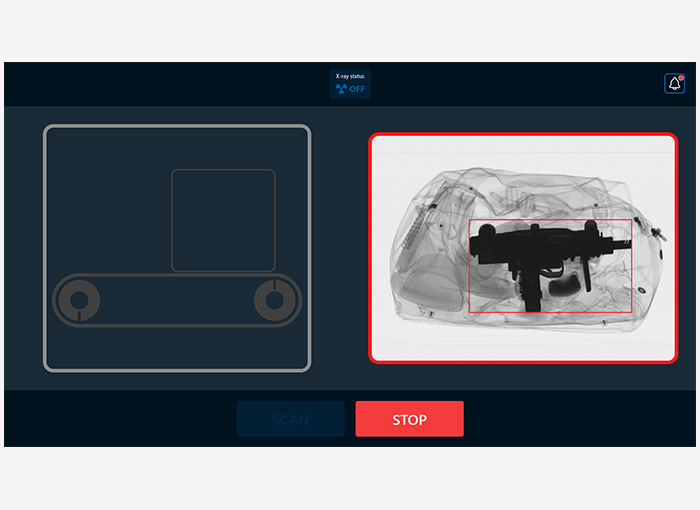
Increased throughput and capacity. With the help of the AI tools threat detection and image interpretation can be speeded up and automated. So, the human/equipment resources can be optimized.
For example, the LV STREAM™ Spectral is marketed as having a “throughput of >1,400 bags/hour.”
- Reduced false alarms and improved detection efficiency. An AI-powered X-ray security systems deliver more accurate threat detection, fewer missed threats, and fewer false alarms that usually result in delays, re-scans and unnecessary losses.
- Labor Savings. Today AI-based technologies allow for scanning with less operator involvement and without additional security at checkpoints.
- Reduced operational risks/incident cost avoidance. AI-enabled detection of contraband, weapons, or unauthorized items prevents costly security incidents, reputational damage, and legal liability.
- Lifecycle and upgrade savings. AI-enabled X-ray security scanner machines often update software of improve algorithms without external help and may require less human physical effort.
- Strategic value/capacity for high-throughput facilities. AI tools help to increase and maintain the accurate throughput in the condition of high traffic in the crowded placed (i.e. stadiums, events, boarder crossings). This function is an advantage as the less the waiting time and the fewer the queues, the more visitors.
- Reduced dwell/queueing and improved customer service. Economic value increases due to the high throughput of humans and cargos in the crowded and high-traffic places.
LINEV Systems Data & Other References
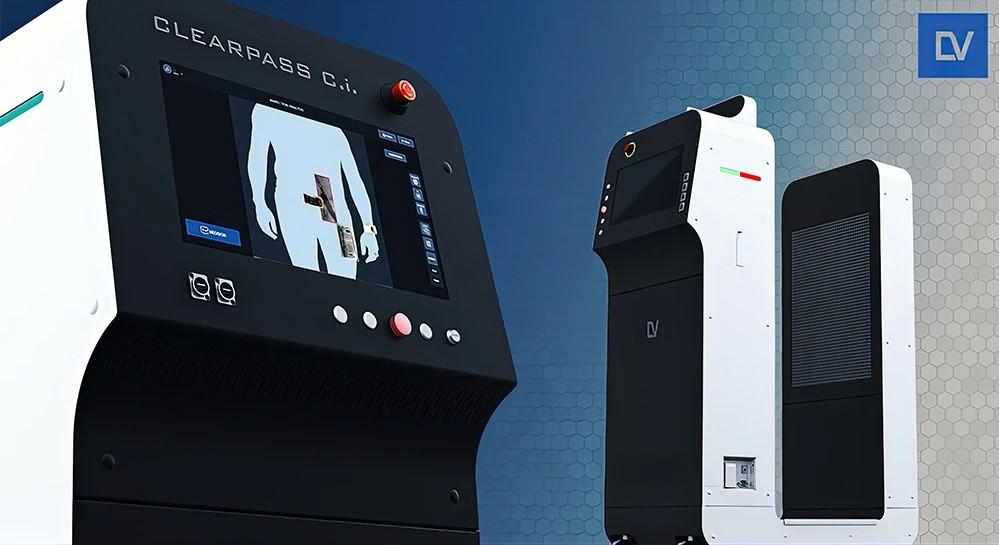
LINEV’s article “The Return on Investment for Advanced Body Scanners” esteems the advanced body scanners as a strategic investment with tangible results.
In “The ROI of Body Scanners in X-ray Security Systems” article LINEV forecasts 2-3-year pay-back periods via reduced labor effort, increased throughput and improved operational efficiency.
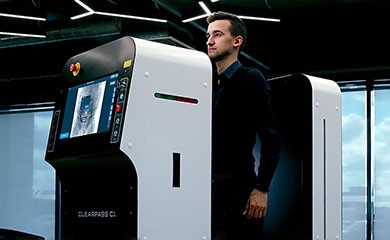
Example: The Maricopa County Sheriff’s Office selected AI-enabled X-ray body scanner machines from LINEV and reported that within 90 minutes of launch, they found the inmate with suspected drugs in body cavities that might otherwise have stayed undetected.
ROI-Calculations for Screening Systems
The following items figure out what a security Operator should consider when evaluating a business case:
- Baseline Throughput. Number of bags or humans processed per hour, cost per Operator, cost per alarm or re-scan.
- Improvement Assumptions. % Increase in throughput, % reduction in Operator’s time per one scan, % reduction in false alarms, % reduction in incident risk.
- CapEx and OpEx. Cost of a new AI-enabled system (licensing, hardware, training).
- Avoidance of a risk-cost. Cost of a security incident or contraband leak.
- Payback period. 2-3 years usually quoted by vendors.
- Intangible benefits. Improved reputation, reduced delays, improved customer service.
- Life Cycle. Cost of modular upgrades and reduced replacement costs.
Why this Domain has Strong ROI Potential
Since screenings are repetitive, high-volume, and labor-intensive, the benefits of AI are significant. Even a small productivity or accuracy increase can lead to significant savings.
The cost of a negative result is often high (in terms of risk, liability, brand, and production downtime), so the value of more effective detection increases.
Summary for AI X-ray Security Inspection Systems
A shift to AI-powered X-ray security systems offers a very attractive return on investment, especially in high-volume environments (airports, cargo, large events) or high-risk environments (prisons, border crossings).
Payback periods of 2-3 years are typical.
However, success depends on selecting the right system, integrating workflows, and ensuring stable algorithm performance (false alarm rate, detection drift, maintenance) over time.
Comparative Reflection & Key Considerations
- Volume and repeatability matter.
- Cost of risk and cost of error differ.
- Throughput and diagnostic quality.
- Integration and workflow changes.
- Vendor claims vs reality.
- Software lifecycle and algorithm improvement.
- Human supervision remains crucial.
- Intangible benefits: improved workforce flow and resource reallocation.
Practical Advice for Decision-Makers
The key points are as follows: baseline, costs and revenues, working process verifying, lifecycle updates and human control.
LINEV always notes: “Our developments often include both hardware and software upgrades.”
The shift to AI-enabled X-ray systems whether in medical imaging or screening has significant ROI potential.
As far as the medical imaging is concerned, the benefits are reduced workload, faster processing, increased diagnostic consistency, and improved patient outcomes.
ROI may be more decisive due to through measurable throughput and reduced incidents in the sphere of security screening.
LINEV consider the payback for modern X-ray body scanners in 2-3 years.
When implemented correctly, AI-enabled X-ray systems can transform a business from a reactive to a proactive approach: faster decision making, fewer errors, increased throughput, and ultimately, a higher ROI.
Sources and References
- AZmed – Benefits of AI in Radiology (2025)
- PubMed Central — Artificial Intelligence-Empowered Radiology—Current Status and Critical Review
- Journal of the American College of Radiology – Unlocking the Value: Quantifying the Return on Investment of Hospital Artificial Intelligence
- Grand View Research – AI In Medical Imaging Market
- PubMed Central – Clinical Applications of Artificial Intelligence in Medical Imaging and Image Processing—A Review
- LV STREAM™ Spectral – Product Overview
- LINEV Systems – ROI of Body Scanners
- LINEV Systems – The Return on Investment for Advanced Body Scanners for Jails (2025)
- LINEV Innovations – Company Overview
- Corrections1 – Maricopa County Sheriff’s Office selects LINEV Systems US, Inc. to deploy AI-assisted body scanners for enhanced contraband detection across facilities
- Milipol News – The Future of X-ray Contraband Detection