













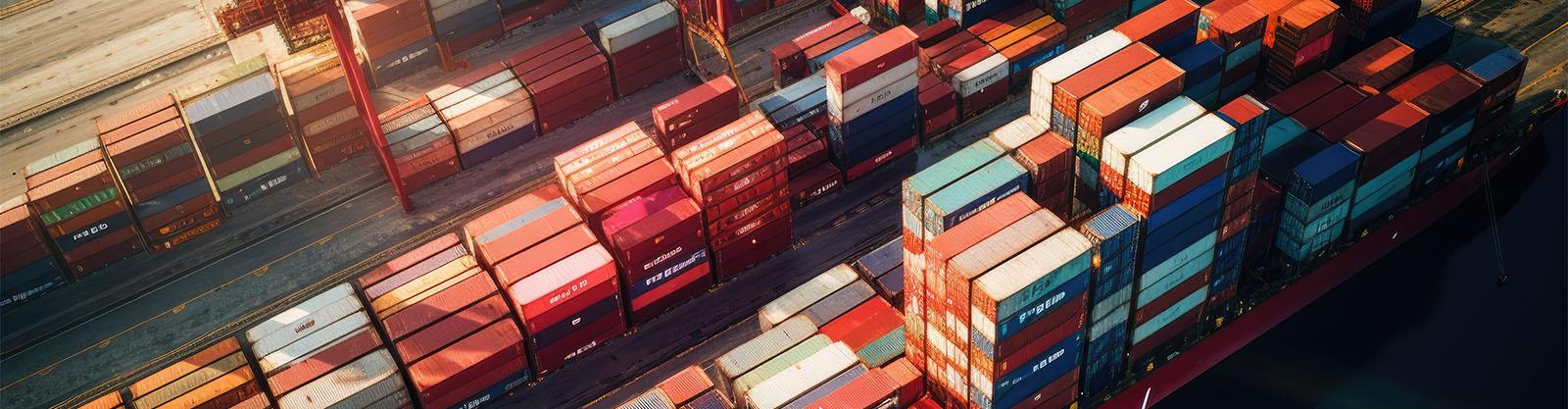


Cargo X-ray scanner capacity is often the single biggest determinant of whether a port, border crossing, or inland transport hub keeps freight moving during peak arrivals. When volumes surge, the challenge is not only scanning fast, but also maintaining inspection quality, officer safety, and consistent decision-making while preventing queues from spilling into public roadways or disrupting terminal operations.
For teams planning or optimizing inspection programs, the most reliable improvements come from tightening the operating model around the scan lane, image review, and secondary inspection handoffs, supported by purpose-built cargo and vehicle inspection capabilities. Peak congestion is usually predictable in patterns, even when day-to-day manifests fluctuate.
Start by mapping arrival waves by hour, carrier type, lane, or appointment window, then translate them into a simple flow model: vehicles per hour arriving, vehicles per hour screened, and vehicles per hour diverted to secondary processes. The objective is to identify where queues form first, pre-screening, lane positioning, scan execution, image review, or secondary bays, because each bottleneck requires a different response.
If the scan lane is the constraint, you focus on lane readiness, vehicle positioning discipline, and eliminating non-productive gaps. If image review is the constraint, you address staffing, escalation rules, and decision consistency. If secondary is the constraint, you rebalance targeting and staging so that a strong primary screening program does not create downstream gridlock. Treat the operation as a chain: the queue will always grow at the weakest link.
Design the Queue as a Controlled Buffer, Not a Side Effect
A queue is not just “waiting vehicles.” It is a buffer that can protect throughput if it is managed deliberately. The practical target is a queue long enough to keep the scan lane continuously fed, but short enough to avoid safety risks, blocking access routes, and creating pressure that can lead to rushed decisions or procedural shortcuts.
Queue strategy begins with geometry, signage, and traffic separation, but it becomes operational through disciplined vehicle release rules. Many sites improve peak performance by separating functions: a staging area that absorbs surges, a marshaling point that assigns lanes, and a clear “commit point” where a vehicle enters the scanning process and is no longer swapped in and out.
Small controls reduce large delays during peaks:
- Use a designated staging buffer to prevent spillback into live roads.
- Assign a queue controller to regulate lane feeding and resolve conflicts quickly.
- Standardize lane-change rules to reduce last-minute merges and stop-start motion.
- Protect a secondary access path so diversions do not block primary flow.
These steps reduce micro-stoppages that erode vehicles-per-hour more than most teams expect.
Staff to the Constraint, Then Rotate to Protect Quality
Planning your schedule based on a spreadsheet rather than what’s actually happening on the ground is a quick way to fail during a rush. Think about the actual chain of events: directing traffic, lining up the truck, running the scan, checking the image, making a call, and sending it to secondary. If you’re short-handed at any of these steps, throwing extra bodies at a different step won’t speed anything up.
A better approach is to organize your team into workflow cells and deploy your backup exactly where the bottleneck is happening. When the rush hits, having one person whose only job is to feed vehicles into the lane keeps the machine running without dead time. You’ll probably need extra help on image review, too. Otherwise, trucks end up parked in the lane or backing up into unsafe areas while waiting for a green light.
It’s easy to blame the machine’s speed, but the real holdup is almost always the time it takes to read the image and figure out what to do next. How you rotate your team matters just as much as your total headcount. Analyzing X-rays and managing heavy traffic drains focus fast. When operators get tired, they take longer to make decisions, second-guess themselves, and send too many trucks to secondary.
Keeping rotations short and giving the team clear rules for when to escalate an issue works much better than leaving someone at a screen for hours. Sometimes, just tweaking the schedule so shifts overlap right when the rush hits is enough to kill a massive line without spending an extra dime on payroll.
Keep Decisions Fast by Making Them Repeatable
Speed gains that degrade detection quality are not gains; they simply move risk downstream. The fastest peak operations protect quality by standardizing decisions and minimizing ambiguity after an anomaly is flagged. Most time loss during peaks comes from unclear handoffs: who makes the call, how quickly it must be made, and where the vehicle goes next.
Define a tiered decision structure that keeps most cases moving via standard actions, while enabling rapid escalation for high-risk anomalies. Create clear categories for routine outcomes, escalation triggers, and diversion destinations so officers are not inventing process under pressure. When lanes are busy, “decide and move” must be supported by rules that are easy to apply and easy to audit, not by informal shortcuts.
Technology and operating concept must align. If the lane is optimized but review workstations, communications, or diversion routes are not, the queue simply relocates. Peak readiness is achieved when scan cadence is steady, review stays within a defined service-level target, and secondary is staged to avoid backflow into the primary lane.
Measure the Peak, Not the Day
Relying on daily totals often masks the critical failures that occur during peak surges. To identify the true operational constraints, teams should track a specific set of peak-period metrics: average gap time between vehicles in the lane, real-time lane utilization, average image review duration, the percentage of loads diverted to secondary, and the time required to clear those secondary bays during high-volume windows.
When these data points are reviewed by the hour rather than by the shift, it often becomes clear that staffing patterns, such as break timing, role assignments, and shift overlaps, impact throughput more significantly than the actual arrival rate of freight.
Ultimately, managing peak arrivals is a discipline of flow. Success requires modeling exactly where the queue forms, controlling the buffer to prevent gridlock, staffing the specific bottleneck of the hour, and ensuring that decision-making is repeatable under pressure.
By implementing a structured operating model, with a cargo X-ray scanner during peak periods, teams can transition from chaotic events into predictable, manageable, and measurable windows that support both rapid trade facilitation and rigorous enforcement outcomes.
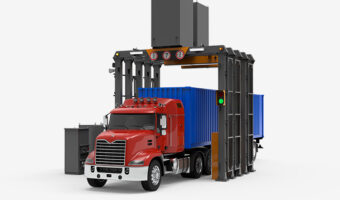


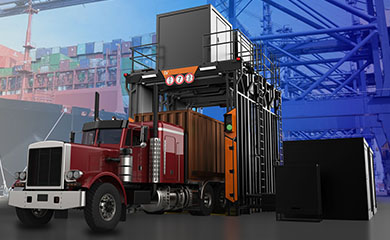
Multi Energy X-ray Portal | AI-powered cargo and vehicle screening system with Multi-Energy Array technology built for high-throughput, precision, and future-ready security
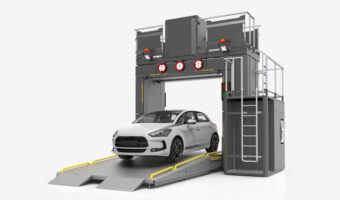
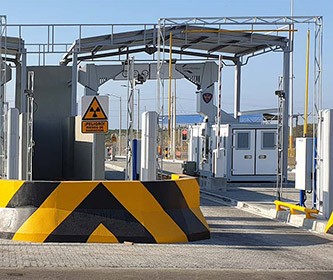
High-performance passenger vehicle inspection solution capable of screening vehicles in drive-through mode at speeds up to 15km/h
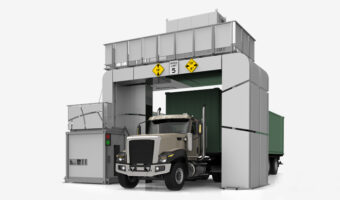
The system’s unique multiple projection and energy technology makes it possible to provide safe inspection of multi size vehicles like passenger vehicles, vans, buses and loaded trucks at the same time.