
















History of Development
In the battery recycling industry, sorting has long been carried out into two or three fractions, as deep processing technologies were only just emerging. Nowadays, a unified approach to recycling is becoming impossible, as technological recycling cycles have become highly specialized and the purity of the output raw materials directly determines the profitability of the business.
For this reason, preliminary sorting is recognized by the expert community as the most critical stage determining the overall profitability. Equipment in this industry is required to achieve sorting accuracy of 95% or higher, which, combined with the need for high throughput, is a serious technological challenge.
For LINEV SYSTEMS, 2019 was the starting point in this direction. While competitors relied on optical sensors, we began extensive research into the applicability of X-ray method for classifying batteries in a stream. The problem with the optical method is obvious to any practitioner: a damaged label, corrosion, or lack of marking makes the battery “invisible” to the system. X-ray systems, on the other hand, look deep inside, identifying the internal structure of the battery.
Previous experience in developing X-ray inspection equipment allowed engineers of LINEV SYSTEMS to use their expertise in recognizing batteries on X-ray images. However, the transition from simply identifying the presence of an object to determining its exact chemical composition in real time posed a serious scientific challenge. At the initial stage of research, it was assumed that the battery stream would be divided into six main groups, including mercury, lithium, nickel-cadmium, nickel-metal hydride, as well as classic alkaline and Zn-carbon batteries.
 During the experimental work, a method for automatically evaluating the average effective atomic number of an object (Zeff) was implemented. This physical parameter allows to analyze the composition of the active substance inside the metal battery casing with a high degree of probability. Analysis of the structure of the five main types revealed a set of unique characteristics that, in the absence of critical mechanical damage to the case, allow identification with an accuracy of about 90%. At the same time, the practical implementation of the method revealed certain limitations related to the physical similarity of Zn-carbon and alkaline mercury batteries with their mercury-free counterparts. This circumstance led to the need to adjust the classifier and temporarily reduce the number of recognizable groups to five categories to ensure guaranteed reliability of the results.
First Customer and New Challenges
The transition from laboratory testing to operation required a review of many system parameters, as the actual waste stream is highly heterogeneous and contaminated. In 2020, cooperation began with the Australian company Resource Pty Ltd, which became an important milestone in the testing of X-ray battery sorting methods. Resource Pty Ltd already had experience operating an optical battery sorting system, but its practical effectiveness was limited to a 95% purity of the output fraction. For a business model that involves using battery recycled products as raw materials for the production of high-quality mineral fertilizers, such purity rate was insufficient.
The technical specifications of Resource Pty Ltd. required the separation of alkaline and Zn-carbon batteries from the general flow with a purity level of at least 99.5%, which was a serious challenge, as such parameters were previously considered almost unachievable at industrial speeds. It took two years to develop and calibrate the system, but the result lived up to expectations: the technology for recognizing the “chemical DNA of batteries” allowed the customer to integrate battery recycling into a closed-loop fertilizer production cycle.
An analysis of the market situation at that time also showed that Zn-carbon and alkaline batteries accounted for more than 70% of the total volume of collected cells, while the remaining groups were often sent to landfill without proper recycling.
Although initially the customer also required separation into only three streams, the choice of a system configuration with six output channels was dictated by the logic of minimizing repeat processing cycles, since the presence of six autonomous discharge nodes allows for a more detailed separation of the mixture in a single sorting cycle, and by the need to ensure long-term operational flexibility for the enterprise.
Nickel and Lithium Challenges
As we accumulated data and expanded our installation geography, we realized that there is no such thing as a unified “mixture.” In addition, as environmental standards have tightened and the cost of metals has risen, the necessity of sorting smaller groups of batteries by chemical type, such as nickel-cadmium or nickel-metal hydride, has begun to increase.
After achieving the purity rate of 99.5% for alkaline and Zn-carbon batteries, LINEV SYSTEMS focused on sorting nickel-containing batteries as the methods for recycling NiCd and NiMH batteries differ significantly due to their chemical composition.
Considering that barely 50% of available Ni-MH batteries are recycled today, owners of BATTERAY X-ray systems for battery sorting gain a strategic advantage as the European Union has set strict targets for the collection of Ni batteries by 2031.
In addition to reaching the 95% purity sorting rate for NiCd and NiMH, LINEV SYSTEMS have implemented a “safe sorting” algorithm: if the system is unsure which type to assign a nickel battery to (for example, whether a nickel-containing battery contains cadmium or not), the item is sent to a special barrel with a mixed group of NiCd/NiMH batteries. This ensures that the main barrel with Ni-MH will meet strict purity standards for subsequent processing.
The Growing Complexity of Lithium Battery Separation
The current stage of energy storage technology development is characterized by a rapid increase in the complexity of the morphological composition of waste, resulting in the need to identify subclasses within a single chemical group. The growth in the production of lithium batteries has led to the need for their accurate separation from the general battery stream for several fundamental reasons. First, these objects contain a high concentration of valuable metals (cobalt and nickel), the extraction of which requires specific processing technologies, and second, they pose a serious hazard as they are highly flammable if the casing is damaged or short-circuited.
The process of improving the lithium group identification algorithms in the BATTERAY system is implemented in stages:
- Step 1: An algorithm has been developed to identify and separate all lithium-containing elements into one barrel with high accuracy.
- Step 2: The algorithm has been trained to distinguish between primary lithium and lithium-ion batteries.
- Step 3: The algorithm was trained to deeply divide primary lithium batteries into subgroups based on the active substance. The system’s ability to distinguish between compounds such as iron disulfide, manganese dioxide, and lithium thionyl chloride opens up new opportunities for optimizing recycling processes.
The new EU Regulation 2023/1542, which has come into force, is once again radically changing the rules of the game. Now, preliminary sorting of lithium-ion batteries into subgroups by chemical composition is mandatory prior to transportation due to the multiple increase in the risk of spontaneous combustion, which makes the availability of multi-fractional automated sorting systems necessary for the legal operation of recycling companies in the international market. In this regard, the next ambitious goal for the LINEV SYSTEMS team is to deeply separate lithium-ion batteries into subclasses (LFP, NMC, LCO, etc.).
6 Containers ≠ 6 Sorting Chemical Types
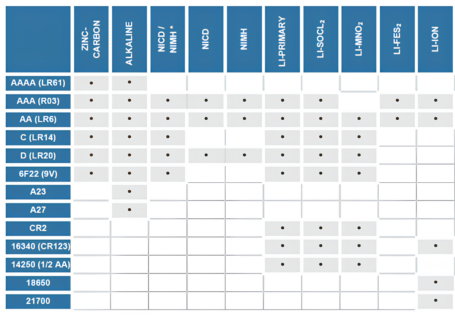
Today, the BATTERAY system is not just a mechanical sorter. It is an analytical complex capable of recognizing 9 chemical types of batteries in 13 form factors.
For a professional recycler, this level of detail, unlike systems with 2-3 outputs, where the output is still a “mixture” requiring an additional sorting cycle, means the ability to form batches of raw materials for specific metallurgical plants without intermediate stages. Each additional fraction sorted by the BATTERAY system is not just “another container,” but a separate financial asset for the user.
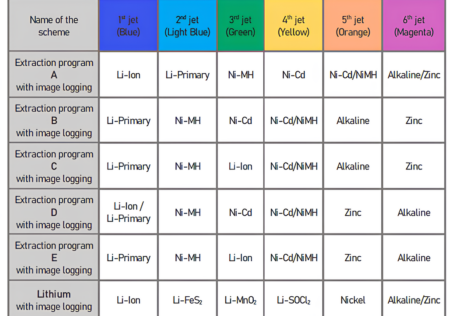
It is important to understand that the number of physical output channels (6 containers) does not limit the intelligence of the system. The current functionality includes six pre-installed programs that the operator of the BATTERAY X-ray battery sorting system can switch between with a single click of a button. In addition, the flexibility of the software architecture allows the sorting programs to be adapted to the user’s individual tasks, saving time and turning waste into a structured portfolio of valuable resources.
Productivity and Ease of Operation
Systems with a small number of output channels inevitably face the problem of having to circulate the material multiple times to separate each subsequent group, which leads to reduced productivity and increased costs.
In today’s environment, where raw material purity requirements are becoming increasingly stringent, having six streams allows the company to respond quickly to changes in demand from metallurgical and chemical companies. Thus, multi-channel capability is not only a technical feature but also a risk management tool in the changing secondary resources market.
Engineering calculations for the BATTERAY system have shown that increasing the number of fractions to 6 does not lead to a proportional increase in the complexity of technical maintenance, but creates a significant reserve for business scalability. Pneumatic mechanisms in this configuration operate at high frequency, ensuring stable sorting of up to 8 batteries per second (up to 18,000 batteries per hour) without compromising accuracy due to parallel computing logic. The AI makes decisions instantly, and the executive mechanism (pneumatic reset) operates in real time.
The engineering solution—a “safety gate” at the end of the conveyor (container 7)—deserves special attention. This structural element performs the function of quality control and system protection, accumulating objects that have not been clearly identified by the algorithm (for example, due to their physical condition or the presence of foreign inclusions). Large debris and random battery assemblies are also sent to this compartment, which prevents contamination of the main ones. Expert assessment shows that returning unrecognized batteries from this container to the beginning of the cycle after preliminary mechanical cleaning increases the overall rate of recognized batteries, minimizing the loss of valuable raw materials.
The arrangement of six pneumatic nozzles allows filled containers to be replaced in just a couple of minutes. In addition, the design allows not only the use of standard containers for battery storage, but also the integration of automated conveyor lines, pipes, and other systems for moving sorted fractions to adjoining workshops or shipping locations.
A Never-Ending Process of Innovation
The world of batteries is changing very quickly. Furthermore, research has shown that the effectiveness of the BATTERAY X-ray system in recognizing batteries depends on the size of the database and the quality of the algorithm training. For LINEV SYSTEMS, developing the database and retraining AI on new types of batteries is an ongoing process that ensures the equipment remains relevant in the context of the constantly evolving battery market.
In conclusion, the transition to using six or more sorting channels is a natural stage in the development of battery sorting systems, driven by the need for maximum resource efficiency. Automated X-ray sorting can transform the waste management process from costly to a highly profitable extraction of secondary resources while ensuring compliance with the strictest environmental and industrial safety standards.
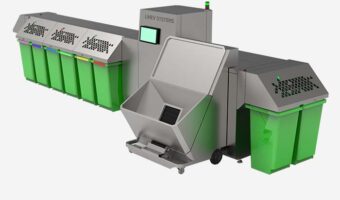


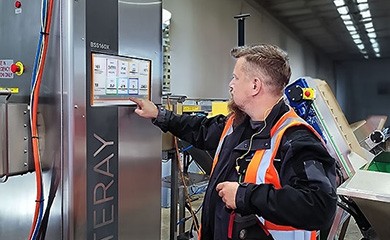
AI-powered X-ray system for high-speed, multi-chemistry battery sorting by internal composition
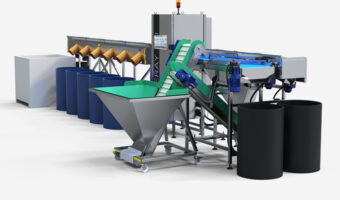
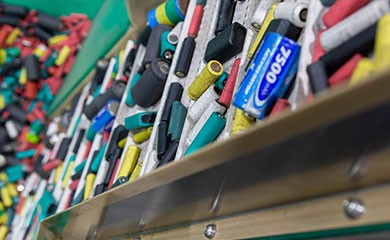
Used batteries can be sorted into 6 different chemical groups