

















16 March 2026
Why Maritime Theft Is Driving Demand for X-Ray Security Solutions for Shipyards
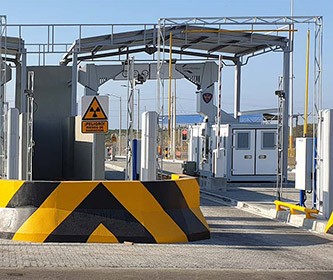
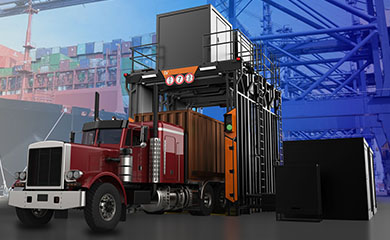
Every day, shipyards process a massive influx of freight, leaving them highly vulnerable to coordinated theft, illicit smuggling, and critical security lapses. The vulnerability of shipyards stems from their unique operational characteristics. Unlike contained warehouse environments, these facilities must balance security with the rapid movement of massive volumes of containers, equipment, and personnel. This creates opportunities for theft that range from pilferage of high-value goods to large-scale smuggling of contraband. As these threats evolve, facility operators are turning to X-ray security solutions for shipyards that can screen cargo without creating bottlenecks in the supply chain.
Global trade continues to grow in volume and speed, and criminal networks are becoming more technologically advanced and organized. Facilities that do not modernize their security systems will be at a disadvantage.
Allocating capital toward X-ray security solutions for shipyards serves as more than just a shield against existing risks. These setups prepare sites for upcoming mandates as global regulations stiffen and shippers demand higher levels of freight integrity. The field is advancing at a high velocity, with breakthroughs in artificial intelligence, automated workflows, and interconnected data systems offering even sharper precision in the near future. Entities that build solid security frameworks now will be equipped to handle the evolving complexities of the maritime landscape.
We are proud of our mission to protect humanity from the latest threats. Creative, innovative ideas and solutions in the field of X-ray security screening have become a worthy and timely response to the global challenges of the 21st century.
How Theft Operations Exploit Shipyard Vulnerabilities
Understanding the mechanics of maritime theft reveals why conventional security approaches fall short. Criminal organizations often work with inside knowledge, exploiting shift changes, high-traffic periods, and gaps in surveillance coverage. Common theft scenarios include:- Strategic placement of stolen goods inside legitimate containers to avoid detection
- Creation of false documentation to redirect shipments to unauthorized destinations
- Coordination with external transportation networks to move stolen cargo before facilities realize items are missing
- Exploitation of peak operational hours when security attention is divided across multiple activities
The Technology Gap That Modern Scanning Systems Fill
Advanced imaging technology overcomes the core limits of manual inspection through greater speed, consistency, and penetration. Modern systems can scan entire containers in minutes, producing detailed images that reveal contents without requiring physical access. This non-intrusive method preserves the integrity of sealed shipments while giving security teams broad visibility into potential threats. The implementation of X-ray security solutions for shipyards transforms the security equation by enabling 100% screening of containers at operational speed. Rather than selecting a small sample for inspection, facilities can examine every container while maintaining throughput requirements. This comprehensive coverage eliminates the gaps that theft operations depend on, creating a security environment where every shipment faces the same level of scrutiny. Detection technology has progressed far past basic density-based scanning. Modern installations now utilize dual-energy systems capable of differentiating organic from inorganic substances, allowing security teams to pinpoint drugs, explosives, and various illicit goods that could be concealed inside standard freight. Key technological advantages include:- Material discrimination that separates organic substances from metals and other inorganics
- Automated threat recognition algorithms that flag suspicious items without constant operator attention
- High-resolution imaging that reveals concealment methods like false compartments or cargo rearrangement
- Real-time processing that delivers results while containers remain in the screening zone
Economic Impact and Return on Investment
The financial case for stronger security infrastructure goes beyond avoiding losses. Facilities that adopt comprehensive scanning systems often see measurable gains across several operational metrics. Processing times frequently drop as containers pass through automated screening more quickly than traditional inspection lines. Insurance premiums may decline when carriers acknowledge the improved security profile. Regulatory compliance is often simpler with documented screening records for each shipment. Mitigating loss is inherently lucrative. A single major theft can trigger immediate losses surpassing $1 million, compounded by expenses for forensics, litigation, and brand erosion. Ports that reliably prove their scanning and interception prowess see a sharp decline in both the volume and the success of criminal attempts. Since illicit networks naturally gravitate toward weaker links, maintaining high-tier security serves as a powerful magnet for premium clients who prioritize the safety of their goods. Labor costs represent another significant factor. Automated scanning systems require fewer personnel to achieve higher inspection rates than manual methods. While initial capital investment is substantial, the operational savings accumulate rapidly. Financial benefits typically include:- Reduced staffing requirements for physical inspection teams
- Lower overtime costs due to faster processing speeds
- Decreased losses from theft, shrinkage, and cargo damage
- Improved throughput capacity without proportional increases in security personnel
Integration with Comprehensive Security Frameworks
Effective security systems function as part of integrated frameworks rather than standalone solutions. Modern shipyard security combines scanning technology with access control systems, surveillance networks, and data analytics platforms. When a scanning system detects an anomaly, that information can trigger additional protocols: enhanced physical inspection, notification to law enforcement, automated documentation, or quarantine procedures. Data integration allows pattern recognition not possible with isolated systems. Analytics platforms can identify abnormal shipment patterns, correlate detections events with specific routes and shippers, or flag relationships that indicate coordinated theft operations. This intelligence-driven security approach transforms reactive threat prevention into proactive threat detection. Modern systems are also capable of remote management and monitoring. Security directors have access to real-time data screening from multiple facilities. They can compare performance metrics and deploy resources according to actual threat patterns, rather than assumptions. This central visibility is especially valuable for organizations that operate multiple shipyards or manage complex supply chains.Regulatory Compliance and International Standards
Globally, government agencies are increasing the security requirements of maritime facilities. Individual nations may impose more stringent requirements. The ISPS Code, which establishes the baseline for security, is often used to set these measures. Non-compliance can have serious consequences, including fines, restrictions on operations, and even the closure of a facility. Advanced screening technology directly supports compliance with these evolving standards. Documentation capabilities create audit trails that demonstrate due diligence in cargo screening. Automated record-keeping reduces the administrative burden of compliance reporting while ensuring completeness and accuracy. Compliance advantages include:- Complete screening records for every container that passes through the facility
- Timestamped documentation that proves regulatory adherence
- Standardized reporting formats that satisfy multiple jurisdictional requirements
- Reduced risk of human error in compliance documentation
Technologies Comparison
| Security Method | Inspection Speed | Detection Accuracy | Operational Impact | Scalability |
| Manual Physical Inspection | 30-60 min per container | Moderate (varies by personnel) | High disruption to workflow | Limited by staffing |
| Traditional X-Ray Systems | 3-5 min per container | Good for density anomalies | Minimal delays | Moderate throughput capacity |
| Advanced Dual-Energy Scanning | 1-2 min per container | Excellent material discrimination | Seamless integration | High-volume processing |
| AI-Enhanced Detection Systems | Under 1 min per container | Superior threat recognition | Automated threat flagging | Unlimited with infrastructure |