


















10 April 2026
The Staff Entrance Blind Spots That X-ray Security Solutions for Universities Are Finally Fixing
When universities invest in campus security, the conversation typically starts at the front gate. Visitor management systems, luggage screening at main doors, and student access control badges frequently dominate budget discussions. These measurements are important. However, they merely handle one aspect of a much more complex problem. Staff corridors, service doors, loading docks, and maintenance access points are increasingly being used to sneak threats onto campus. This is the gap that X-ray security solutions for universities are now explicitly designed to fill, and the results are changing the way facilities managers think about perimeter management. The idea has traditionally been that employees are trustworthy, vetted, and thus pose a reduced risk. That assumption isn’t entirely incorrect, but it’s dangerously incomplete. Staff entrances are frequently utilized not only by employees, but also by contractors, delivery personnel, catering providers, and maintenance crews, a changing cast of characters whose entry is rarely screened with the same rigor as a student walking through a main lobby. The difference between what institutions assume they are defending and what they actually protect is greater than most administrators understand.
The Anatomy of a Campus Blind Spot
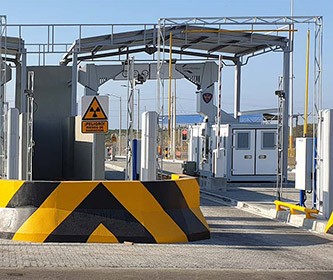
There are dozens of exit and entry points on a typical university campus. The main entrance is often equipped with access control technology. The rest of the system is based on trust, habit, and limited staffing. Until it becomes a problem, a loading dock that is used by food suppliers three times per day does not seem like a security threat. The staff and service entrances have several features that attract those who want to bring prohibited items on campus.- Because they are predictable, it is easier to plan.
- In off-peak times, they are seldom manned by security personnel.
- They often lack item-level screening of bags, equipment cases or parcels.
- It is difficult to monitor the number of users, such as contractors, maintenance crews and suppliers, because they change daily.
Why Staff Entrances Are a Growing Target
The shift toward using secondary access points to introduce threats into secured environments is well-documented in security research. As primary entrances become harder to breach, the path of least resistance moves elsewhere. Universities are not immune to this pattern, and in many cases, they are particularly exposed because their secondary access points have historically received so little investment. Several factors are making this gap more significant over time:- Campus populations and physical footprints have grown considerably, adding more doors and more access complexity.
- The volume of third-party deliveries and external contractors on university grounds has increased sharply over the past decade.
- Hybrid work and flexible scheduling mean staff entrances are active across a wider range of hours than they once were.
How Screening is Actually Performed at the Staff Entrances
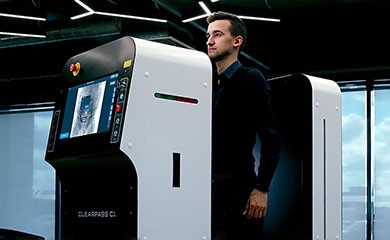
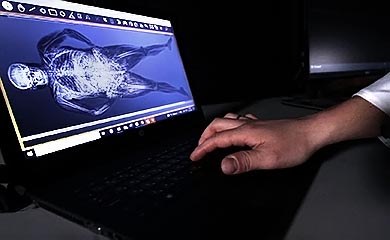
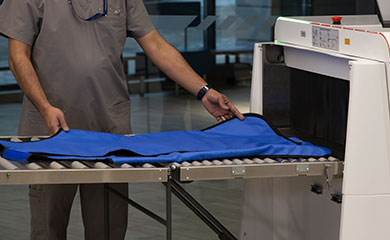
The assumption that it would be slow, disruptive, or impractical to secure staff entrances is one of the most common arguments against doing so. This objection has been largely addressed by the evolution of X-ray security solutions for universities. However, there is a significant gap between what facility managers think this will look like and what actually happens. The baggage and parcel screening equipment of today is compact enough to fit in service areas and corridors that weren’t designed for security. High-throughput scanners are able to process delivery parcels, toolkits, and equipment cases quickly enough so that staff moving through the loading area or contractors arriving at work do not experience any delays. The footprint of the scanner is much smaller than people think, and it does not require structural changes at existing entrances. Low-dose full body scanners are a quick, effective, and dignified solution for staff screening. They do not require people to remove their clothing or empty out their pockets, as traditional metal detectors often do. It is more like walking through a front door than going through an airport check. This can be important in environments where employee morale and trust are key considerations. When the screening is proportionate and respectful, there is a higher level of compliance and less resistance. The deployment does not need to be uniform at all entrances. In practice, a phased approach is effective.- Start with the loading docks and entry points for contractors, as they are the most frequented and have the most varied traffic.
- Access control at side entrances for staff only, where it is currently restricted to badge readers.
- Integrate existing access management software with screening data to get a comprehensive view of the campus entry activities.