Modern airport security is transitioning from high-friction checkpoints to seamless, AI-integrated screening environments.
Next-generation technologies like SENTINUS and CLEARPASS provide sub-second full-body scanning with ultra-low radiation doses.
AI-powered threat detection (A-EYE) reduces human error and significantly increases the speed of baggage processing.
Comprehensive security ecosystems now include everything from carry-on screening to high-energy vehicle and cargo portals.
Cloud connectivity and remote monitoring allow airport operators to manage security flows dynamically and maintain high throughput.
The global aviation industry is currently facing a dual challenge: record-breaking passenger volumes and an evolving landscape of security threats. For airport operators, the primary goal is to maintain the highest safety standards without creating terminal friction, the delays, bottlenecks, and frustrations that occur at traditional checkpoints. To meet these demands, the implementation of advanced X-ray security solutions for airports has become a strategic necessity. By integrating high-speed imaging with artificial intelligence, these systems transform the security hall from a point of congestion into a streamlined gateway, ensuring that safety and efficiency are no longer mutually exclusive.The shift toward frictionless travel relies heavily on the ability to screen individuals and their belongings with minimal physical contact and maximum speed. Traditional metal detectors and manual bag searches are being replaced by sophisticated scanners that can see through complex materials and identify organic or inorganic threats in seconds. As airports look to future-proof their infrastructure, they are turning to technology providers like LINEV Systems to implement a cohesive ecosystem of sensors and software that automates the most time-consuming aspects of the security process.
The Evolution of Passenger Screening: Sub-Second Precision
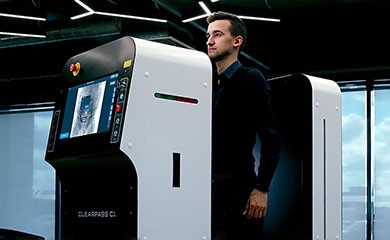
The most visible point of friction in any terminal is the body screening area. Passengers are often required to remove shoes, belts, and outerwear, leading to long queues. Modern solutions like the SENTINUS ultra-fast AI body scanner are designed to eliminate these delays. Utilizing sub-second X-ray scanning technology, SENTINUS provides a comprehensive view of potential threats hidden under clothing or within the body while maintaining an ultra-low radiation dose. This speed allows for a continuous flow of passengers, drastically reducing the stop-and-go nature of traditional checkpoints.Complementing this is the CLEARPASS full-body scanner, which offers a versatile approach to security. By utilizing high-resolution imaging, CLEARPASS allows security personnel to detect a wide range of prohibited items, including non-metallic weapons and contraband. The key to these X-ray security solutions for airports lies in their ability to provide high-definition results without requiring passengers to hold awkward poses for extended periods. When the screening process takes less than a second, the throughput of the entire terminal increases, directly improving the passenger experience and operational ROI.
AI and the Automation of Baggage Screening
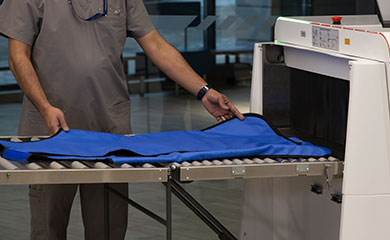
While body scanning handles the passengers, the volume of carry-on and checked luggage remains a primary cause of terminal friction. This is where AI-powered threat detection, such as the A-EYE software, becomes a game-changer. By layering artificial intelligence over traditional X-ray imaging, the system can automatically flag weapons, explosives, and lithium batteries with a degree of accuracy that surpasses human operators alone. This automation allows security officers to focus their attention only on high-risk items, rather than scrutinizing every single bag that passes through the machine.For high-traffic gateways, the LV Stream system offers a high-throughput solution for baggage screening. Designed for environments where speed is critical, it works in tandem with specialized scanners like the BV 6045. The BV 6045 is optimized for carry-on and cabin baggage, providing dual-view imaging that allows operators to see objects from multiple angles without needing to re-scan the bag. This multi-energy technology differentiates between materials, making it easier to identify liquids and electronics, which are common sources of false alarms and manual search requests.
Comprehensive Cargo and Vehicle Security
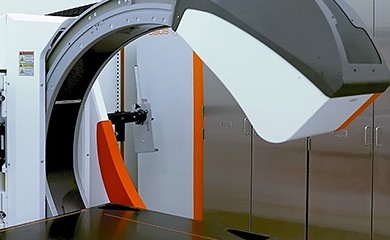
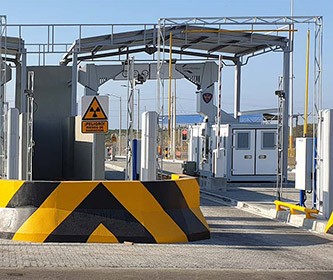
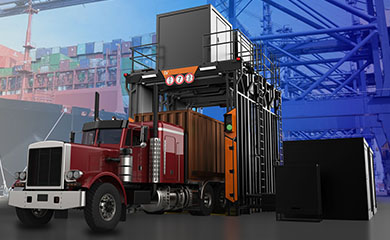
Airport security extends far beyond the passenger terminal. The logistics side of aviation, involving massive volumes of cargo and the vehicles that transport them, requires equally robust screening protocols. Large baggage and palletized cargo are handled by systems like the BV 160180, which features a large tunnel opening and high-penetration X-rays. This ensures that even dense shipments can be inspected thoroughly without being broken down into smaller components, preserving the speed of the supply chain.At the perimeter of the airport, vehicle security is managed by portals such as the DTP 7500/320DV. This vehicle and cargo portal provides dual-view X-ray imaging of entire trucks and vans as they enter restricted zones. By utilizing high-energy X-ray sources, these portals can penetrate thick steel to detect hidden compartments or illicit goods. When integrated into the broader airport network, these x-ray security solutions for airports ensure that the clean side of the terminal remains secure from the ground up, covering every possible entry point for threats.
Data-Driven Security Management
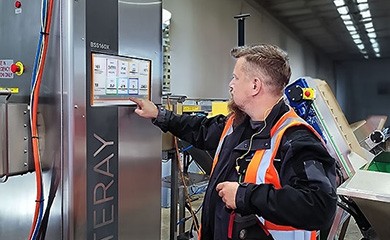
Modern security no longer relies on hardware alone – rather, data generated from each scan drives modern security operations. Remote monitoring and cloud connectivity enables airport administrators to oversee security operations at multiple terminals or even airports from a centralized command center, including real-time troubleshooting, software updates, performance tracking and reallocation of staff or changes to lane configuration based on live scanner data provided to managers from each scan connected.Connectivity also facilitates AI algorithm enhancement. As A-EYE software encounters more data, its ability to recognize emerging threats increases accordingly ensuring airports remain protected against emerging and sophisticated smuggling tactics. Airports transforming to connected security infrastructure achieve unparalleled situational awareness that enables terminal friction reduction at scale.
Comparative Overview of Security Technologies
As airports strive to deliver a frictionless airport experience, technological solutions must become smarter, faster and more integrated. Aviation authorities can ensure safety protocols don’t impede traveler flow by employing tools like AI-driven body scanners and high energy cargo portals; with reduced terminal friction coming not just from faster movement; rather it should create an atmosphere in which security becomes so efficient it becomes an unnoticed background process, freeing passengers up for their journey instead of queuing up at security checkpoints.As the industry develops, comprehensive x-ray security solutions for airports will become more important in driving operational success. These systems offer reliability, speed, and precision necessary to meet modern regulatory requirements while meeting 21st-century traveler expectations. Investment in this cutting-edge screening technology represents more than a simple security upgrade; it represents an investment towards creating a safer future for global aviation.
We use cookies to enhance your browsing experience, analyze traffic, and support website features. You can accept all cookies, decline them, or manage your preferences at any time. Learn more in our Cookie Policy.
Your message was successfully delivered. Our specialist will contact you shortly.