











From the operator’s perspective, airport security had been unchanged for decades. A bag passed through a tube, a grayscale image displayed on a monitor, and a human made a decision in under six seconds. That paradigm propelled global aviation through an era of increasing passenger volumes, but it was never designed for the threat scenario or throughput expectations of 2026. What replaces it isn’t a louder alert or a larger machine, but intelligence incorporated directly into an image pipeline.
We at LINEV Systems have witnessed this transition firsthand and have contributed to its advancement. Terminal after terminal, algorithms are redefining how X-ray security solutions for airports work at every level. Detection is becoming more automated rather than manual; anomalies are identified before an operator even looks at the screen, and each scan teaches the system something new. The checkpoint is still there. The technology inside is nearly indistinguishable.
The Limits of the Analog Era
The traditional X-ray screen relied solely on the operator’s eye. The training was thorough, but fatigue and distractions, as well as the visual complexity of a tightly packed suitcase, created gaps that could not be avoided. In the aviation industry, studies have shown that accuracy in detection drops after long shifts and that cluttered luggage is among the most difficult images to correctly read.
Scale was another problem for the analog model. The math stopped working as passenger numbers increased beyond pre-pandemic levels. When every additional lane needs trained staff, floor area, and ongoing certification, you can’t hire your way to a throughput issue. For years, either the speed of the scan or the confidence in it had to be sacrificed.
What AI Actually Does Inside the Scanner
When people hear the phrase “AI in airport security,” they typically envision a futuristic control center. The reality is more pragmatic. Our systems use deep learning models trained on massive libraries of labeled X-ray images to identify the shapes, densities, and material signatures of specific threats like firearms, explosives, lithium anomalies, prohibited liquids, and, increasingly, 3D-printed objects that traditional detection logic was never intended to detect.
It doesn’t replace an operator. The algorithm changes the tasks that an operator must perform. Screeners no longer have to scan every bag individually, but are instead guided by overlay highlights and flagged areas. They also don’t have to worry about low-risk items. As a result, a few things change:
- The detection becomes consistent between shifts, operators and fatigue levels.
- Bags that are clear move automatically through, which reduces the rate of secondary inspection.
- The training cycle is shorter because the system can be used to transfer institutional knowledge between deployments.
This last point is more important than it may sound. The cost of operator turnover in aviation security has been hidden for years. AI-assisted screeners allow new hires to reach functional competency faster because the algorithm does the pattern recognition that humans used to do over many years.
Multi-Energy Imaging and Material Discrimination
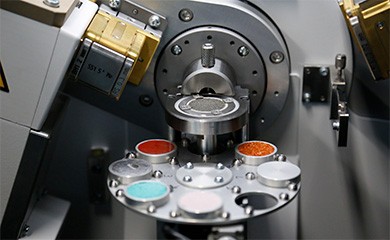
Detection intelligence is only as good as the data it receives; the hardware side of airport X-ray security solutions for airports has evolved with it. Multi-energy and spectrum imaging now capture far more than just a silhouette; they distinguish organic from inorganic materials, identify particular atomic signatures, and generate the layered data AI models require to make informed decisions.
This is where the Multi-Energy X-ray Array (MEA) technology comes into play. Our latest generation of screening platforms can tell the difference between a harmless bottle of shampoo and a chemically similar threat that would have seemed identical under prior technology by integrating spectral tomography with AI-powered classification. The analog system came into shape. The algorithmic system recognizes composition.
The idea that speed or thoroughness is the only way to achieve aviation security is a stubborn one. This assumption is being quietly shattered by the new generation of AI-assisted screeners. Automated threat detection processes images in real-time, which means lanes move more quickly, not because standards have been relaxed, but rather because the system eliminates pause-and-check rhythms that defined checkpoints over a period of time.
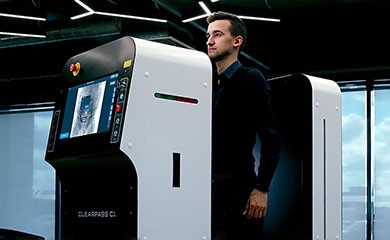
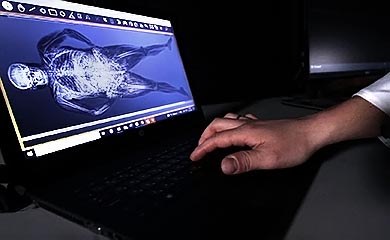
This is demonstrated by the platforms we have designed for environments with high footfall, including LV Stream, our next-generation X-ray security gateway for venues with heavy crowds, and SENTINUS, which is our ultra-fast AI-based full-body scanning system. Intelligent intelligence can be located inside the tunnel, rather than in the back. This allows for a seamless and continuous flow. The line moves forward as operators intervene only where necessary.
A Security Layer That Learns
Perhaps the most overlooked feature of this transition is that AI-powered systems improve with time. Every confirmed threat, false alarm addressed, and new object class encountered serves as training data for the future deployment. A scanner placed in 2026 will not be the same scanner in 2028, not because the technology has changed, but because the intelligence within it has grown.
The modernization of airports rarely generates headlines, which is part of the objective. Effective security is invisible. But behind every quick lane and confident operator is a stack of algorithms performing tasks that were just inconceivable a decade ago. The analog era expected humans to accomplish everything. The algorithmic era requires them to do the correct things at the right time, while machines handle the rest.
At LINEV Systems, we don’t believe that the question is whether to adopt intelligent airport X-ray security solutions for airports. The real question is how quickly this transition can take place without disrupting the operations. The technology is here. We are proud to build the checkpoint of tomorrow, one terminal at a time.