

















01 June 2026
Event Venues and Stadiums Are Now Borrowing AI Baggage Screening Systems Technology From the Aviation World
Key Takeaways
- Stadiums, arenas, and large public venues are adopting AI Baggage Screening Systems that were originally refined for high-throughput aviation environments.
- AI-driven detection reduces operator fatigue, shortens lines, and improves the consistency of threat identification across long event days.
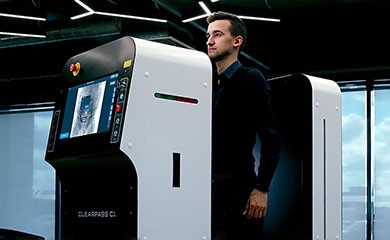
- LINEV Systems develops next-generation X-ray screening platforms, including the LV STREAM gateway and BV 6045, purpose-built for crowd-heavy venues.
- Algorithm-assisted screening adapts to evolving threats over time, learning from each scan rather than relying on static rule sets.
- Choosing the right system depends on footfall, available footprint, and integration with existing venue access control.
What AI-Assisted Screening Actually Does at the Gate
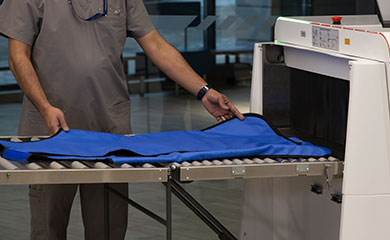
When venue operators discuss AI in screening, they typically refer to two stacked capabilities that function together within the image pipeline. The first is automated threat recognition, in which the system identifies things that match previously taught signatures for weapons, razors, improvised explosive components, and forbidden substances, before an operator clicks through the image. The second category is image enhancement and assistance, which involves processing dual-energy or multi-view scans in real time to differentiate organic and metallic materials, sharpen edges, and emphasize congested regions. For event security, this is significant since operator fatigue is the single most important variable in screening performance. A trained reviewer who has seen 10,000 photographs on a Saturday is not the same reviewer as at midday. AI-supported analysis remains consistent. It does not become bored. It does not begin glancing past questionable overlap because the line is backing up. Modern AI Baggage Screening Systems are designed around this fact, with the operator acting as a decision-maker aided by software rather than a single point of failure. It is not a simple marketing stunt to adapt aviation equipment for stadium gates. Hardware must be able to cope with a new rhythm, including bursts in traffic, items ranging from camera bags to coolers, and operators rotating through their positions. LINEV Systems has platforms that are designed for environments with high traffic, but not airports. For example, the LV STREAM is positioned to be a next-generation X-ray security gateway designed for venues with high crowds and schools. The system is designed to provide fast, automated scanning with software that assists operators instead of overwhelming them. The BV 6045 is a single-view solution for smaller bag categories, such as purses, backpacks, and briefcases. It features AI-powered threat detection, along with remote monitoring. Both platforms share the same philosophy: Keep the queue moving, surface only the correct items, and make operators’ jobs sustainable over a long period of time. Considerations for deployment include a footprint that matches the layout of a concourse rather than an airport hall, central image review to allow a back-of-house staff to support multiple gates, and allowing throughputs high enough to absorb peak entry surges while not becoming clogged.Public Events as a Distinct Security Market
Public events are in a category all their own, halfway between a transportation hub, a corporate facility, and a temporary infrastructure project. The screening atmosphere varies according to the event, venue, and even the weather. LINEV Systems regards public events as a distinct solution area, alongside transportation security, government buildings, and schools, because the needs range significantly from those sectors. For an arena tour, the problem may be to standardize screening across dozens of venues with varying staffing. For a one-time festival, it might be deploying mobile inspection sites that can be set up, networked, and demobilized in a matter of days. In both circumstances, the underlying detection logic, the same type of AI-assisted picture analysis utilized in aviation, must execute consistently outside of a controlled airport setting. That portability and agility distinguish an event-ready platform from a repurposed checkpoint scanner. One element that is frequently overlooked in discussions about AI is that the value is not in replacing the operator, but in changing what the operator spends their time doing. With automatic detection help, a reviewer does not have to scan every pixel of each bag from the beginning. They are validating, dismissing, or escalating issues that the system has previously highlighted. The training priorities are shifted. The venue security team needs to spend less time teaching pattern recognition based on raw images and more time practicing communication with the floor staff and incident handoff. This results in a screening line that is consistent and based on the team’s judgment. AI Baggage Screening Systems that are well-implemented can also provide venue operators with the type of performance data they need to optimize staffing, gate placement, and entry timing over a season.How Aviation-Grade Screening Translates to Venues
| Capability | Aviation Origin | Venue Application |
| Automated threat recognition | Carry-on bag screening at checkpoints | Gate-level bag inspection at stadiums and arenas |
| Dual or multi-view imaging | Hold baggage and high-clutter cabin items | Backpacks, camera bags, and concession-related items |
| Centralized image review | Networked checkpoint operations | Multi-gate venue control rooms |
| Operator assistance software | Long-shift fatigue mitigation | Sustained performance across event-day surges |
| Mobile or modular deployment | Temporary terminal expansions | Festivals, tours, and pop-up venue configurations |